#baby $BABY لقد كنت أفكر في هذا كثيرًا في الآونة الأخيرة: في التمويل اللامركزي (DeFi)، فإن إزالة الوسيط لا تلغي الثقة فعليًا—بل تقوم فقط بإعادة توطينها.
خذ على سبيل المثال إيصال المستودع. حتى إذا لم تكن السلع المادية بين يديك، فإن التفاصيل الدقيقة بشأن متى يمكن إعادة رهنها أو بيعها أو إعادتها ما تزال هي التي تحكم الأمر. وهذا بالضبط ما جعل «صناديق بيتكوين بدون ثقة» من Babylon تلفت انتباهي.
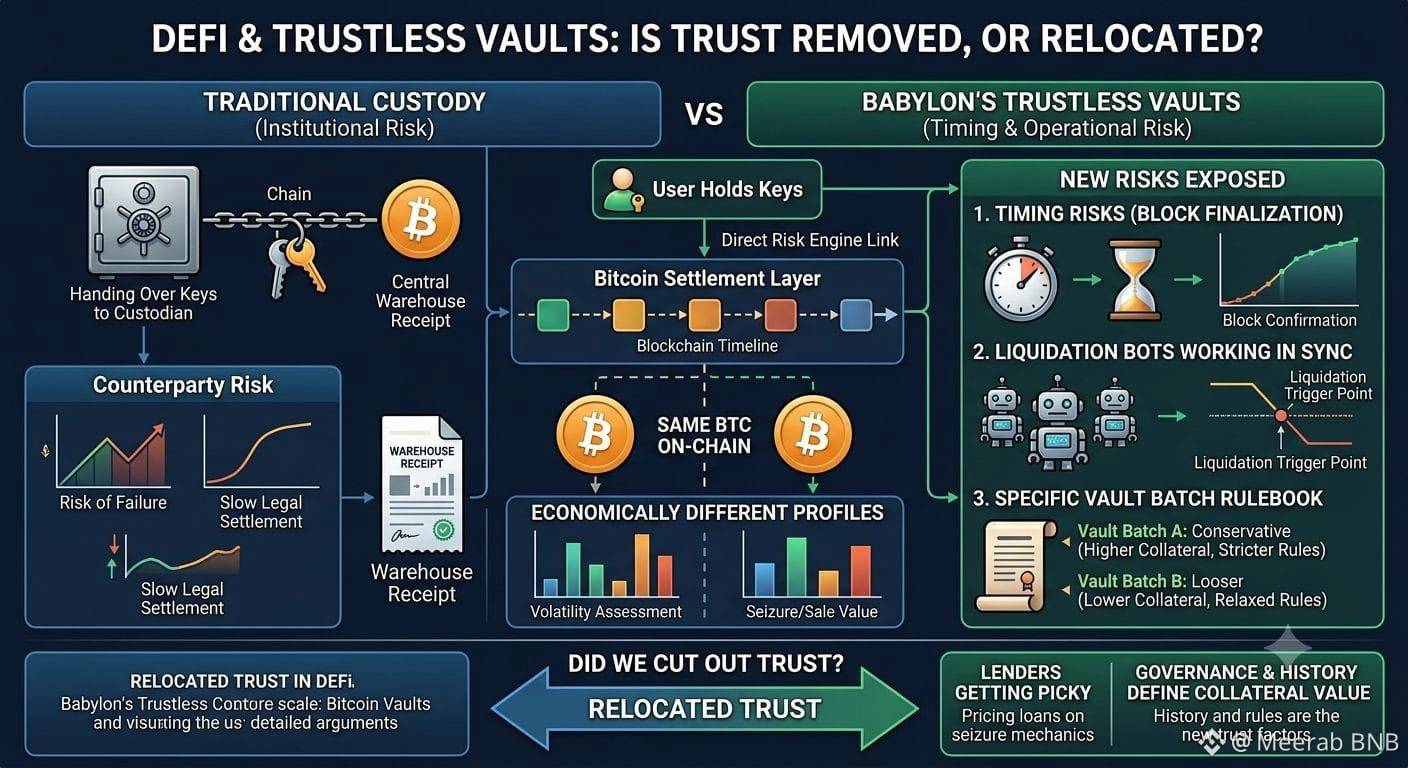
بالطبع، العنوان واضح—استخدم BTC كضمان دون تسليم مفاتيحك لوصيّ مركزي. رائع. لكن الخلاصة الخفية هنا هي أن طبقة التسوية الخاصة ببيتكوين أصبحت الآن تتصل مباشرةً بمحركات المخاطر في أسواق الائتمان. وهذا حيوان آخر تمامًا.
وهنا المفارقة: أنت تتجاوز مخاطر الطرف المقابل المؤسسي، لكنك الآن تميل بقوة إلى مخاطر التوقيت (ما مدى سرعة اعتماد ذلك البلوك؟)، وبرامج التصفية التي تعمل بتناغم، والقواعد المحددة للنظام الخاص بدُفعة ذلك القبو بعينه.
ما يعني أن كومتين من بيتكوين تبدوان متطابقتين جنبًا إلى جنب على السلسلة، لكن اقتصاديًا لا تكونان توأمين بعد الآن. قد يكون أحد القبوين قد تم إصداره تحت معايير محافظة، والآخر تحت معايير أكثر تساهلًا. نفس BTC، لكن ملف المخاطر مختلف تمامًا.
لذلك أصبحت أقل اهتمامًا بإجمالي BTC المودعة، وأكثر اهتمامًا بما إذا كان المقرضون سيبدأون في التدقيق—تسعير القروض بناءً على كيفية وتوقيت إمكانية الاستيلاء على ذلك الضمان أو بيعه.
إذا وصلنا إلى مرحلة تصبح فيها سيرة العملة وقواعد الحوكمة تؤثر في قيمتها كضمان، فعلينا أن نسأل: هل قطعنا الثقة فعلًا، أم أننا نقلنا فقط خطوط النهاية وسمّيناه يومًا؟
@BabylonLabs_io $BABAB
خذ على سبيل المثال إيصال المستودع. حتى إذا لم تكن السلع المادية بين يديك، فإن التفاصيل الدقيقة بشأن متى يمكن إعادة رهنها أو بيعها أو إعادتها ما تزال هي التي تحكم الأمر. وهذا بالضبط ما جعل «صناديق بيتكوين بدون ثقة» من Babylon تلفت انتباهي.
بالطبع، العنوان واضح—استخدم BTC كضمان دون تسليم مفاتيحك لوصيّ مركزي. رائع. لكن الخلاصة الخفية هنا هي أن طبقة التسوية الخاصة ببيتكوين أصبحت الآن تتصل مباشرةً بمحركات المخاطر في أسواق الائتمان. وهذا حيوان آخر تمامًا.
وهنا المفارقة: أنت تتجاوز مخاطر الطرف المقابل المؤسسي، لكنك الآن تميل بقوة إلى مخاطر التوقيت (ما مدى سرعة اعتماد ذلك البلوك؟)، وبرامج التصفية التي تعمل بتناغم، والقواعد المحددة للنظام الخاص بدُفعة ذلك القبو بعينه.
ما يعني أن كومتين من بيتكوين تبدوان متطابقتين جنبًا إلى جنب على السلسلة، لكن اقتصاديًا لا تكونان توأمين بعد الآن. قد يكون أحد القبوين قد تم إصداره تحت معايير محافظة، والآخر تحت معايير أكثر تساهلًا. نفس BTC، لكن ملف المخاطر مختلف تمامًا.
لذلك أصبحت أقل اهتمامًا بإجمالي BTC المودعة، وأكثر اهتمامًا بما إذا كان المقرضون سيبدأون في التدقيق—تسعير القروض بناءً على كيفية وتوقيت إمكانية الاستيلاء على ذلك الضمان أو بيعه.
إذا وصلنا إلى مرحلة تصبح فيها سيرة العملة وقواعد الحوكمة تؤثر في قيمتها كضمان، فعلينا أن نسأل: هل قطعنا الثقة فعلًا، أم أننا نقلنا فقط خطوط النهاية وسمّيناه يومًا؟
@BabylonLabs_io $BABAB