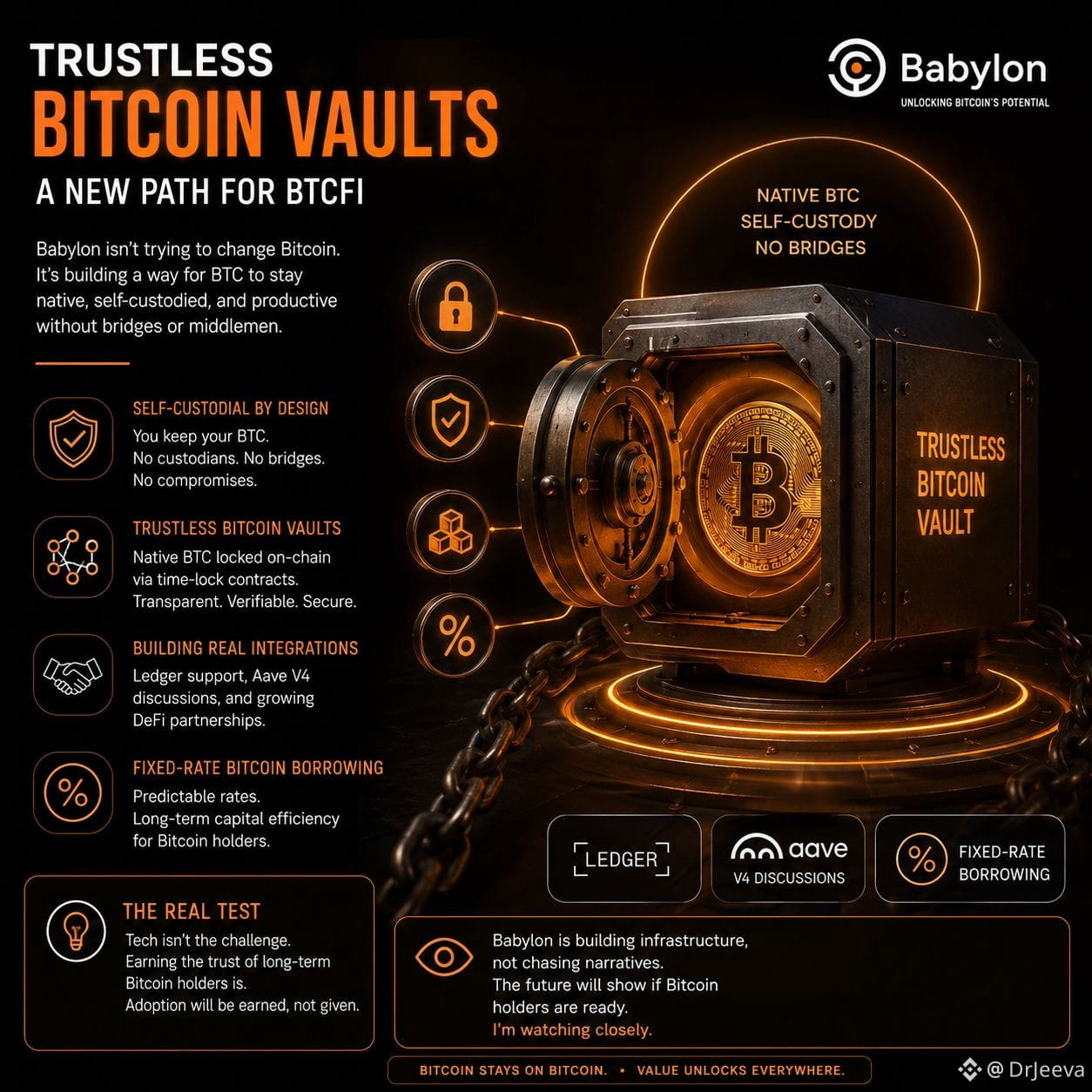
كانت الأيام القليلة الماضية هادئة بشكل مدهش، وغالبًا ما أستغل هذا النوع من الأسواق لإعادة زيارة المشاريع بدلًا من مطاردة الشموع. انتهى الأمر بظهور Babylon مجددًا على شاشتي، لكن هذه المرة لم أكن أركز على الإيهام بالتكديس الخاص بالـ Bitcoin. أردت فهم ما إذا كانت فكرة "Trustless Bitcoin Vault" برمتها تحل مشكلة حقيقية فعلًا، أم أنها تضيف مجرد طبقة أخرى من التعقيد.
كنت أتوقع قصة BTCFi مألوفة مبنية حول الأصول المُغلّفة، لكن لم يكن هذا ما وجدته. الجزء الذي لفت انتباهي فعليًا هو كيف يستمر Babylon في دفع Bitcoin الأصلي كضمان مع تجنب الجسور والوسطاء. أعمالهم الأخيرة مع دعم Ledger، والمناقشات الجارية حول Aave V4، وتركيزهم المتزايد على الاقتراض بمعدل ثابت للبيتكوين، تشير إلى أنهم يحاولون بناء بنية تحتية طويلة الأجل بدلًا من سردية أخرى عابرة.
ومع ذلك، ما زلت أرى أن أكبر اختبار ليس تقنيًا. بل هو ما إذا كانت الناس الذين احتفظوا بـ BTC لسنوات سيشعرون بالراحة عند قفلها في نظام جديد، حتى لو ظل النظام تحت الحيازة الذاتية. نادرًا ما يغيّر مستخدمو Bitcoin عاداتهم بسرعة، وهذا الحذر موجود لسبب وجيه.
بالنسبة لي، تبدو Babylon أكثر ارتباطًا بالأشخاص الذين يريدون أن يبقى Bitcoin على شبكة Bitcoin، مع أن يصبح في الوقت نفسه رأس مالًا منتجًا. سأتابع ما إذا كانت هناك حاجة فعلية متزايدة إلى الاقتراض وتبنّي من المطورين، لأن البنية التحتية لا تصبح ذات معنى إلا عندما يبدأ الناس بالاعتماد عليها بهدوء بدلًا من مجرد الحديث عنها. @BabylonLabs_io
#baby $BABY $BTC
كنت أتوقع قصة BTCFi مألوفة مبنية حول الأصول المُغلّفة، لكن لم يكن هذا ما وجدته. الجزء الذي لفت انتباهي فعليًا هو كيف يستمر Babylon في دفع Bitcoin الأصلي كضمان مع تجنب الجسور والوسطاء. أعمالهم الأخيرة مع دعم Ledger، والمناقشات الجارية حول Aave V4، وتركيزهم المتزايد على الاقتراض بمعدل ثابت للبيتكوين، تشير إلى أنهم يحاولون بناء بنية تحتية طويلة الأجل بدلًا من سردية أخرى عابرة.
ومع ذلك، ما زلت أرى أن أكبر اختبار ليس تقنيًا. بل هو ما إذا كانت الناس الذين احتفظوا بـ BTC لسنوات سيشعرون بالراحة عند قفلها في نظام جديد، حتى لو ظل النظام تحت الحيازة الذاتية. نادرًا ما يغيّر مستخدمو Bitcoin عاداتهم بسرعة، وهذا الحذر موجود لسبب وجيه.
بالنسبة لي، تبدو Babylon أكثر ارتباطًا بالأشخاص الذين يريدون أن يبقى Bitcoin على شبكة Bitcoin، مع أن يصبح في الوقت نفسه رأس مالًا منتجًا. سأتابع ما إذا كانت هناك حاجة فعلية متزايدة إلى الاقتراض وتبنّي من المطورين، لأن البنية التحتية لا تصبح ذات معنى إلا عندما يبدأ الناس بالاعتماد عليها بهدوء بدلًا من مجرد الحديث عنها. @BabylonLabs_io
#baby $BABY $BTC