#baby لقد اكتشفت شيئًا أثناء بحثي اليوم عن @BabylonLabs_io:
غالبًا ما يستخدم الناس كلمة "ثقة معدومة" (trustless) كما لو كانت تنطبق على نظام بيئي كامل. وفي الغالب لا تنطبق.
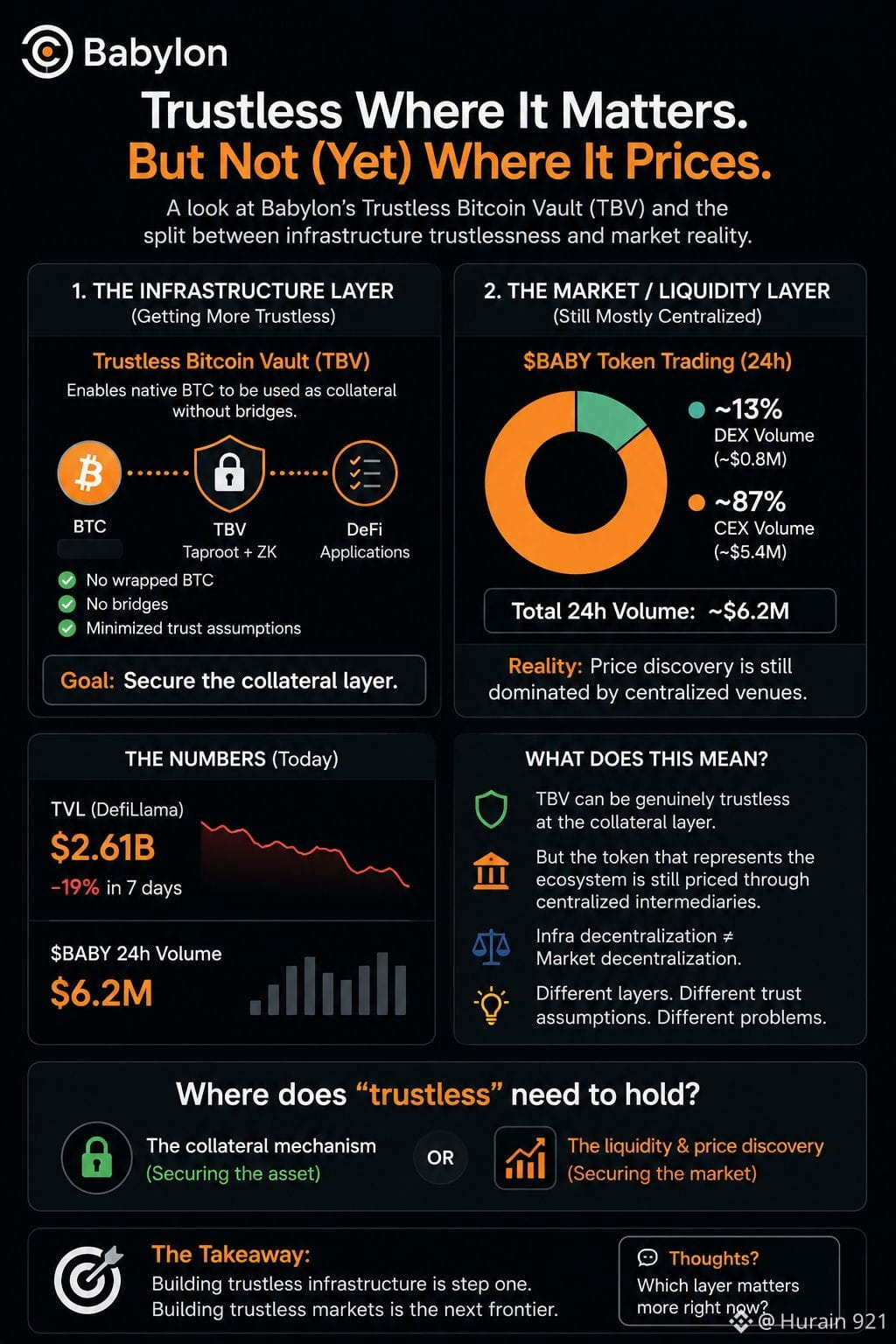
خذوا "صندوق البيتكوين الثقة-المعدومة" لدى بابل (TBV).
الهدف واضح: استخدام BTC كضمان دون الاعتماد على الجسور، ما يقلل أحد أكبر افتراضات الثقة في عالم الكريبتو.
هذا تحسين جوهري للبنية التحتية.
لكن بعد ذلك نظرت إلى بيانات السوق.
- TVL يقارب 2.61 مليار دولار (DefiLlama)، منخفضًا بنحو 19% خلال الأسبوع الماضي.
- $BABY تمّت معالجته بحجم تداول على مدى 24 ساعة يساوي حوالي 6.2 مليون دولار.
- حدث فقط نحو 13% من هذا الحجم على DEXs، بينما تم تداول حوالي 87% في البورصات المركزية.
هذا لا يعني أن TBV لا يعمل.
بل يسلط الضوء على شيء أكثر إثارة للاهتمام:
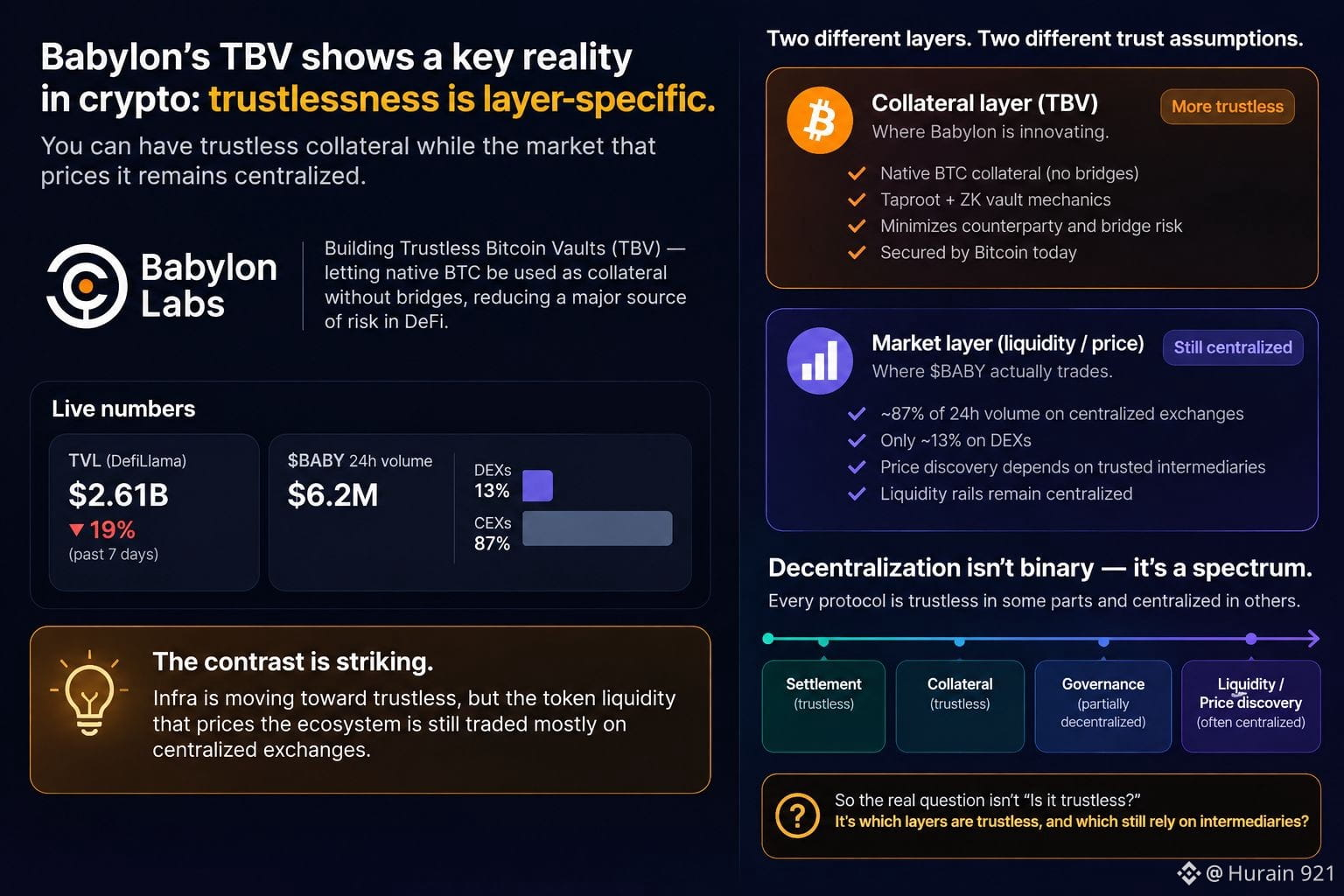
الثقة-الانعدام (Trustlessness) خاص بطبقة بعينها.
قد يزيل بروتوكول الثقة من طبقة الضمان الخاصة به، بينما تظل عملية اكتشاف السعر معتمدة إلى حد كبير على البورصات المركزية.
وهذان مشكلتان مختلفتان تمامًا.
إحداهما تتعلق بأمن الأصول.
والأخرى تتعلق ببنية السوق.
غالبًا ما يتعامل عالم الكريبتو مع اللامركزية باعتبارها ثنائية—إما أنها لامركزية أو ليست كذلك.
لكن في الواقع، كل بروتوكول يقع في مكان ما على طيف:
• يمكن أن تكون التسوية بلا ثقة.
• يمكن أن تكون الضمانات بلا ثقة.
• يمكن أن تكون الحوكمة لامركزية.
• ويمكن أن تظل السيولة مركزية.
كل طبقة لها افتراضات الثقة الخاصة بها.
لذلك، السؤال الأفضل ليس:
"هل هذا البروتوكول بلا ثقة؟"
بل:
"أي الأجزاء بلا ثقة، وأي الأجزاء ما زالت تعتمد على وسطاء موثوقين؟"
هذه صياغة أكثر فائدة لتقييم البنية التحتية للكريبتو.
@BabylonLabs_io
غالبًا ما يستخدم الناس كلمة "ثقة معدومة" (trustless) كما لو كانت تنطبق على نظام بيئي كامل. وفي الغالب لا تنطبق.
خذوا "صندوق البيتكوين الثقة-المعدومة" لدى بابل (TBV).
الهدف واضح: استخدام BTC كضمان دون الاعتماد على الجسور، ما يقلل أحد أكبر افتراضات الثقة في عالم الكريبتو.
هذا تحسين جوهري للبنية التحتية.
لكن بعد ذلك نظرت إلى بيانات السوق.
- TVL يقارب 2.61 مليار دولار (DefiLlama)، منخفضًا بنحو 19% خلال الأسبوع الماضي.
- $BABY تمّت معالجته بحجم تداول على مدى 24 ساعة يساوي حوالي 6.2 مليون دولار.
- حدث فقط نحو 13% من هذا الحجم على DEXs، بينما تم تداول حوالي 87% في البورصات المركزية.
هذا لا يعني أن TBV لا يعمل.
بل يسلط الضوء على شيء أكثر إثارة للاهتمام:
الثقة-الانعدام (Trustlessness) خاص بطبقة بعينها.
قد يزيل بروتوكول الثقة من طبقة الضمان الخاصة به، بينما تظل عملية اكتشاف السعر معتمدة إلى حد كبير على البورصات المركزية.
وهذان مشكلتان مختلفتان تمامًا.
إحداهما تتعلق بأمن الأصول.
والأخرى تتعلق ببنية السوق.
غالبًا ما يتعامل عالم الكريبتو مع اللامركزية باعتبارها ثنائية—إما أنها لامركزية أو ليست كذلك.
لكن في الواقع، كل بروتوكول يقع في مكان ما على طيف:
• يمكن أن تكون التسوية بلا ثقة.
• يمكن أن تكون الضمانات بلا ثقة.
• يمكن أن تكون الحوكمة لامركزية.
• ويمكن أن تظل السيولة مركزية.
كل طبقة لها افتراضات الثقة الخاصة بها.
لذلك، السؤال الأفضل ليس:
"هل هذا البروتوكول بلا ثقة؟"
بل:
"أي الأجزاء بلا ثقة، وأي الأجزاء ما زالت تعتمد على وسطاء موثوقين؟"
هذه صياغة أكثر فائدة لتقييم البنية التحتية للكريبتو.
@BabylonLabs_io