الرقم الذي كان يزعجني لم يكن هو TVL. بل كانت الرسوم.
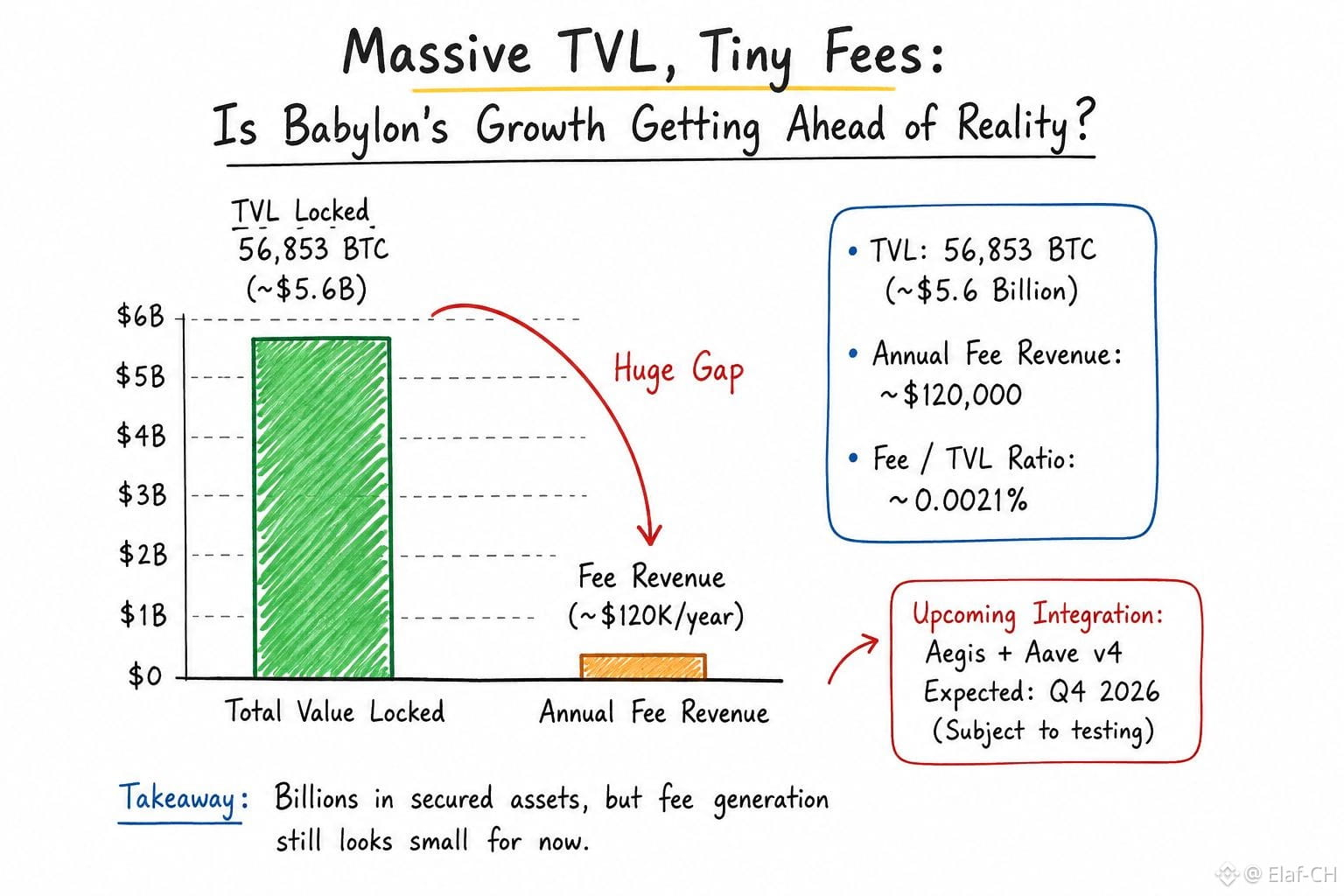
قضيت بعض الوقت في مقارنة مؤشرات بابل الحالية، ويبدو أن الفجوة واسعة بشكل غير معتاد. حوالي 56,853 BTC محجوزة داخل البروتوكول، بقيمة تقارب 5.6 مليار دولار بالأسعار الحالية. هذا قدر هائل من الأمان الاقتصادي الموجود هناك. لكن البروتوكول لا ينتج إيرادات رسوم تبدو متناسبة مع هذا الحجم.
لا يعني ذلك تلقائيًا أن شيئًا ما معطّل. غالبًا ما تنمو البنية التحتية في المراحل المبكرة من خلال TVL قبل أن تلحق التدفقات النقدية. ومع ذلك، فهذا يغيّر الطريقة التي أنظر بها إلى الأرقام.
إذا كانت مليارات الدولارات تُؤمَّن بينما يبقى توليد الرسوم محدودًا نسبيًا، فتعتمد التقييمات اليوم بدرجة كبيرة على النشاط المستقبلي بدلًا من الطلب الحالي. المزيد من استخدام الخزائن. المزيد من عمليات التكامل. المزيد من الاقتراض. المزيد من الأسباب الحقيقية لبقاء BTC منتِجة بدل أن تُركن ببساطة.
كما لاحظت مدى سهولة الانبهار بلوحات معلومات TVL. تفتحها، ترى آلاف الإيداعات من BTC، ويستنتج عقلك فورًا اقتصاديات بروتوكول قوية. ثم تبحث عن الإيرادات، لتصبح الصورة أقل وضوحًا.
قد يؤدي التكامل القادم مع Aegis وAave v4 في النهاية إلى زيادة الاستخدام، لكنه متوقع في الربع الرابع من عام 2026 وما زال يعتمد على التطوير والاختبار. وحتى يصبح شيء من هذا القبيل حيًا، تظل العلاقة بين 5.6B دولار من الأصول المؤمَّنة وتوليد الرسوم المتواضع نسبيًا هي الرقم الذي أعود إليه باستمرار.
ربما يكون ذلك طبيعيًا تمامًا لهذه المرحلة.
أو ربما يكون TVL يروي قصة أكثر تفاؤلًا بكثير مما تسمح به خانة الرسوم بتأكيده حتى الآن.
@BabylonLabs_io #baby $BABY
$BTC
قضيت بعض الوقت في مقارنة مؤشرات بابل الحالية، ويبدو أن الفجوة واسعة بشكل غير معتاد. حوالي 56,853 BTC محجوزة داخل البروتوكول، بقيمة تقارب 5.6 مليار دولار بالأسعار الحالية. هذا قدر هائل من الأمان الاقتصادي الموجود هناك. لكن البروتوكول لا ينتج إيرادات رسوم تبدو متناسبة مع هذا الحجم.
لا يعني ذلك تلقائيًا أن شيئًا ما معطّل. غالبًا ما تنمو البنية التحتية في المراحل المبكرة من خلال TVL قبل أن تلحق التدفقات النقدية. ومع ذلك، فهذا يغيّر الطريقة التي أنظر بها إلى الأرقام.
إذا كانت مليارات الدولارات تُؤمَّن بينما يبقى توليد الرسوم محدودًا نسبيًا، فتعتمد التقييمات اليوم بدرجة كبيرة على النشاط المستقبلي بدلًا من الطلب الحالي. المزيد من استخدام الخزائن. المزيد من عمليات التكامل. المزيد من الاقتراض. المزيد من الأسباب الحقيقية لبقاء BTC منتِجة بدل أن تُركن ببساطة.
كما لاحظت مدى سهولة الانبهار بلوحات معلومات TVL. تفتحها، ترى آلاف الإيداعات من BTC، ويستنتج عقلك فورًا اقتصاديات بروتوكول قوية. ثم تبحث عن الإيرادات، لتصبح الصورة أقل وضوحًا.
قد يؤدي التكامل القادم مع Aegis وAave v4 في النهاية إلى زيادة الاستخدام، لكنه متوقع في الربع الرابع من عام 2026 وما زال يعتمد على التطوير والاختبار. وحتى يصبح شيء من هذا القبيل حيًا، تظل العلاقة بين 5.6B دولار من الأصول المؤمَّنة وتوليد الرسوم المتواضع نسبيًا هي الرقم الذي أعود إليه باستمرار.
ربما يكون ذلك طبيعيًا تمامًا لهذه المرحلة.
أو ربما يكون TVL يروي قصة أكثر تفاؤلًا بكثير مما تسمح به خانة الرسوم بتأكيده حتى الآن.
@BabylonLabs_io #baby $BABY
$BTC