#baby $BABY
كنت أظن أن عبارة "لا أمناء، لا جسور" تعني أننا أخيرًا نجحنا في كسر الجزء الأصعب. بدون وسطاء، بدون رموز ملفوفة على سلسلة أخرى—فقط بيتكوين تقوم بأعمال بيتكوين.
لكن كلما تعمقت في "خزائن بيتكوين بدون ثقة"، أدركت أننا لم نُزل الاحتكاك. بل نقلناه فقط إلى مكان آخر.
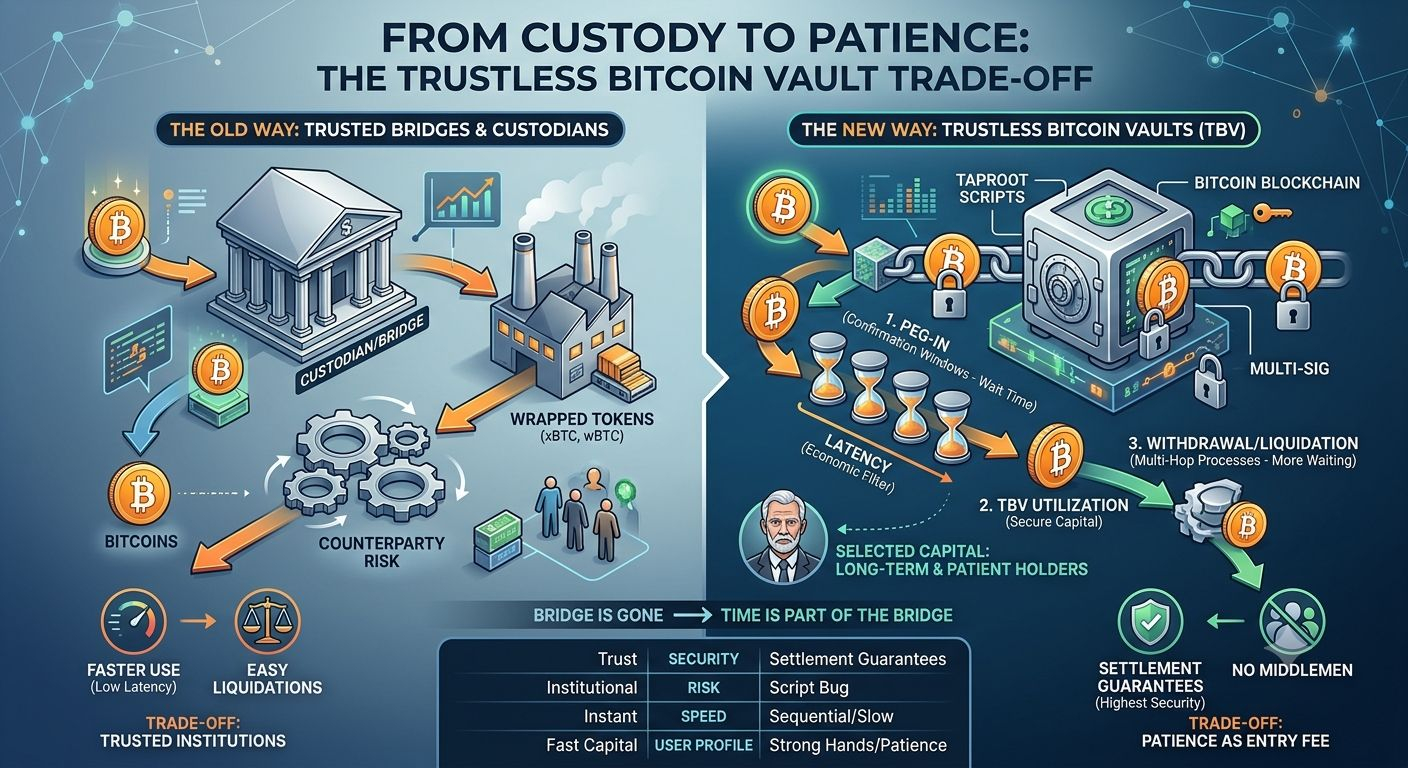
بدلًا من تسليم عملاتك إلى شركة أو إصدار مشتق، تقوم TBV بقفل BTC داخل سكريبتات Taproot. هذا يستبدل الثقة المؤسسية بضمانات التسوية الخاصة ببيتكوين نفسها. وهذا مهم فعلًا.
لكن التسوية ليست مجانية.
نوافذ الربط تلك؟ لا تختفي. بل تتحول إلى فلتر صامت. إذا لم تكن مستعدًا للجلوس خلال عمليات التأكيد قبل أن يفعل رأس المال شيئًا مفيدًا، فهذا النظام ليس لك. وحتى التصفّيات تصبح متعبة—فبيتكوين لم تُبنَ لتحديث الحالة فورًا، لذا تحتاج إلى قفزات إضافية.
بشكل أساسي، اختفى الجسر. لكن الزمن يصبح جزءًا من الجسر.
وهذا تبادل حقيقي، لا خللًا. ينخفض خطر الطرف المقابل بشكل كبير، ومع ذلك تصبح التأخيرات بمثابة شاشة اقتصادية. لا يحمي البروتوكول أموالك فحسب—بل يختار بشكل خفي نوع الشخص الذي يمكنه فعلًا استخدامها.
وهذا ما جعلني أفكر: ربما ليس عنق الزجاجة الحقيقي في التمويل المدمج مع بيتكوين هو السيولة على الإطلاق.
ربما هي الصبر.
إذا أصبح المثابرة هي رسوم الدخول بدلًا من الحيازة/الوصاية، فهل يجذب ذلك رأس مالًا أقوى وأكثر استعدادًا للمدى الطويل؟ أم أنه فقط يدفع الأموال المتوترة نحو بدائل أسرع—لكن أكثر موثوقية—؟
بصراحة، لست متأكدًا من أيهما سيفوز في النهاية.
@BabylonLabs_io $BABY
كنت أظن أن عبارة "لا أمناء، لا جسور" تعني أننا أخيرًا نجحنا في كسر الجزء الأصعب. بدون وسطاء، بدون رموز ملفوفة على سلسلة أخرى—فقط بيتكوين تقوم بأعمال بيتكوين.
لكن كلما تعمقت في "خزائن بيتكوين بدون ثقة"، أدركت أننا لم نُزل الاحتكاك. بل نقلناه فقط إلى مكان آخر.
بدلًا من تسليم عملاتك إلى شركة أو إصدار مشتق، تقوم TBV بقفل BTC داخل سكريبتات Taproot. هذا يستبدل الثقة المؤسسية بضمانات التسوية الخاصة ببيتكوين نفسها. وهذا مهم فعلًا.
لكن التسوية ليست مجانية.
نوافذ الربط تلك؟ لا تختفي. بل تتحول إلى فلتر صامت. إذا لم تكن مستعدًا للجلوس خلال عمليات التأكيد قبل أن يفعل رأس المال شيئًا مفيدًا، فهذا النظام ليس لك. وحتى التصفّيات تصبح متعبة—فبيتكوين لم تُبنَ لتحديث الحالة فورًا، لذا تحتاج إلى قفزات إضافية.
بشكل أساسي، اختفى الجسر. لكن الزمن يصبح جزءًا من الجسر.
وهذا تبادل حقيقي، لا خللًا. ينخفض خطر الطرف المقابل بشكل كبير، ومع ذلك تصبح التأخيرات بمثابة شاشة اقتصادية. لا يحمي البروتوكول أموالك فحسب—بل يختار بشكل خفي نوع الشخص الذي يمكنه فعلًا استخدامها.
وهذا ما جعلني أفكر: ربما ليس عنق الزجاجة الحقيقي في التمويل المدمج مع بيتكوين هو السيولة على الإطلاق.
ربما هي الصبر.
إذا أصبح المثابرة هي رسوم الدخول بدلًا من الحيازة/الوصاية، فهل يجذب ذلك رأس مالًا أقوى وأكثر استعدادًا للمدى الطويل؟ أم أنه فقط يدفع الأموال المتوترة نحو بدائل أسرع—لكن أكثر موثوقية—؟
بصراحة، لست متأكدًا من أيهما سيفوز في النهاية.
@BabylonLabs_io $BABY