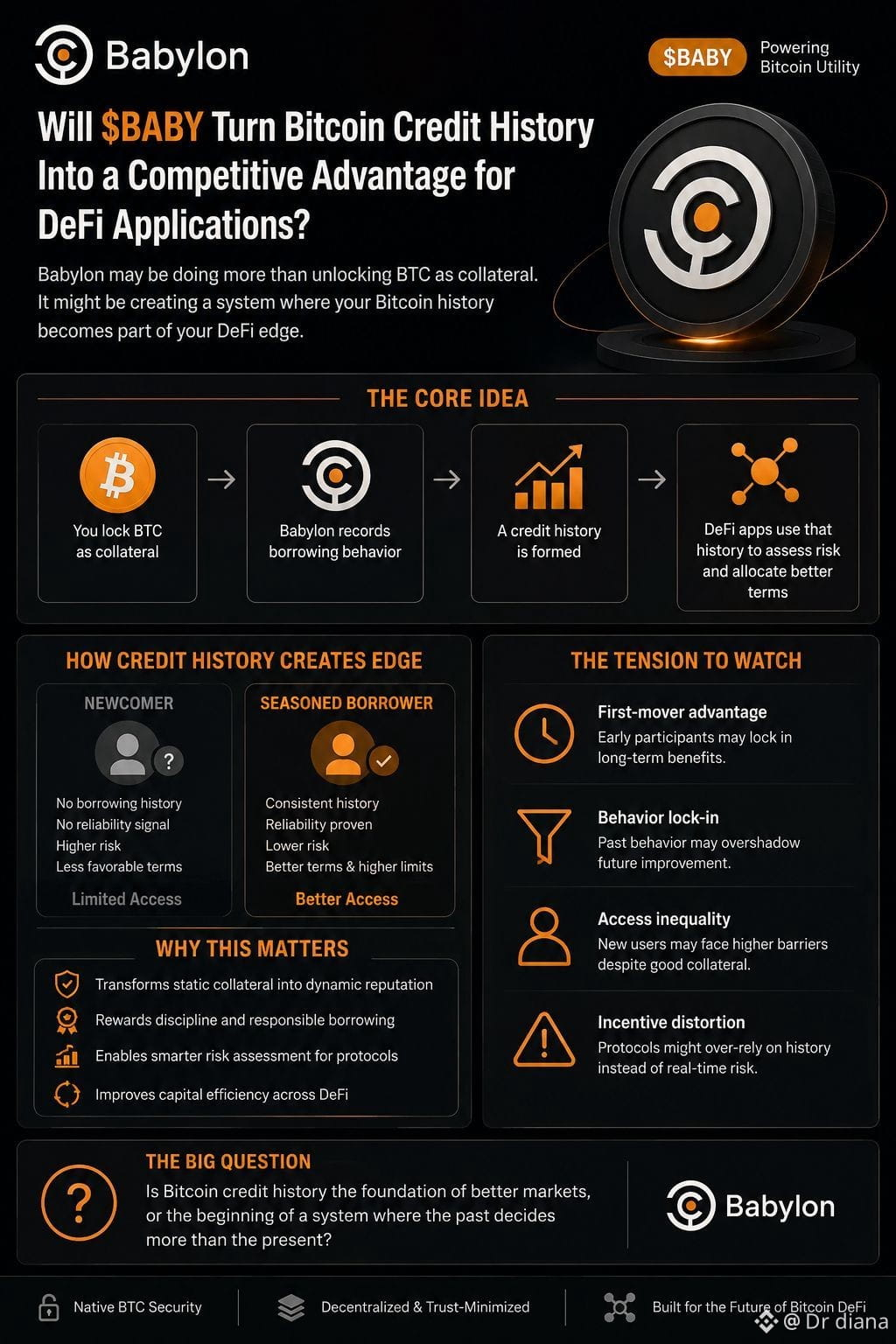
ما زلت أفكر في شيء يبدو سهل الإغفال. نقضي وقتًا طويلًا نتحدث فيه عن البيتكوين كضمان، لدرجة أنني نادرًا ما أتوقف لأتساءل إن كان الضمان نفسه هو أكثر شيء قيمة في النظام. ربما ليس كذلك.
بالطريقة التي أفهم بها Babylon حاليًا، الجزء المثير للاهتمام ليس فقط أن BTC الأصلي يمكنه دعم الاقتراض دون الحاجة إلى التغليف. بل إن الاقتراض المتكرر قد يترك تدريجيًا سجلًا. وإذا أصبح ذلك السجل مرئيًا، فقد لا يعود التعامل مع مبلغين متطابقين من البيتكوين كما لو أنهما متشابهان. أحدهما لديه تاريخ. والآخر لديه رصيد فقط.
في البداية بدا ذلك غير عادل بالنسبة إليّ. كان يُفترض أن يشعر البيتكوين بالحياد دائمًا. لكن من ناحية أخرى، تطبّق تطبيقات DeFi قرارات بالفعل اعتمادًا على أي معلومات يمكنها قياسها. إذا كانت إحدى الخزائن قد تصرفت بشكل جيد باستمرار عبر دورات اقتراض متعددة، بينما تظهر خزانة أخرى لأول مرة دون سياق، فأستطيع فهم سبب تفضيل البروتوكولات واحدًا منها على الآخر بهدوء.
ومع ذلك، من هنا تبدأ حيرتي. يمكن للتاريخ أن يقيس الاعتمادية، لكنه قد يكافئ أيضًا من دخل النظام في وقت أبكر. قد تتحول السجلات الجيدة إلى مزايا تعزز نفسها، حتى لو تغيّر سلوك المستقبل. لدى الحوافز عادة تجميد الافتراضات القديمة داخل بنية تحتية جديدة.
لذلك ربما $BABY لا يساعد فقط على إدخال البيتكوين إلى DeFi. ربما هو يخلق ظروفًا تبدأ فيها ذاكرة الضمانات الماضية بالمنافسة إلى جانب الضمان نفسه. على الورق، يبدو ذلك كفؤًا. لكن ما إذا كان سيؤدي إلى أسواق أفضل أو ببساطة إلى أشكال جديدة من الإقصاء يبقى أصعب بكثير للإجابة.
#baby $BABY @BabylonLabs_io
بالطريقة التي أفهم بها Babylon حاليًا، الجزء المثير للاهتمام ليس فقط أن BTC الأصلي يمكنه دعم الاقتراض دون الحاجة إلى التغليف. بل إن الاقتراض المتكرر قد يترك تدريجيًا سجلًا. وإذا أصبح ذلك السجل مرئيًا، فقد لا يعود التعامل مع مبلغين متطابقين من البيتكوين كما لو أنهما متشابهان. أحدهما لديه تاريخ. والآخر لديه رصيد فقط.
في البداية بدا ذلك غير عادل بالنسبة إليّ. كان يُفترض أن يشعر البيتكوين بالحياد دائمًا. لكن من ناحية أخرى، تطبّق تطبيقات DeFi قرارات بالفعل اعتمادًا على أي معلومات يمكنها قياسها. إذا كانت إحدى الخزائن قد تصرفت بشكل جيد باستمرار عبر دورات اقتراض متعددة، بينما تظهر خزانة أخرى لأول مرة دون سياق، فأستطيع فهم سبب تفضيل البروتوكولات واحدًا منها على الآخر بهدوء.
ومع ذلك، من هنا تبدأ حيرتي. يمكن للتاريخ أن يقيس الاعتمادية، لكنه قد يكافئ أيضًا من دخل النظام في وقت أبكر. قد تتحول السجلات الجيدة إلى مزايا تعزز نفسها، حتى لو تغيّر سلوك المستقبل. لدى الحوافز عادة تجميد الافتراضات القديمة داخل بنية تحتية جديدة.
لذلك ربما $BABY لا يساعد فقط على إدخال البيتكوين إلى DeFi. ربما هو يخلق ظروفًا تبدأ فيها ذاكرة الضمانات الماضية بالمنافسة إلى جانب الضمان نفسه. على الورق، يبدو ذلك كفؤًا. لكن ما إذا كان سيؤدي إلى أسواق أفضل أو ببساطة إلى أشكال جديدة من الإقصاء يبقى أصعب بكثير للإجابة.
#baby $BABY @BabylonLabs_io