
Camp David doesn't usually double as a war room. On Friday, it did.
President Trump sat at the head of the Cabinet table, cameras rolling, and delivered a line his own aides had reportedly tried to keep off the record for days: At some point, they're going to say, 'We just can't take it anymore. I think we just want to win. He didn't have to.
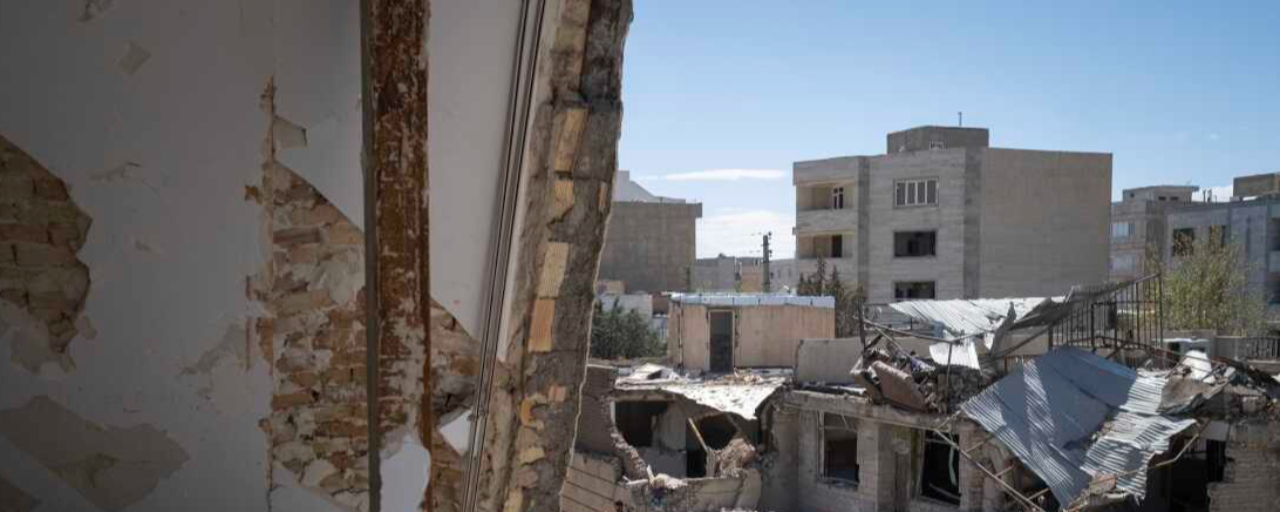
Within hours, multiple U.S. officials confirmed what reporters already suspected. The United States and Israel are preparing one of the most punishing bombing campaigns yet against Iran's energy infrastructure, and it could begin as soon as this weekend.
This isn't a strike planned in isolation. It's a strike planned around a deadline that has nothing to do with the battlefield. According to officials briefed on the discussions, there's an active push inside the administration to wrap up the campaign before financial markets open Monday.
Nobody has locked in an end date. But timing an act of war around a trading session tells its own story about how much this conflict now weighs on the economy it was supposed to protect.
Power plants and refineries are reportedly the leading targets. Officials have also floated cutting electricity across Tehran entirely, though no final decision had been made. The logic, according to a former U.S. military official, is straightforward: cripple the regime's ability to keep the lights on, and you cripple its ability to keep governing.
Trump has been building toward this moment publicly. Last week he posted on Truth Social that he'd destroy an Iranian bridge or power plant for every attack on a ship in the Strait of Hormuz. This weekend looks like the follow-through.
A joint U.S.-Israeli operation would mark Israel's return to active combat after it stood down during a U.S.-brokered truce — one Iran hasn't broken with a strike on Israeli territory since early summer.
But ask an Israeli official directly whether Israel is rejoining the fight, and the answer gets slippery. One official told CBS News that Israel hasn't been asked to participate and isn't aware any decision has been made to restart full operations. Israel's defense minister, Israel Katz, has been more blunt about what he'd prefer, saying earlier this week that Israel wants to strike Iran's energy targets — while conceding Washington hasn't given the green light.
That's the gap Trump has to close before any final order goes out. As of Friday, officials say, he hadn't given it.
The Pentagon Isn't Saying Much, on Purpose
Chief Pentagon spokesperson Sean Parnell wouldn't discuss targets ahead of a presidential decision. What he would say was blunt enough to fill the silence: the department is "locked and loaded, ready to execute the President's directives at a moment's notice."
Iran's response arrived almost as fast. A senior security official told Tasnim, a news agency tied to the Revolutionary Guards, that striking Iranian infrastructure would be "an act of madness," and that Tehran has a retaliation plan ready that includes hitting American energy infrastructure across the region.
When Trump met Netanyahu at the White House this week, the Israeli prime minister laid out three paths forward without pushing Trump toward any of them: a negotiated deal focused on removing Iran's nuclear material, continued economic pressure and blockade, or what officials described simply as a massive strike. Netanyahu followed up with Defense Secretary Pete Hegseth the next day. Trump, by every account, is the one who decides.
Markets Already Know Which Way This Is Leaning
Oil isn't waiting for the final order. Crude has climbed for most of the past month, and by Friday afternoon Brent was trading near $90 a barrel, up more than 1.5% on the day, while U.S. crude sat close to $85.50.
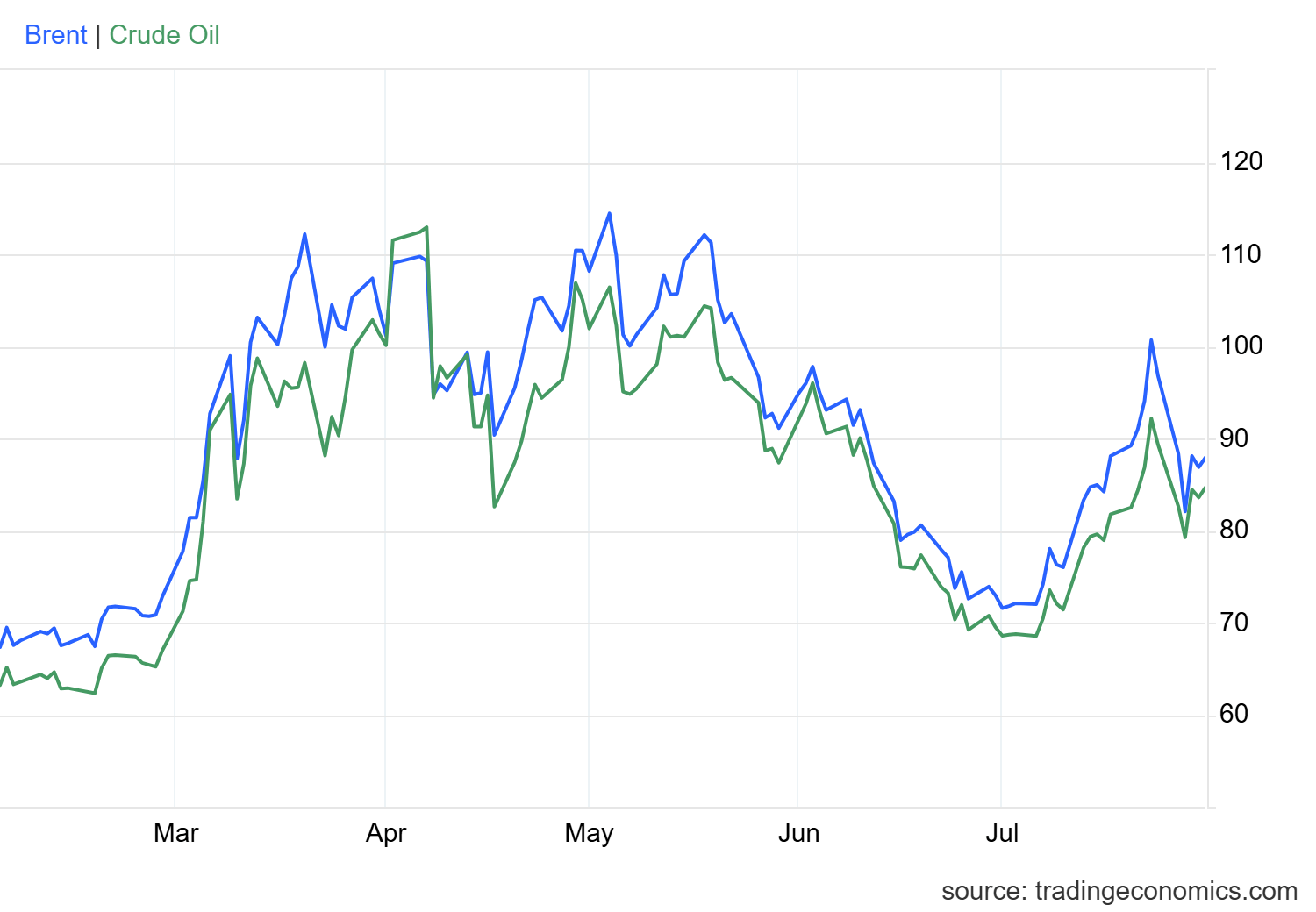
Both benchmarks are on pace for a monthly gain north of 20%, the strongest since March, driven less by any single strike than by the accumulating risk that the Strait of Hormuz, the route for close to a fifth of the world's oil, stops functioning as a reliable channel.
It came close to that this week. Iran's Revolutionary Guards said they halted two tankers attempting to transit the strait; four others reportedly turned back on their own after Iranian warnings. Ship-tracking data from Kpler showed two loaded tankers made it through regardless. Traffic hasn't stopped. It has gotten a great deal more nervous.
A Different Kind of Deal, Announced the Same Week
While one track of the Trump administration prepared for war, another quietly closed in on peace — just not in Iran.
On Thursday, Trump announced that his Board of Peace had struck an agreement with Hamas on the "complete disarmament" of armed groups in Gaza. The board published a 15-point roadmap the next morning, and senior Hamas official Basem Naim said the group had "agreed to the roadmap," pressing mediators to hold Israel to the same standard.
Israel wasn't nearly as enthusiastic. An Israeli official said the proposal didn't meet Jerusalem's demand for full demilitarization as a precondition for any troop withdrawal, and that Netanyahu's government had already raised those objections with envoy Tony Blair. Under the plan, both sides now have two weeks to turn the roadmap into a detailed implementation schedule — an arrangement U.S. officials describe as built on the assumption that neither side trusts the other to keep its word.
It's an odd split-screen for one presidency: threatening to black out Tehran on one channel, brokering a weapons handover in Gaza on the other. Whether either effort holds through the weekend may say more about the region's next six months than anything said at Camp David on Friday.