

نشر


Crypto Expert whale
·
--
هابطكيف تعاقب العناصر السيئة على سلسلة بلا عقود ذكية؟
أكثر جزء يثير الدهشة في هندسة بابل ليس مجرد عملية الرهن بحد ذاتها—بل كيف صمّموا آلية الإيقاف/الاقتطاع (slashing) مباشرة على الطبقة الأساسية في بيتكوين.
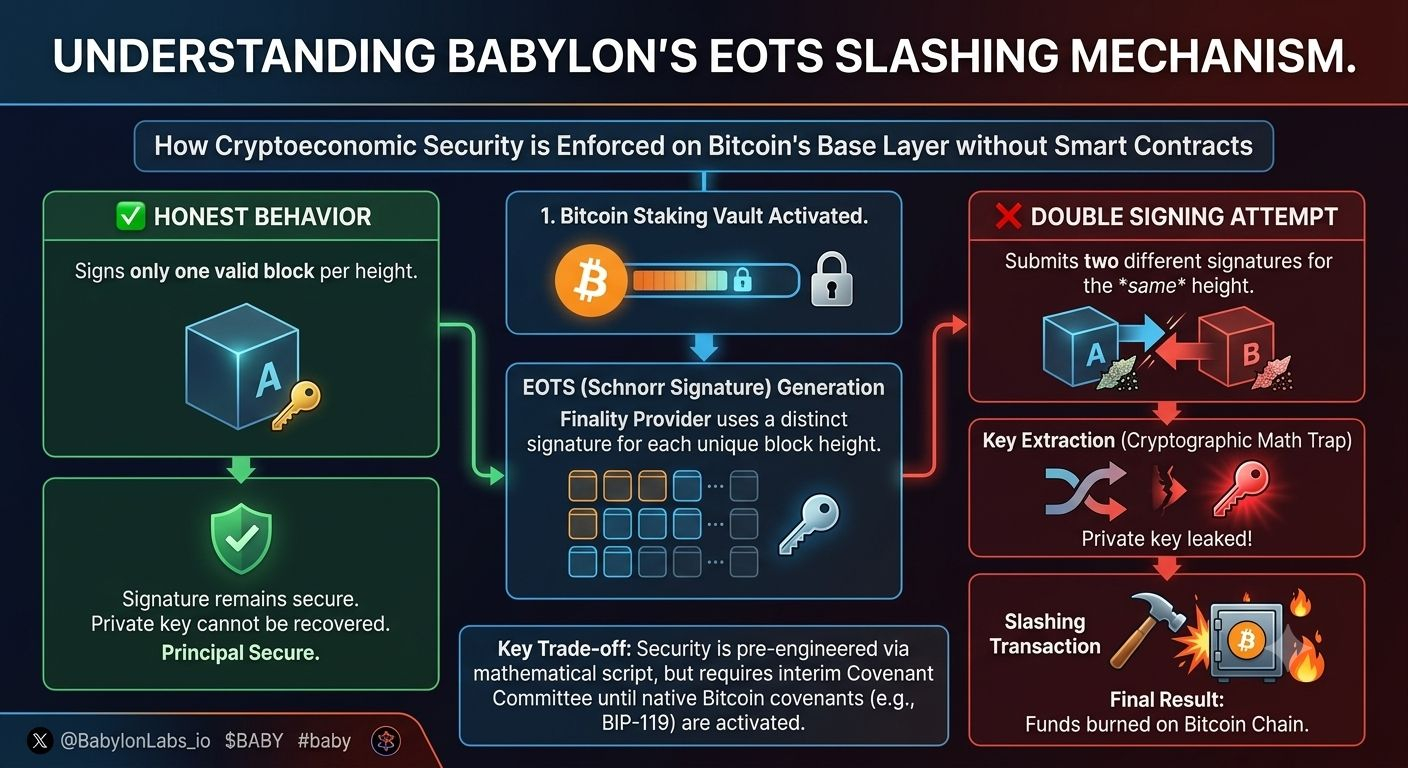
بدون الاعتماد على العقود الذكية، يستخدم بابل نظامه للإمضاء القابل للاستخراج لمرة واحدة (EOTS)، المبني على توقيعات شناور (Schnorr) في بيتكوين، لتمكين الـslashing. يعمل كمصيدة رياضية أنيقة لمزوّدي الإنهاء (Finality Providers).
إذا تصرّف مزوّد بسلوك خبيث ووقّع على بلوكين مختلفين عند الارتفاع نفسه (double signing)، تصبح مفاتيحه الخاصة قابلة للاستخراج من هاتين التوقيعتين المجمّعتين. وهذا يؤدي فعليًا إلى تسريب مفتاحه، مما يسمح لأي شخص بتنفيذ معاملة الـslashing على بيتكوين تحرق جزءًا من الأموال المرهونة.
لكن توجد هناك ملاحظة دقيقة في هذا التصميم: فهو يعتمد حاليًا على لجنة تعاهد (Covenant Committee) للمساعدة في تسهيل هذه المعاملات. وتهدف هذه اللجنة إلى حلٍّ مؤقت إلى أن تُدخل بيتكوين ميزات التعاهد الأصلية، مثلًا عبر مقترحات مثل BIP-119، وعندها يمكن استبدال آلية الإنفاذ خارج السلسلة بمنطق كامل على السلسلة.
هل نحن مرتاحون للاعتماد على هيكل اللجنة المؤقتة هذا، أم أن الأمان التشفير-اقتصادي لـEOTS كافٍ للحفاظ على التزام المدققين إلى أن تصل تعاهدات بيتكوين الأصلية؟
@BabylonLabs_io $BABY #baby
أكثر جزء يثير الدهشة في هندسة بابل ليس مجرد عملية الرهن بحد ذاتها—بل كيف صمّموا آلية الإيقاف/الاقتطاع (slashing) مباشرة على الطبقة الأساسية في بيتكوين.
بدون الاعتماد على العقود الذكية، يستخدم بابل نظامه للإمضاء القابل للاستخراج لمرة واحدة (EOTS)، المبني على توقيعات شناور (Schnorr) في بيتكوين، لتمكين الـslashing. يعمل كمصيدة رياضية أنيقة لمزوّدي الإنهاء (Finality Providers).
إذا تصرّف مزوّد بسلوك خبيث ووقّع على بلوكين مختلفين عند الارتفاع نفسه (double signing)، تصبح مفاتيحه الخاصة قابلة للاستخراج من هاتين التوقيعتين المجمّعتين. وهذا يؤدي فعليًا إلى تسريب مفتاحه، مما يسمح لأي شخص بتنفيذ معاملة الـslashing على بيتكوين تحرق جزءًا من الأموال المرهونة.
لكن توجد هناك ملاحظة دقيقة في هذا التصميم: فهو يعتمد حاليًا على لجنة تعاهد (Covenant Committee) للمساعدة في تسهيل هذه المعاملات. وتهدف هذه اللجنة إلى حلٍّ مؤقت إلى أن تُدخل بيتكوين ميزات التعاهد الأصلية، مثلًا عبر مقترحات مثل BIP-119، وعندها يمكن استبدال آلية الإنفاذ خارج السلسلة بمنطق كامل على السلسلة.
هل نحن مرتاحون للاعتماد على هيكل اللجنة المؤقتة هذا، أم أن الأمان التشفير-اقتصادي لـEOTS كافٍ للحفاظ على التزام المدققين إلى أن تصل تعاهدات بيتكوين الأصلية؟
@BabylonLabs_io $BABY #baby
إخلاء مسؤولية: يتضمن آراء جهات خارجية. لا تُعدّ نصيحة. يُمكن استخدام Binance AI دون أي ضمان. اطلع على الشروط والأحكام.