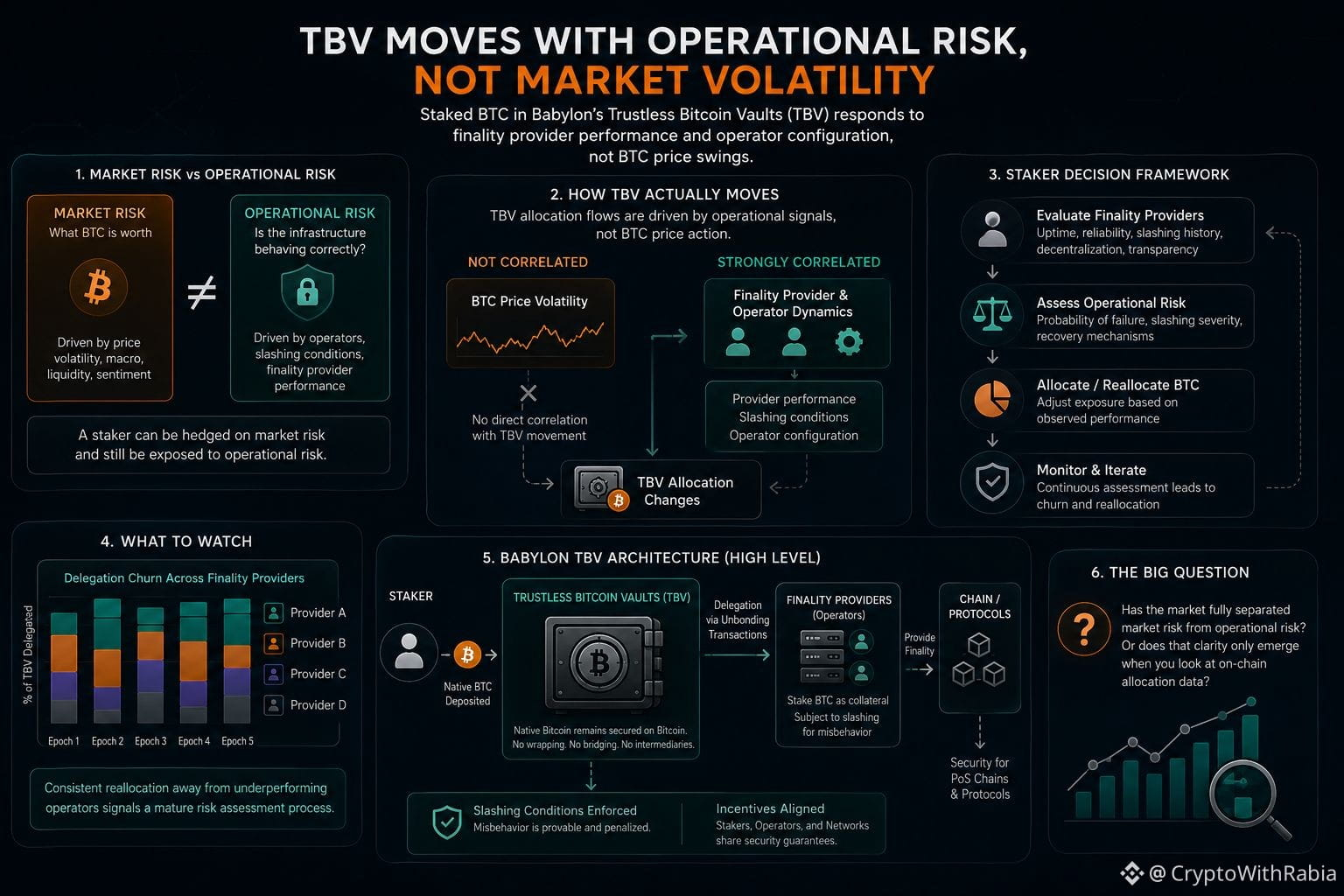
لاحظت شيئًا غير معتاد أثناء تتبّعي أرقام BTC المرهونة في بابل مقارنةً بتقلبات السوق العامة. افترضت أن TBV سيتذبذب بالتوازي مع تحركات سعر BTC، لأن هذا هو ما تفعله معظم لوحات معلومات الرهن الأخرى. لكن لم تكن هذه الارتباطية قائمة بالطريقة التي توقعتها.
وبالتعمق أكثر، أدركت أن حركة TBV لم تكن تتبع السعر إطلاقًا. كانت تتبع تغيّرات اختيار مزوّدي خدمة الاستمرارية (finality) وإعدادات المشغّلين. كان الرهان يعدّل مستوى التعرّض بناءً على أداء المزوّد وظروف الإقصاء/الخصم (slashing)، وليس بناءً على اتجاه BTC في ذلك الأسبوع.
غيّرت هذه الفروق طريقة تفكيري بشأن المخاطر هنا. غالبًا ما تُجمع مخاطر السوق ومخاطر التشغيل معًا باستمرار، لكنهما تجيبان عن أسئلة مختلفة تمامًا. مخاطر السوق تسأل: ما قيمة BTC؟ أما مخاطر التشغيل فتسأل: هل البنية التحتية التي تؤمّن ذلك BTC تعمل بشكل صحيح؟ يمكن للمرتهن أن يكون محوطًا بالكامل ضد الأولى بينما يظل مكشوفًا تجاه الثانية.
ما لا أستطيع حسمه بالكامل بعد هو كيف تُسعّر جهة الرهن هذه الطبقة التشغيلية داخليًا. هل تعتبر مخاطر مزوّدي الاستمرارية تكلفة ثابتة، أم أنها تقوم بتدوير فعّال للتخصيص بناءً على الاعتمادية التي تُلاحظ؟ غياب السلوك المرتبط بالسعر يشير إلى أن الاكتتاب الحقيقي يحدث، لكن من الصعب قياس عمق هذا التدقيق من خارج المنظومة.
في الفترة القادمة، أريد مراقبة معدل تبدّل التفويض عبر مزوّدي الاستمرارية، وليس فقط إجمالي TBV. إن عمليات إعادة التخصيص المتكررة بعيدًا عن المشغّلين ضعيفي الأداء ستخبرني أكثر عن مدى نضج تقييم هذه المخاطر مما قد يخبرنا به أي رقم بارز في الرهن.
يبقى في ذهني سؤال: هل قام السوق بفصل هاتين الفئتين من المخاطر بشكل كامل داخل تفكيره، أم أن هذا الفصل لا يظهر إلا عندما تنظر مباشرة إلى بيانات التخصيص على السلسلة.
@BabylonLabs_io #baby $BABY
$GIGGLE
وبالتعمق أكثر، أدركت أن حركة TBV لم تكن تتبع السعر إطلاقًا. كانت تتبع تغيّرات اختيار مزوّدي خدمة الاستمرارية (finality) وإعدادات المشغّلين. كان الرهان يعدّل مستوى التعرّض بناءً على أداء المزوّد وظروف الإقصاء/الخصم (slashing)، وليس بناءً على اتجاه BTC في ذلك الأسبوع.
غيّرت هذه الفروق طريقة تفكيري بشأن المخاطر هنا. غالبًا ما تُجمع مخاطر السوق ومخاطر التشغيل معًا باستمرار، لكنهما تجيبان عن أسئلة مختلفة تمامًا. مخاطر السوق تسأل: ما قيمة BTC؟ أما مخاطر التشغيل فتسأل: هل البنية التحتية التي تؤمّن ذلك BTC تعمل بشكل صحيح؟ يمكن للمرتهن أن يكون محوطًا بالكامل ضد الأولى بينما يظل مكشوفًا تجاه الثانية.
ما لا أستطيع حسمه بالكامل بعد هو كيف تُسعّر جهة الرهن هذه الطبقة التشغيلية داخليًا. هل تعتبر مخاطر مزوّدي الاستمرارية تكلفة ثابتة، أم أنها تقوم بتدوير فعّال للتخصيص بناءً على الاعتمادية التي تُلاحظ؟ غياب السلوك المرتبط بالسعر يشير إلى أن الاكتتاب الحقيقي يحدث، لكن من الصعب قياس عمق هذا التدقيق من خارج المنظومة.
في الفترة القادمة، أريد مراقبة معدل تبدّل التفويض عبر مزوّدي الاستمرارية، وليس فقط إجمالي TBV. إن عمليات إعادة التخصيص المتكررة بعيدًا عن المشغّلين ضعيفي الأداء ستخبرني أكثر عن مدى نضج تقييم هذه المخاطر مما قد يخبرنا به أي رقم بارز في الرهن.
يبقى في ذهني سؤال: هل قام السوق بفصل هاتين الفئتين من المخاطر بشكل كامل داخل تفكيره، أم أن هذا الفصل لا يظهر إلا عندما تنظر مباشرة إلى بيانات التخصيص على السلسلة.
@BabylonLabs_io #baby $BABY
$GIGGLE