كلما نظرت أكثر إلى تكامل Aave، كلما غيّر الطريقة التي أرى بها TBV.
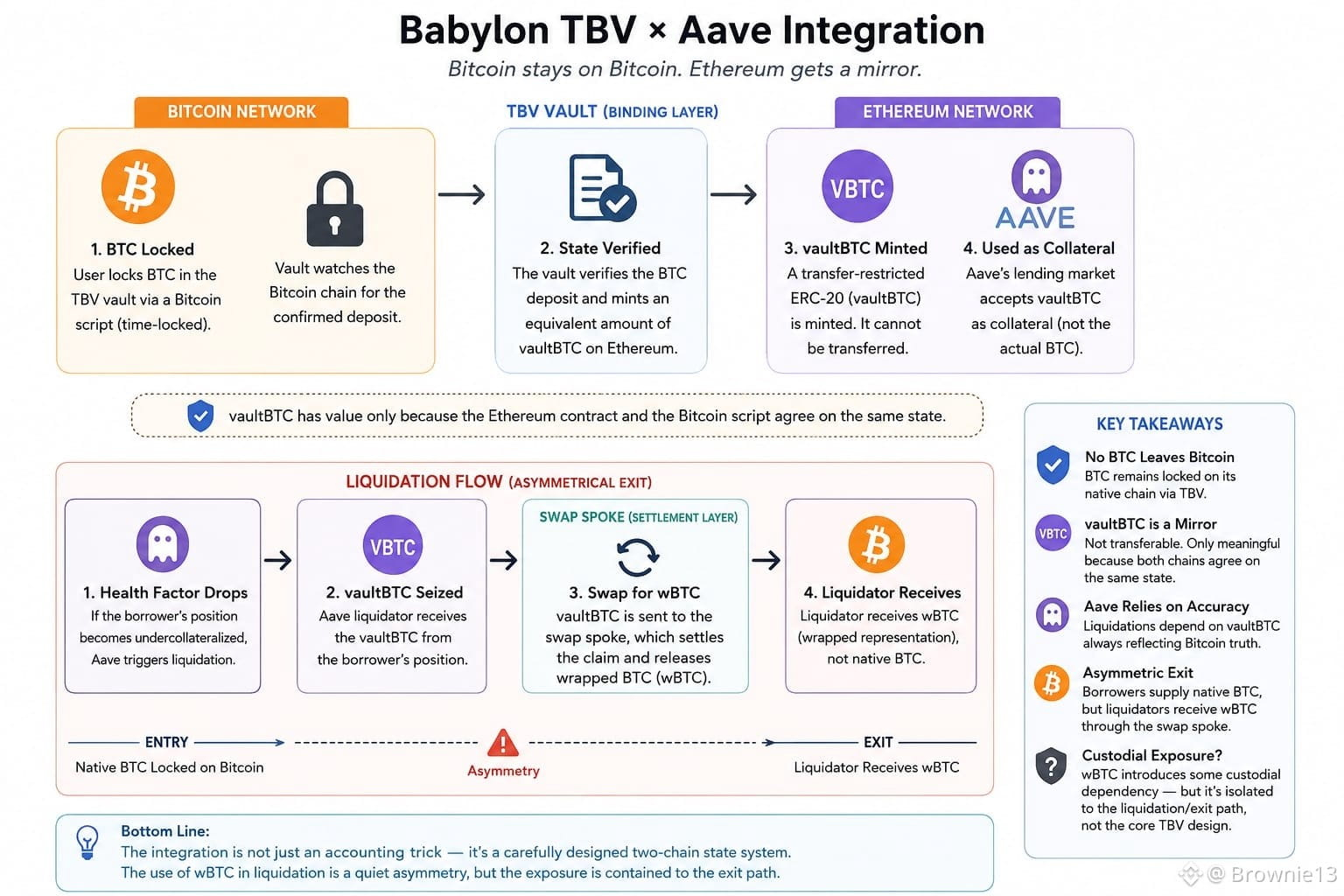
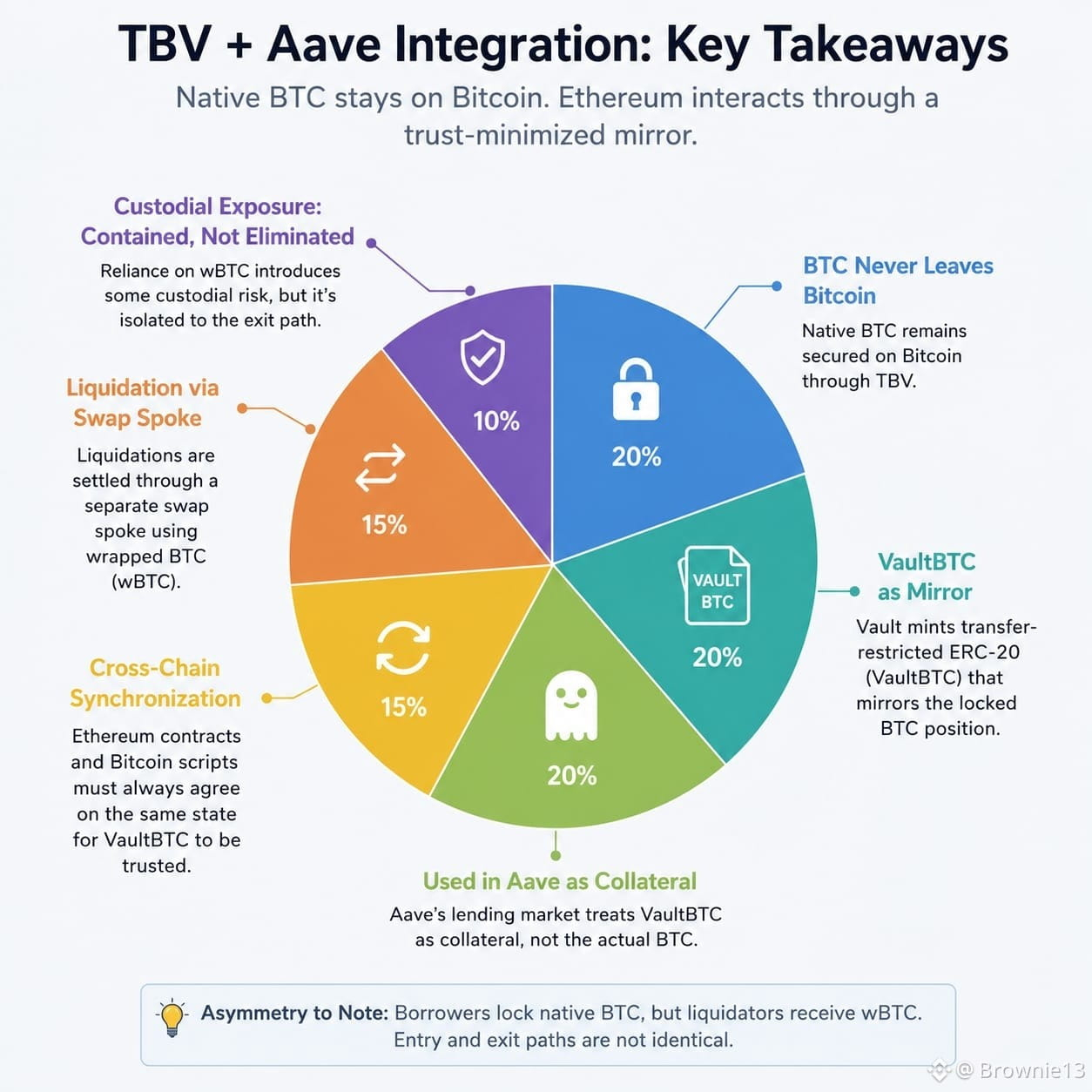
لا يغادر الـ BTC شبكة بيتكوين أبدًا، لكن الإيثريوم ما زال يحتاج شيئًا يشير إليه. لذلك تقوم الـ vault بإنشاء vaultbtc، وهو أصل ERC-20 خاضع لقيود التحويل، يعكس المركز المُقفل، وتتعامل معها سوق الإقراض في Aave كضمان بدلًا من العملة الفعلية.
هذه إحلالية دقيقة.
ليست vaultbtc تذكرة مطالبة قابلة للاسترداد من أي شخص؛ فهي غير قابلة للتحويل، ولا معنى لها إلا لأنها متزامنة في الحالة نفسها التي يتفق عليها عقد الإيثريوم وسكربت بيتكوين.
في البداية بدا الأمر كأنه مجرد خدعة محاسبية.
لكن العمل الحقيقي هو إبقاء نظرتي سلسلتين مختلفتين لدفعة واحدة متزامنتين، لأن منطق تصفية Aave يجب أن يثق بأن رصيد vaultbtc يعكس حقيقة بيتكوين في جميع الأوقات.
إذا حدثت التصفية، تتم التسوية عبر قناة swap منفصلة، ومُسعّرة في BTC مُلتف wrap btc بدلًا من الأصل الأصلي نفسه.
لذلك مسار الخروج ليس مطابقًا لمسار الدخول.
يستحق ملاحظة ذلك.
يحصل المقترضون على ضمان BTC أصلي عند الدخول، لكن يحصل المُصفيون على تمثيل مُلتف عند الخروج.
لا تناسق هادئ.
هل يعيد اعتماد الواجهة الخلفية على WBTC هذا التعرض الحِفظي الذي بُنيت TBV لإزالته، أم أنه محصور بدرجة كافية بحيث لا يهم?
@BabylonLabs_io
#baby $BABY
لا يغادر الـ BTC شبكة بيتكوين أبدًا، لكن الإيثريوم ما زال يحتاج شيئًا يشير إليه. لذلك تقوم الـ vault بإنشاء vaultbtc، وهو أصل ERC-20 خاضع لقيود التحويل، يعكس المركز المُقفل، وتتعامل معها سوق الإقراض في Aave كضمان بدلًا من العملة الفعلية.
هذه إحلالية دقيقة.
ليست vaultbtc تذكرة مطالبة قابلة للاسترداد من أي شخص؛ فهي غير قابلة للتحويل، ولا معنى لها إلا لأنها متزامنة في الحالة نفسها التي يتفق عليها عقد الإيثريوم وسكربت بيتكوين.
في البداية بدا الأمر كأنه مجرد خدعة محاسبية.
لكن العمل الحقيقي هو إبقاء نظرتي سلسلتين مختلفتين لدفعة واحدة متزامنتين، لأن منطق تصفية Aave يجب أن يثق بأن رصيد vaultbtc يعكس حقيقة بيتكوين في جميع الأوقات.
إذا حدثت التصفية، تتم التسوية عبر قناة swap منفصلة، ومُسعّرة في BTC مُلتف wrap btc بدلًا من الأصل الأصلي نفسه.
لذلك مسار الخروج ليس مطابقًا لمسار الدخول.
يستحق ملاحظة ذلك.
يحصل المقترضون على ضمان BTC أصلي عند الدخول، لكن يحصل المُصفيون على تمثيل مُلتف عند الخروج.
لا تناسق هادئ.
هل يعيد اعتماد الواجهة الخلفية على WBTC هذا التعرض الحِفظي الذي بُنيت TBV لإزالته، أم أنه محصور بدرجة كافية بحيث لا يهم?
@BabylonLabs_io
#baby $BABY