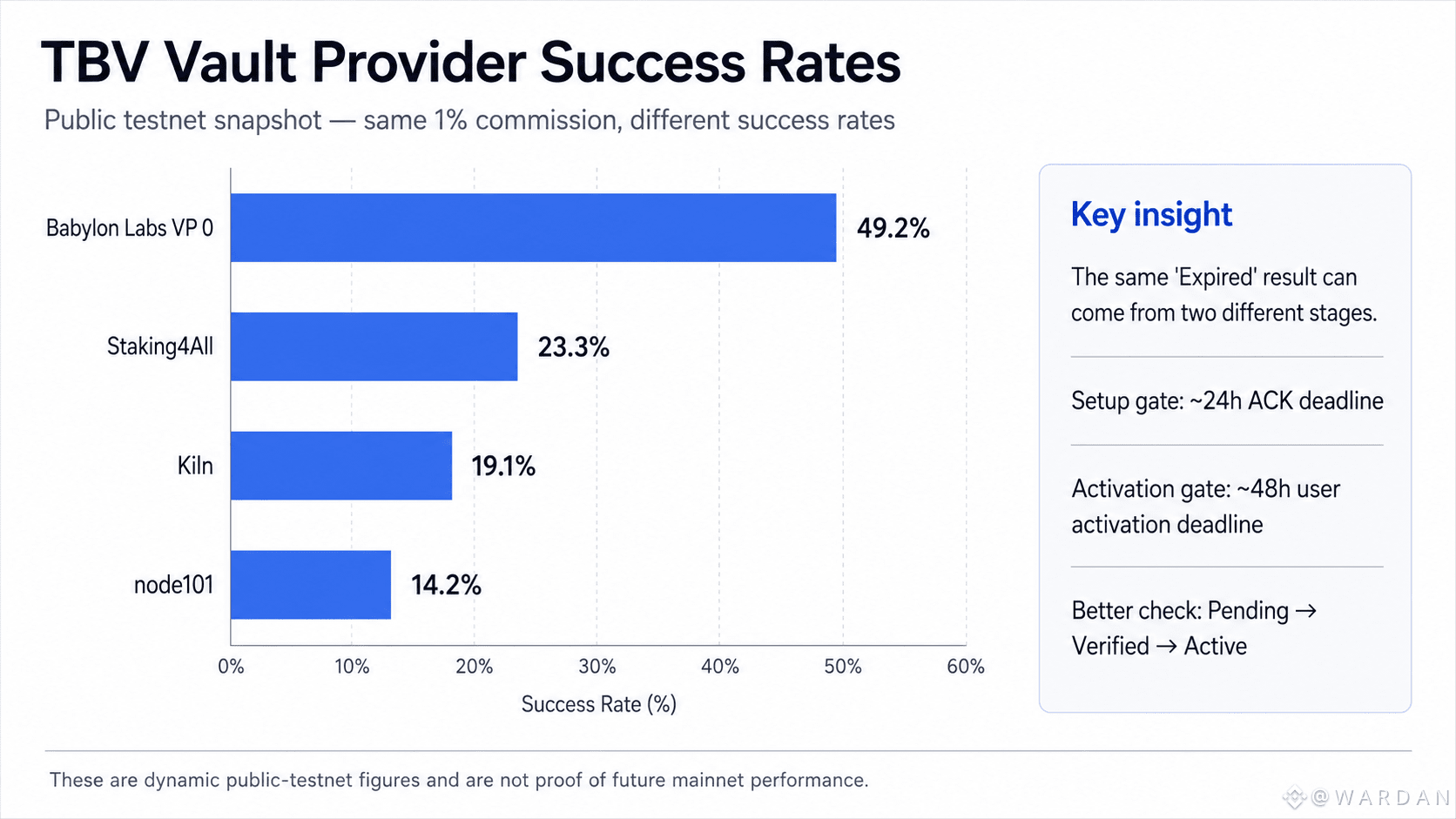
ما جذب انتباهي في شبكة الاختبار الخاصة بـ Babylon لأقبية البيتكوين غير القابلة للثقة (TBV) هو أن أربع صفحات لمزوّدي الأقبية أظهرت نفس عمولة 1%، لكن معدلات النجاح تراوحت بين 14.2% و49.2%. في البداية، بدا الأمر كأنه ترتيب. لكن الآلية جعلتني أقرأه بشكل مختلف. وبما أن هذه أرقام من شبكة اختبار متغيّرة، فسأستخدمها لتوجيه الأسئلة، لا للحسم في حكم يتعلق بموثوقية الشبكة الرئيسية.
يجب أن ينتقل القبو من Pending إلى Verified. خلال هذه المرحلة، يجب على مزوّد القبو والمشغّلين إكمال الإعداد والإقرارات خلال 24 ساعة. بعد ذلك، يجب على المودِع كشف سر التفعيل على Ethereum خلال نحو 48 ساعة لكي يصبح القبو Active.
إن فُوّتت أي بوابة، قد تكون التسمية النهائية نفسها: Expired.
هذه هي التفاصيل التي لن أتجاهلها. قد يختلط معدل نجاح عنوان رئيسي مع حدثين. قد يعكس أحدهما مشاكل في الإعداد أو التنسيق قبل Verified. والآخر قد يعكس مستخدمًا حصل على قبو جاهز لكنه لم يُكمل التفعيل. لذا قد يحتوي النسبة على إشارة من المزوّد، لكنها لا تُظهر من تسبب في كل حالة Expiry.
بالنسبة لاختبار @BabylonLabs_io $BABY على شبكة الاختبار، أرى تحققًا أفضل ضمن مسار مبني على المراحل (funnel): كم عدد الطلبات التي تصل إلى Verified، وكم عدد الأقبية التي وصلَت Verified وانتقلت إلى Active. ستكون هذه مقاييس مقترحة، وليست مؤشرات رسمية من Babylon (KPIs).
عند اختبار TBV، سجّل المزوّد، وأعلى حالة تم الوصول إليها، وما إذا تمّت محاولة التفعيل، والنتيجة النهائية. «قبوّي بقي Pending» أو «وصل إلى Verified لكنني لم أقم بتفعيله» يعطيان تعليقات أفضل من «مزوّدي فشل». #baby
يجب أن ينتقل القبو من Pending إلى Verified. خلال هذه المرحلة، يجب على مزوّد القبو والمشغّلين إكمال الإعداد والإقرارات خلال 24 ساعة. بعد ذلك، يجب على المودِع كشف سر التفعيل على Ethereum خلال نحو 48 ساعة لكي يصبح القبو Active.
إن فُوّتت أي بوابة، قد تكون التسمية النهائية نفسها: Expired.
هذه هي التفاصيل التي لن أتجاهلها. قد يختلط معدل نجاح عنوان رئيسي مع حدثين. قد يعكس أحدهما مشاكل في الإعداد أو التنسيق قبل Verified. والآخر قد يعكس مستخدمًا حصل على قبو جاهز لكنه لم يُكمل التفعيل. لذا قد يحتوي النسبة على إشارة من المزوّد، لكنها لا تُظهر من تسبب في كل حالة Expiry.
بالنسبة لاختبار @BabylonLabs_io $BABY على شبكة الاختبار، أرى تحققًا أفضل ضمن مسار مبني على المراحل (funnel): كم عدد الطلبات التي تصل إلى Verified، وكم عدد الأقبية التي وصلَت Verified وانتقلت إلى Active. ستكون هذه مقاييس مقترحة، وليست مؤشرات رسمية من Babylon (KPIs).
عند اختبار TBV، سجّل المزوّد، وأعلى حالة تم الوصول إليها، وما إذا تمّت محاولة التفعيل، والنتيجة النهائية. «قبوّي بقي Pending» أو «وصل إلى Verified لكنني لم أقم بتفعيله» يعطيان تعليقات أفضل من «مزوّدي فشل». #baby