I keep coming back to one technical detail: every legitimate Bitcoin spending path in a Babylon Trustless Bitcoin Vault is constructed and signed before the vault becomes active.
That is what makes the design powerful. BTC stays inside a depositor-owned Taproot output on Bitcoin, while the pre-signed transaction graph limits future movement to the redemption, liquidation, challenge, and refund paths agreed during setup. After activation, nobody can simply invent a new route for the coins. BABE-based proofs and a challenge window then help enforce the matching Ethereum-side outcome without relying on a bridge or custodian.
But cryptography can only enforce what was approved.
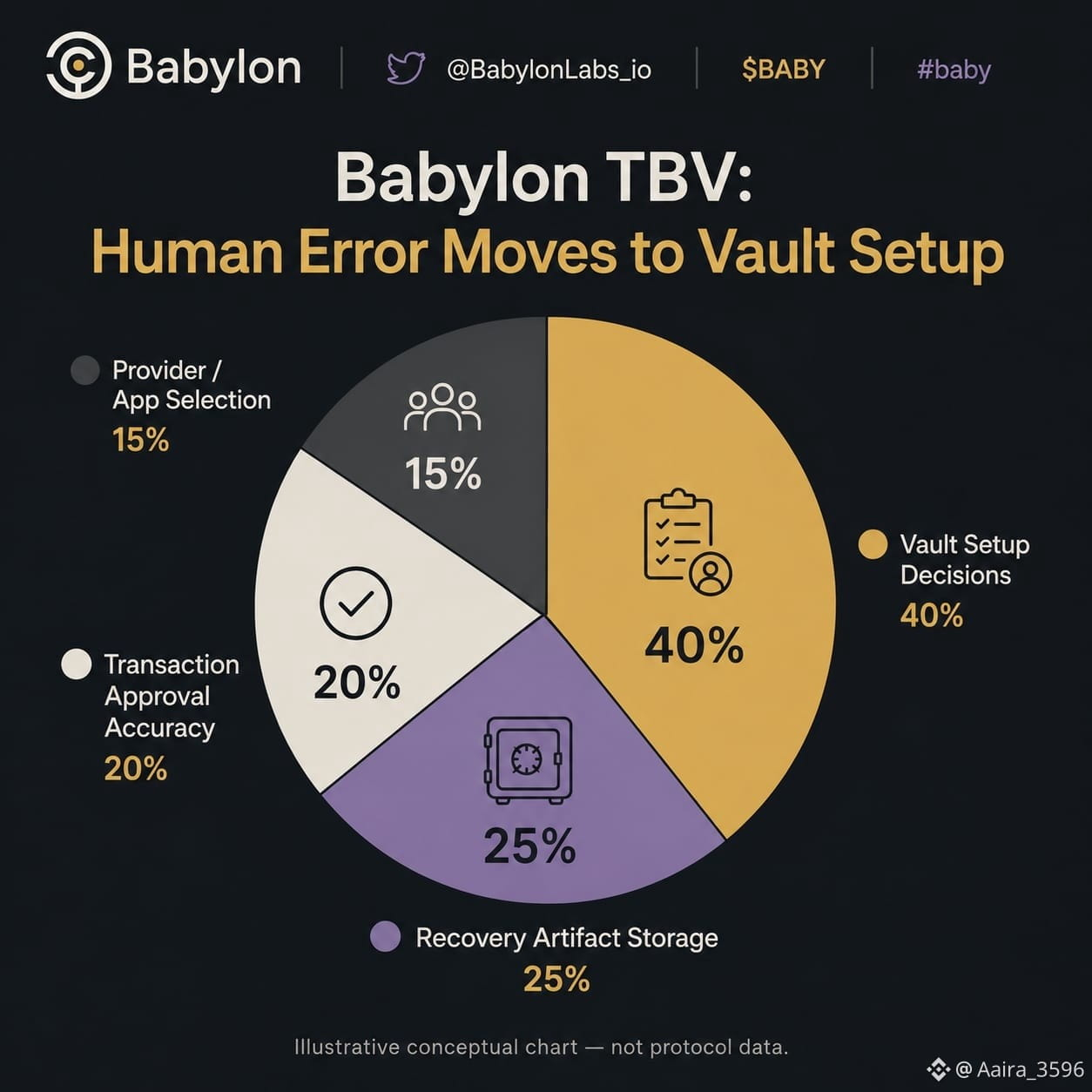
The depositor still chooses the amount, application, Vault Provider, and transaction approvals. They also need to preserve the vault-specific recovery artifacts required for the self-claim fallback. A mistaken choice, a rushed signature, or a missing backup may not look dramatic when the vault is created, yet it can matter much later when the BTC needs to move.
It reminds me of setting a permanent bank instruction: automation removes repeated manual risk, but the original instruction still has to be correct. The safer the system becomes after setup, the more important that first setup moment becomes.
That does not make TBV insecure. It means the human-risk surface has shifted from ongoing custody and bridge trust toward configuration, signing, and long-term evidence storage.
For me, the next real test is usability: can @BabylonLabs_io make those setup decisions understandable enough that ordinary holders notice mistakes before Bitcoin makes them permanent?
Or does #baby still need a stronger verification layer around vault creation before the wider $BABY ecosystem is truly ready for mainstream users?
That is what makes the design powerful. BTC stays inside a depositor-owned Taproot output on Bitcoin, while the pre-signed transaction graph limits future movement to the redemption, liquidation, challenge, and refund paths agreed during setup. After activation, nobody can simply invent a new route for the coins. BABE-based proofs and a challenge window then help enforce the matching Ethereum-side outcome without relying on a bridge or custodian.
But cryptography can only enforce what was approved.
The depositor still chooses the amount, application, Vault Provider, and transaction approvals. They also need to preserve the vault-specific recovery artifacts required for the self-claim fallback. A mistaken choice, a rushed signature, or a missing backup may not look dramatic when the vault is created, yet it can matter much later when the BTC needs to move.
It reminds me of setting a permanent bank instruction: automation removes repeated manual risk, but the original instruction still has to be correct. The safer the system becomes after setup, the more important that first setup moment becomes.
That does not make TBV insecure. It means the human-risk surface has shifted from ongoing custody and bridge trust toward configuration, signing, and long-term evidence storage.
For me, the next real test is usability: can @BabylonLabs_io make those setup decisions understandable enough that ordinary holders notice mistakes before Bitcoin makes them permanent?
Or does #baby still need a stronger verification layer around vault creation before the wider $BABY ecosystem is truly ready for mainstream users?