#baby $BABY
واصلتُ الرجوع إلى تفصيل واحد أثناء اطلاعي على مواد “BSN” في بابل. توحي رسائلهم بأن طبقة الأمان الموحدة هذه تعمل بالفعل عبر نظام بيئي كامل—وأن عبارة “تؤمّن عشرات السلاسل” هي التي علقت في ذهني. لكن كلما تعمّقت أكثر في وثائق الحوكمة الفعلية ومناقشات المقترحات، أدركت أن هذه العبارة تؤدي قدرًا كبيرًا من العمل.
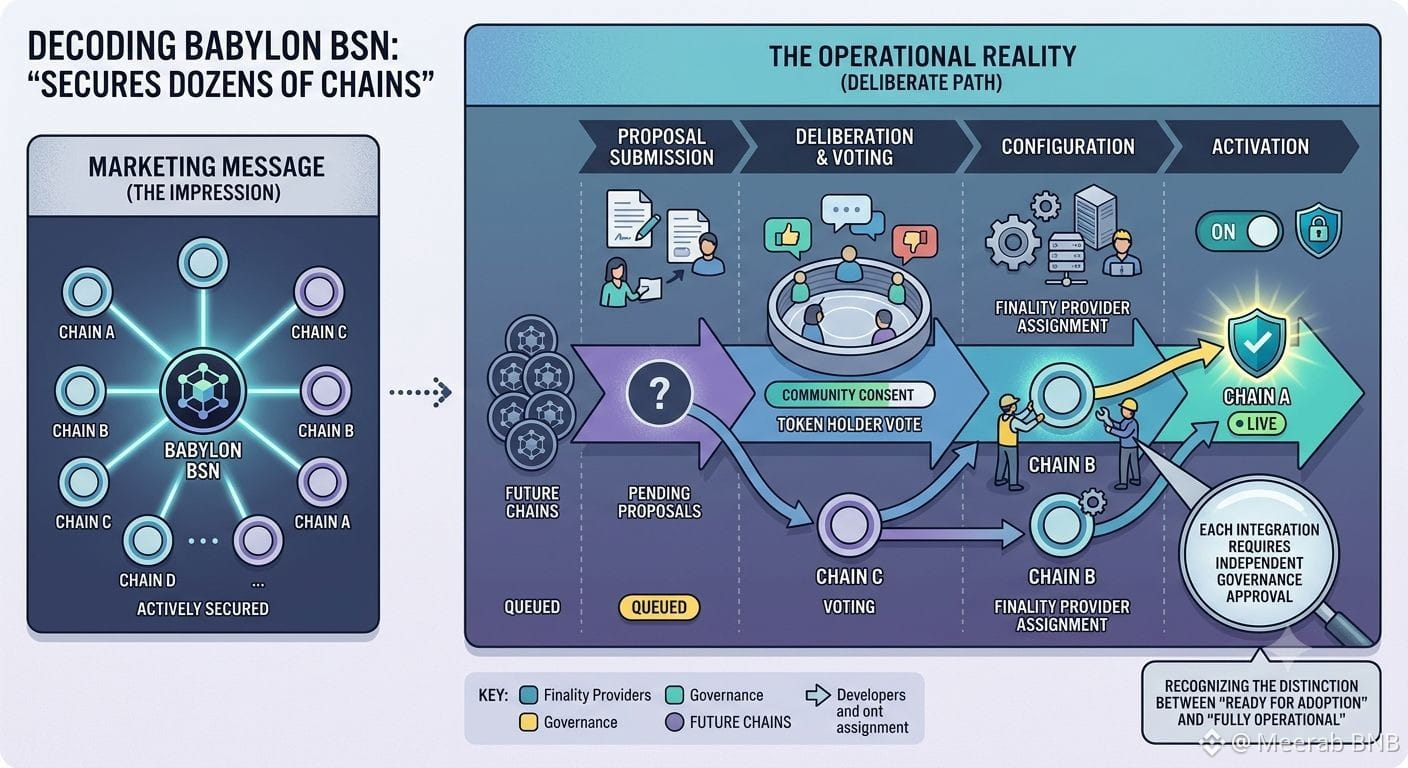
ما وجدته هو أن كل عملية تكامل تتبع هذا المسار المقصود خطوة بخطوة. كان تسلسل “Union” مثيرًا بشكل خاص—إذ عرض العملية كاملة بوضوح. أولًا يتم تقديم المقترح، ثم تمر فترة انتظار حيث يتداول حاملو الرموز، وبعد ذلك يتم إجراء تصويت رسمي. ولا تصل إلى الجزء التقني إلا بعد اجتياز ذلك: حيث يتم تعيين مزوّدي الإنهاء (finality) وتكوينهم. ثم—في النهاية—تتفعّل تغطية الأمان بالفعل.
ليس الأمر أن هذا النهج خاطئ. بل على العكس، ربما إن اشتراط موافقة المجتمع على كل سلسلة جديدة يمنع الكثير من المتاعب في المستقبل. لكن هذا يغيّر طريقة فهمي لتأطير “نسيج الأمان المشترك”. فالمعنى الحقيقي هو: “أمان يتم تمديده إلى سلاسل واحدة تلو الأخرى، مع اشتراط موافقة حوكمية خاصة بكل سلسلة.” إنها عملية إطلاق أكثر حذرًا وأكثر تفتّتًا مما توحي به عملية التسويق.
وهذا ما جعلني أتساءل عن الحالة الفعلية لتلك “العشرات من السلاسل”. بعضها يعمل بوضوح، لكن كم منها ما زال يجلس في مراحل مختلفة من مراجعة المقترحات أو ينتظر أن يتم تنظيم مجموعة المدققين (validator set) المناسبة؟ إنها من تلك الأشياء التي لا تنتبه لها إلا عندما تتوقف عن النظر إلى الموقع وتبدأ بقراءة المقترحات نفسها. الفرق بين ما هو مُعلن وما يجري فعليًا ليس بالضرورة أمرًا مُضلِّلًا—لكنه بالتأكيد يستحق الانتباه.
@BabylonLabs_io
واصلتُ الرجوع إلى تفصيل واحد أثناء اطلاعي على مواد “BSN” في بابل. توحي رسائلهم بأن طبقة الأمان الموحدة هذه تعمل بالفعل عبر نظام بيئي كامل—وأن عبارة “تؤمّن عشرات السلاسل” هي التي علقت في ذهني. لكن كلما تعمّقت أكثر في وثائق الحوكمة الفعلية ومناقشات المقترحات، أدركت أن هذه العبارة تؤدي قدرًا كبيرًا من العمل.
ما وجدته هو أن كل عملية تكامل تتبع هذا المسار المقصود خطوة بخطوة. كان تسلسل “Union” مثيرًا بشكل خاص—إذ عرض العملية كاملة بوضوح. أولًا يتم تقديم المقترح، ثم تمر فترة انتظار حيث يتداول حاملو الرموز، وبعد ذلك يتم إجراء تصويت رسمي. ولا تصل إلى الجزء التقني إلا بعد اجتياز ذلك: حيث يتم تعيين مزوّدي الإنهاء (finality) وتكوينهم. ثم—في النهاية—تتفعّل تغطية الأمان بالفعل.
ليس الأمر أن هذا النهج خاطئ. بل على العكس، ربما إن اشتراط موافقة المجتمع على كل سلسلة جديدة يمنع الكثير من المتاعب في المستقبل. لكن هذا يغيّر طريقة فهمي لتأطير “نسيج الأمان المشترك”. فالمعنى الحقيقي هو: “أمان يتم تمديده إلى سلاسل واحدة تلو الأخرى، مع اشتراط موافقة حوكمية خاصة بكل سلسلة.” إنها عملية إطلاق أكثر حذرًا وأكثر تفتّتًا مما توحي به عملية التسويق.
وهذا ما جعلني أتساءل عن الحالة الفعلية لتلك “العشرات من السلاسل”. بعضها يعمل بوضوح، لكن كم منها ما زال يجلس في مراحل مختلفة من مراجعة المقترحات أو ينتظر أن يتم تنظيم مجموعة المدققين (validator set) المناسبة؟ إنها من تلك الأشياء التي لا تنتبه لها إلا عندما تتوقف عن النظر إلى الموقع وتبدأ بقراءة المقترحات نفسها. الفرق بين ما هو مُعلن وما يجري فعليًا ليس بالضرورة أمرًا مُضلِّلًا—لكنه بالتأكيد يستحق الانتباه.
@BabylonLabs_io