@BabylonLabs_io
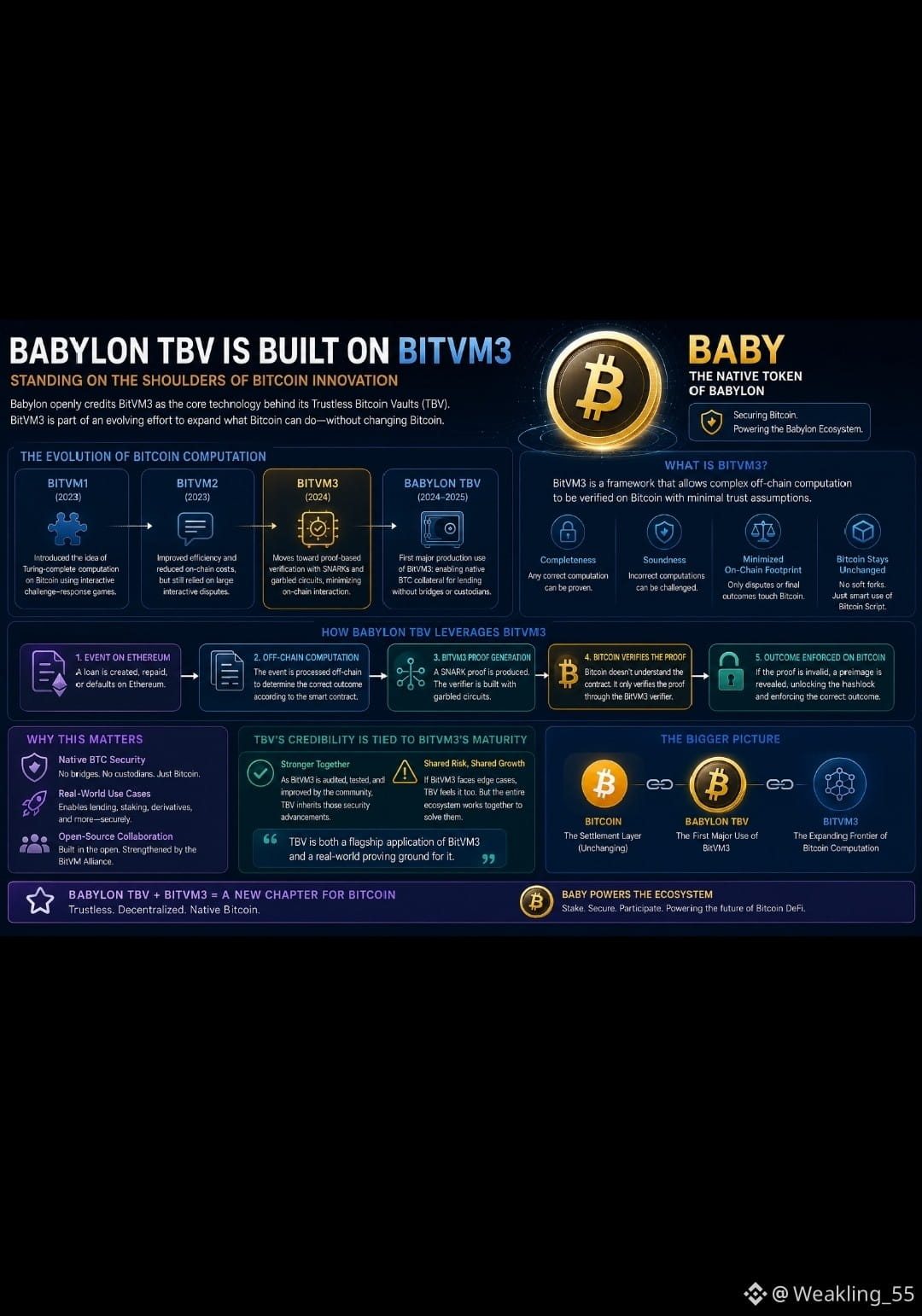
لاحظت شيئًا ما أثناء تتبّعي ردود/إقرارات بابل الخاصة بها في وثائقها؛ فهي مباشرة جدًا في نسبة الفضل إلى BitVM3 باعتبارها التقنية التي بُنيت عليها كامل تصميمها لصندوقها الموثوق عديم الثقة. جعلني ذلك فضوليًا بما يكفي لأن أتراجع قليلًا عن TBV نفسها وألقي نظرة على ما الذي تمثله BitVM3 فعلًا ضمن النقاش الأوسع حول برمجة سكربتات بيتكوين.
ما يبدو مثيرًا للاهتمام هو أن BitVM3 ليست حقًا اختراعًا من بابل؛ بل هي جزء من سلسلة متطورة من المحاولات لتمكين بيتكوين من تنفيذ منطق أكثر تعقيدًا مما كانت لغة سكربت الخاصة بها مصممة أصلًا للتعامل معه. الإصدارات الأقدم كانت تعتمد بشكل كبير على ألعاب تحدٍّ/استجابة تفاعلية ضخمة، أي تنفيذ “متفائل” حيث تفترض الصحة ما لم يعترض أحد عليها. يبدو أن BitVM3 يدفع ذلك إلى أبعد من مجرد التفاؤل، باتجاه التحقق المعتمد على الإثبات بدلًا من التفاؤل الخالص، وهذا يغيّر طريقة حل النزاعات فعليًا على السلسلة.
هذا يجعلني أفكر بأن بابل تموضعت أقل كـ بروتوكول مستقل وأكثر كواحدة من أولى المحاولات الجادة للإسقاط بهذا “البدائي/الprimitive” على شيء ملموس: ضمانات BTC أصلية للإقراض. السؤال الذي يتبادر إلى ذهني هو: هل مصداقية TBV أصبحت مرتبطة الآن بنضج BitVM3؟ إذا تطورت BitVM3، أو خضعت لمراجعات وتدقيق إضافية، أو كشفت حالات حافة غير متوقعة عبر تعاون BitVM Alliance الأوسع، فهل سترث TBV تلقائيًا نفس تلك “آلام النمو” تدريجيًا؟
لكنني لست متأكدًا تمامًا أنها بالضرورة نقطة ضعف، لأن البناء على بدائي يجري فحصه من مجتمع مفتوح المصدر كاملًا قد يكون أكثر أمانًا من شيء تم تطويره بمعزل. من وجهة النظر من الخارج، تشعر TBV وكأنها ساحة اختبار مبكرة لـ BitVM3 بقدر ما تكون BitVM3 بنية تحتية لـ TBV. ربما يكون هذا هو الاختبار الحقيقي القادم... أيًا كان، الوقت سيخبرنا 👍
$UAI
$COTI
$BABY
#baby
لاحظت شيئًا ما أثناء تتبّعي ردود/إقرارات بابل الخاصة بها في وثائقها؛ فهي مباشرة جدًا في نسبة الفضل إلى BitVM3 باعتبارها التقنية التي بُنيت عليها كامل تصميمها لصندوقها الموثوق عديم الثقة. جعلني ذلك فضوليًا بما يكفي لأن أتراجع قليلًا عن TBV نفسها وألقي نظرة على ما الذي تمثله BitVM3 فعلًا ضمن النقاش الأوسع حول برمجة سكربتات بيتكوين.
ما يبدو مثيرًا للاهتمام هو أن BitVM3 ليست حقًا اختراعًا من بابل؛ بل هي جزء من سلسلة متطورة من المحاولات لتمكين بيتكوين من تنفيذ منطق أكثر تعقيدًا مما كانت لغة سكربت الخاصة بها مصممة أصلًا للتعامل معه. الإصدارات الأقدم كانت تعتمد بشكل كبير على ألعاب تحدٍّ/استجابة تفاعلية ضخمة، أي تنفيذ “متفائل” حيث تفترض الصحة ما لم يعترض أحد عليها. يبدو أن BitVM3 يدفع ذلك إلى أبعد من مجرد التفاؤل، باتجاه التحقق المعتمد على الإثبات بدلًا من التفاؤل الخالص، وهذا يغيّر طريقة حل النزاعات فعليًا على السلسلة.
هذا يجعلني أفكر بأن بابل تموضعت أقل كـ بروتوكول مستقل وأكثر كواحدة من أولى المحاولات الجادة للإسقاط بهذا “البدائي/الprimitive” على شيء ملموس: ضمانات BTC أصلية للإقراض. السؤال الذي يتبادر إلى ذهني هو: هل مصداقية TBV أصبحت مرتبطة الآن بنضج BitVM3؟ إذا تطورت BitVM3، أو خضعت لمراجعات وتدقيق إضافية، أو كشفت حالات حافة غير متوقعة عبر تعاون BitVM Alliance الأوسع، فهل سترث TBV تلقائيًا نفس تلك “آلام النمو” تدريجيًا؟
لكنني لست متأكدًا تمامًا أنها بالضرورة نقطة ضعف، لأن البناء على بدائي يجري فحصه من مجتمع مفتوح المصدر كاملًا قد يكون أكثر أمانًا من شيء تم تطويره بمعزل. من وجهة النظر من الخارج، تشعر TBV وكأنها ساحة اختبار مبكرة لـ BitVM3 بقدر ما تكون BitVM3 بنية تحتية لـ TBV. ربما يكون هذا هو الاختبار الحقيقي القادم... أيًا كان، الوقت سيخبرنا 👍
$UAI
$COTI
$BABY
#baby