اعتقدت أن التقطيع يدور في الغالب حول خسارة جزء من الرهان والمضي قدمًا… أصلح المشكلة، انتظر قليلًا ثم عُد كما لو لم يحدث شيء. كلما بحثت أكثر في @BabylonLabs_io ، أدركت أن الأمر ليس كذلك في هذه الحالة.
ما فاجأني لم يكن مقدار ما يُقتطع… بل كيف تتعامل الشبكة مع الهوية بعد حدوث ذلك.
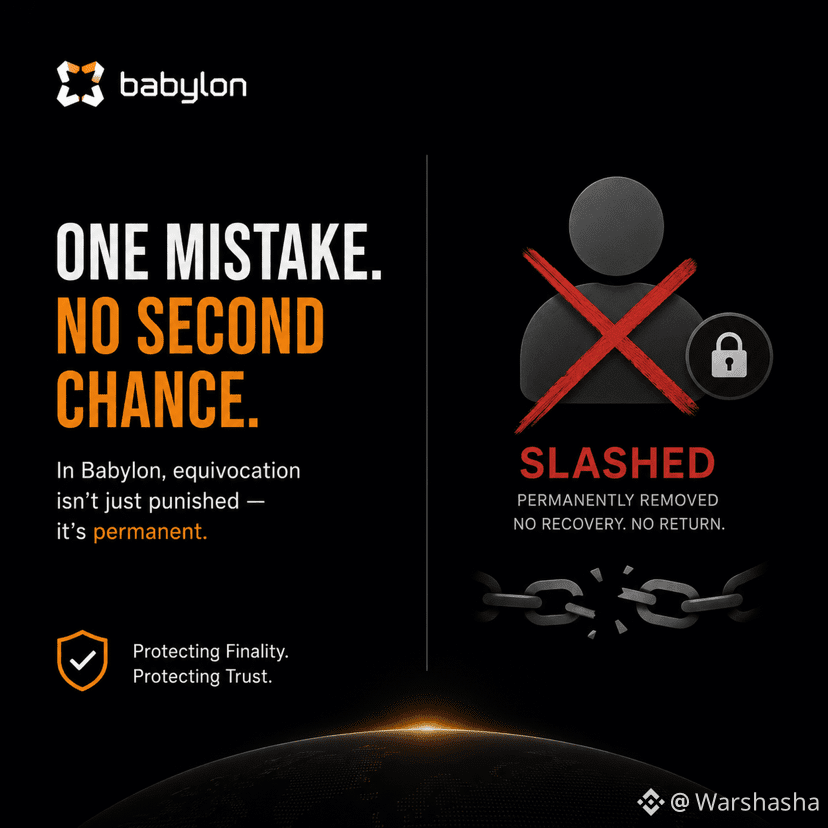
إذا قام مزوّد نهائية (Finality Provider) بالتوقيع المزدوج، فهذا في الواقع يعني نهاية تلك الهوية. تنخفض قوة التصويت، ويُوسَم المزوّد بأنه مُسحوب/مُقتطع (slashed)، ولا توجد مسار “طبيعي” يعود فيه نفس المفتاح بهدوء لاحقًا. جلست مع هذه الفكرة لبعض الوقت لأن ذلك يغيّر الإحساس الكامل بدور المزوّد.
هذا ليس فقط “ادفع غرامة وحاول مجددًا”
بل أشبه بـ… كسر الثقة مرة واحدة، والشبكة تتذكر إلى الأبد.
أفهم لماذا صمّموا الأمر بهذه الطريقة. إذا كانت النهائية (Finality) من المفترض أن تحمي الجميع، فربما لا ينبغي للنظام أن يستمر في مطالبة المستخدمين بالثقة في هوية عبَرت الخط مرة واحدة بالفعل. هذه رسالة قوية، وبصراحة ربما تجعل المشغّلين يفكرون مرتين قبل اتخاذ اختصارات.
لكنني كذلك أتساءل عن الجانب الآخر…
ماذا لو لم تكن المشكلة جشعًا، بل بُنية تحتية سيئة، أو مشكلة في مفتاح، أو فشل غريب لم يتوقعه أحد؟ الإزالة الدائمة قاعدة واضحة، لكن القواعد الواضحة قد تبدو قاسية عندما تتعقد الأمور في الحياة الواقعية.
لذا نعم، لا أرى هذا حقًا على أنه “صارم مقابل مرن”
أراه كأن بابل (Babylon) تختار الثقة طويلة الأمد بدل فرص ثانية… وهذه مقايضة لا أعتقد أن كثيرًا من الناس يتحدثون عنها.
هل تفضّل أن تغفر الشبكة للمشغّلين بعد أن يدفعوا ثمن الخطأ… أم ألا تطلب أبدًا من المستخدمين الثقة بتلك الهوية نفسها مرة أخرى؟
@BabylonLabs_io #baby $BABY
ما فاجأني لم يكن مقدار ما يُقتطع… بل كيف تتعامل الشبكة مع الهوية بعد حدوث ذلك.
إذا قام مزوّد نهائية (Finality Provider) بالتوقيع المزدوج، فهذا في الواقع يعني نهاية تلك الهوية. تنخفض قوة التصويت، ويُوسَم المزوّد بأنه مُسحوب/مُقتطع (slashed)، ولا توجد مسار “طبيعي” يعود فيه نفس المفتاح بهدوء لاحقًا. جلست مع هذه الفكرة لبعض الوقت لأن ذلك يغيّر الإحساس الكامل بدور المزوّد.
هذا ليس فقط “ادفع غرامة وحاول مجددًا”
بل أشبه بـ… كسر الثقة مرة واحدة، والشبكة تتذكر إلى الأبد.
أفهم لماذا صمّموا الأمر بهذه الطريقة. إذا كانت النهائية (Finality) من المفترض أن تحمي الجميع، فربما لا ينبغي للنظام أن يستمر في مطالبة المستخدمين بالثقة في هوية عبَرت الخط مرة واحدة بالفعل. هذه رسالة قوية، وبصراحة ربما تجعل المشغّلين يفكرون مرتين قبل اتخاذ اختصارات.
لكنني كذلك أتساءل عن الجانب الآخر…
ماذا لو لم تكن المشكلة جشعًا، بل بُنية تحتية سيئة، أو مشكلة في مفتاح، أو فشل غريب لم يتوقعه أحد؟ الإزالة الدائمة قاعدة واضحة، لكن القواعد الواضحة قد تبدو قاسية عندما تتعقد الأمور في الحياة الواقعية.
لذا نعم، لا أرى هذا حقًا على أنه “صارم مقابل مرن”
أراه كأن بابل (Babylon) تختار الثقة طويلة الأمد بدل فرص ثانية… وهذه مقايضة لا أعتقد أن كثيرًا من الناس يتحدثون عنها.
هل تفضّل أن تغفر الشبكة للمشغّلين بعد أن يدفعوا ثمن الخطأ… أم ألا تطلب أبدًا من المستخدمين الثقة بتلك الهوية نفسها مرة أخرى؟
@BabylonLabs_io #baby $BABY