كنت في الواقع أبحث في نموذج إتاحة/استثمار البيتكوين الخاص بـ Babylon (Bitcoin staking)، لكن تفصيلة صغيرة واحدة في الوثائق غيّرت تمامًا ما انتهيتُ إلى التفكير فيه.
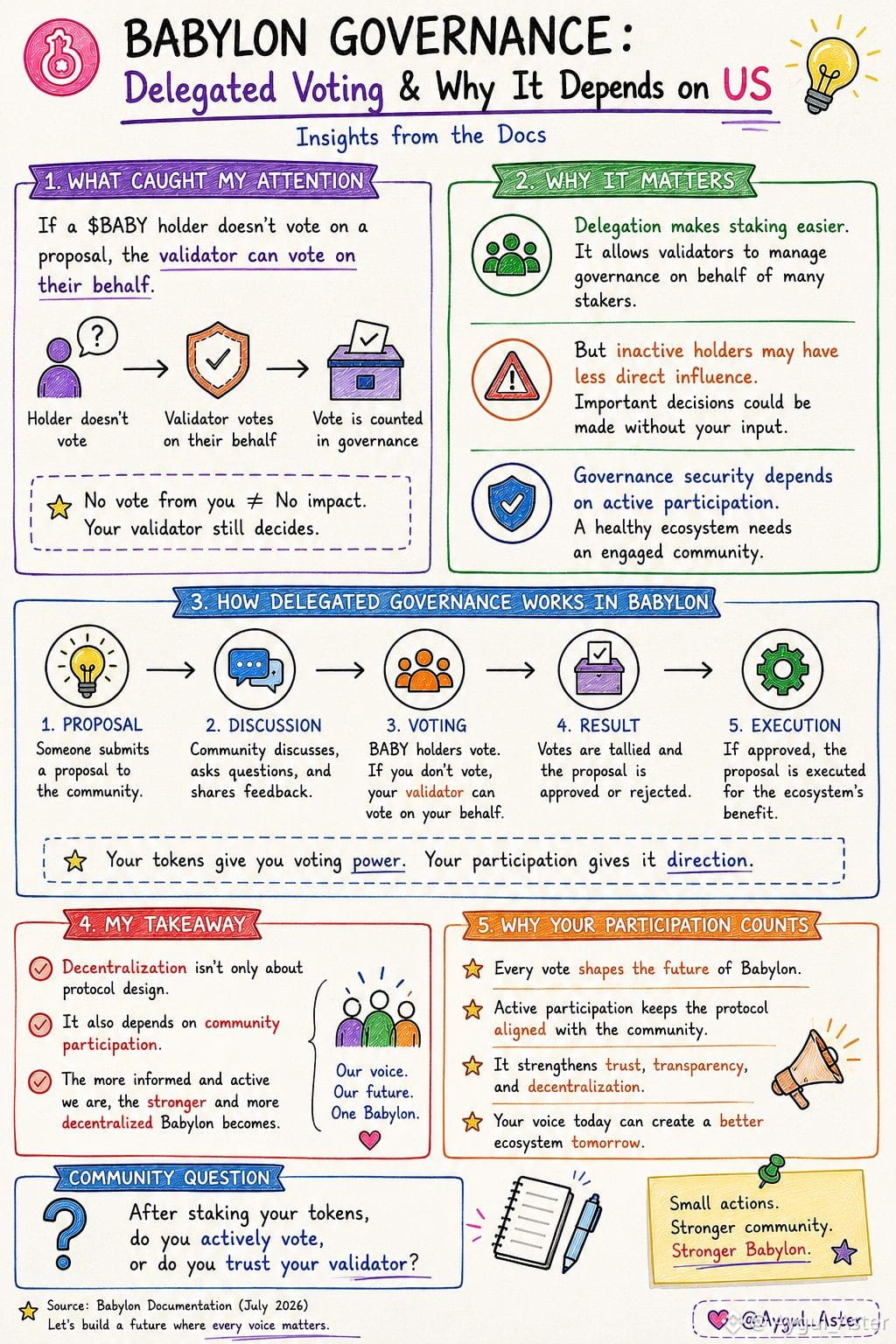
كنت أتوقع أن أقضي وقتي في تعلّم المزيد عن استثمار البيتكوين، لكنني انتهيت إلى قراءة الكثير عن الحوكمة بدلًا من ذلك. أثناء اطلاعي على وثائق Babylon، لاحظت شيئًا جعلني أتوقف فعلًا. إذا لم يُصوِّت مالك <0>$BABY </0> على مقترح، فيمكن للمُدلِّف/المدقِّق المفوَّض نيابةً عنه أن يصوّت باسمه ضمن نموذج الحوكمة. أعلم أن هذا ليس شيئًا ابتكرته Babylon وحدها، لكن بصراحة لم يكن قد خطرت ببالي كثيرًا ماذا يعني ذلك عمليًا. لقد جعلني ذلك أدرك مدى سهولة تفويض رموزنا، والشعور بأن كل شيء بات مُنجزًا، ثم عدم مراجعة الحوكمة مجددًا. نتحدث كثيرًا عن اللامركزية وكأنها تتعلق فقط بالتقنية، لكن ربما تعتمد أيضًا على مدى استعدادنا للبقاء مشاركين بعد أن نقوم بالاستثمار. غالبًا كانت هذه أكبر نتيجة خرجت بها بالنسبة لي بعد قراءة الوثائق.
كلما قرأت المزيد من وثائق المشروع، أدركت أكثر فأكثر أن أكثر الرؤى إثارة للاهتمام عادةً لا تكون موجودة في الصفحة الرئيسية. كلما فكرت في الأمر، أصبح Babylon أكثر إثارة للاهتمام بالنسبة لي. من جهة، يضع البروتوكول تركيزًا كبيرًا على منح حاملي البيتكوين التحكم عبر الحفظ الذاتي (self-custody) وتصميم استثمار مدروس. ومن جهة أخرى، ما تزال الحوكمة تعتمد على شيء لا يمكن لأي بروتوكول أن يجبرنا عليه—وهو المشاركة. يمكن للبلوكشين أن يمنحنا فرصة التصويت، لكنه لا يستطيع أن يجعلنا نهتم بما يكفي لاستخدام تلك الفرصة. لا أرى هذا مشكلة لدى Babylon. بل أرى أنه تذكير بأن المجتمعات القوية تُبنى بواسطة مشاركين نشطين، لا فقط عبر تقنية قوية. والآن أصبحت فضوليًا بشأن تجربة الجميع. بعد إتاحة/استثمار رموزك، هل تتابع عادةً مقترحات الحوكمة، أم تثق غالبًا في المُدقِّق الذي اخترته؟
@BabylonLabs_io #baby $BABY
كنت أتوقع أن أقضي وقتي في تعلّم المزيد عن استثمار البيتكوين، لكنني انتهيت إلى قراءة الكثير عن الحوكمة بدلًا من ذلك. أثناء اطلاعي على وثائق Babylon، لاحظت شيئًا جعلني أتوقف فعلًا. إذا لم يُصوِّت مالك <0>$BABY </0> على مقترح، فيمكن للمُدلِّف/المدقِّق المفوَّض نيابةً عنه أن يصوّت باسمه ضمن نموذج الحوكمة. أعلم أن هذا ليس شيئًا ابتكرته Babylon وحدها، لكن بصراحة لم يكن قد خطرت ببالي كثيرًا ماذا يعني ذلك عمليًا. لقد جعلني ذلك أدرك مدى سهولة تفويض رموزنا، والشعور بأن كل شيء بات مُنجزًا، ثم عدم مراجعة الحوكمة مجددًا. نتحدث كثيرًا عن اللامركزية وكأنها تتعلق فقط بالتقنية، لكن ربما تعتمد أيضًا على مدى استعدادنا للبقاء مشاركين بعد أن نقوم بالاستثمار. غالبًا كانت هذه أكبر نتيجة خرجت بها بالنسبة لي بعد قراءة الوثائق.
كلما قرأت المزيد من وثائق المشروع، أدركت أكثر فأكثر أن أكثر الرؤى إثارة للاهتمام عادةً لا تكون موجودة في الصفحة الرئيسية. كلما فكرت في الأمر، أصبح Babylon أكثر إثارة للاهتمام بالنسبة لي. من جهة، يضع البروتوكول تركيزًا كبيرًا على منح حاملي البيتكوين التحكم عبر الحفظ الذاتي (self-custody) وتصميم استثمار مدروس. ومن جهة أخرى، ما تزال الحوكمة تعتمد على شيء لا يمكن لأي بروتوكول أن يجبرنا عليه—وهو المشاركة. يمكن للبلوكشين أن يمنحنا فرصة التصويت، لكنه لا يستطيع أن يجعلنا نهتم بما يكفي لاستخدام تلك الفرصة. لا أرى هذا مشكلة لدى Babylon. بل أرى أنه تذكير بأن المجتمعات القوية تُبنى بواسطة مشاركين نشطين، لا فقط عبر تقنية قوية. والآن أصبحت فضوليًا بشأن تجربة الجميع. بعد إتاحة/استثمار رموزك، هل تتابع عادةً مقترحات الحوكمة، أم تثق غالبًا في المُدقِّق الذي اخترته؟
@BabylonLabs_io #baby $BABY