
توقعات بيتكوين للربع الأول من عام 2026. سيكون أداء سعر بيتكوين في بداية العام حاسماً. يتوقع كي يونغ جو، الرئيس التنفيذي لشركة كريبتو كوانت، تداولاً "جانبياً" أو "هادئاً" لبيتكوين في الربع الأول من عام 2026، نظراً لتباطؤ تدفقات رأس المال واتجاه الأموال نحو الأسهم والذهب. في الواقع، استقر سعر بيتكوين في أواخر عام 2025 عند حوالي 88 ألف دولار إلى 94 ألف دولار بعد عمليات سحب كبيرة من صناديق المؤشرات المتداولة. لا يشير هذا بالضرورة إلى انهيار، فالعوامل الموسمية التاريخية لها دورها. يبلغ متوسط عائدات شهر يناير منذ عام 2013 حوالي 3.8%، مع أداء قوي أيضاً في فبراير/مارس. يشير المحللون إلى أن شهر يناير غالباً ما يحدد اتجاه الربع الأول: على سبيل المثال، شهد يناير 2023 ذروة قصيرة الأجل، بينما سجل يناير 2024 أدنى مستوى سنوي بعد الموافقة على صناديق المؤشرات المتداولة. ينبغي على المتداولين مراقبة ما إذا كان بيتكوين سيحافظ على مستوى الدعم الرئيسي (90 ألف دولار) أو سينخفض نحو مستوى المقاومة (98-100 ألف دولار). ستؤثر هذه التحركات على توجهات السوق. (راجع صفحة سعر البيتكوين على منصة بينانس للاطلاع على الرسوم البيانية والبيانات المباشرة للبيتكوين.)
كريبتوكوانت (كي يونغ جو): “سيُتداول البيتكوين جانبًا” في الربع الأول من 2026 مع جفاف التدفقات.
يذكر CoinMarketCap متوسطات يناير التاريخية +3.8% (وبالنسبة لـ Feb +13% و Mar +12%) للبيتكوين.
راقب خط الدعم عند ~90K (تُظهر Binance ~[$90.5K]) وأي اختراقات نحو 100K.
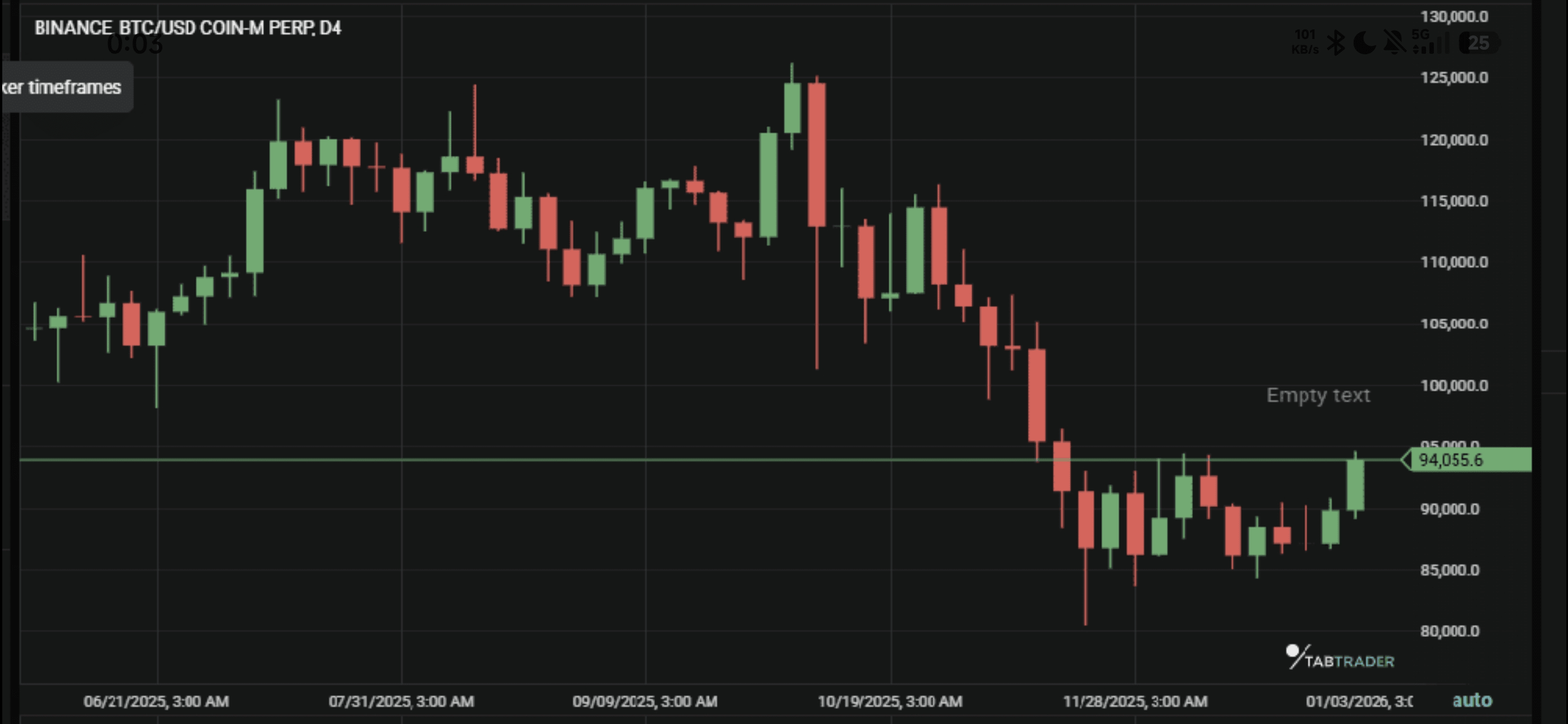
الشكل: مخطط سعر بيتكوين (BTC/USD) (من ديسمبر 2024 إلى يناير 2026) على BitMEX. ارتفعت البيتكوين إلى 109 آلاف دولار في يناير 2025 قبل أن يحدث تراجع؛ وبعد تجميع/توحيد في أواخر 2025، أصبح النطاق السعري في أوائل 2026 محكومًا حتى الآن.
البدائل (Altcoins) وعرض السوق. بينما يتلكأ البيتكوين، شدّت البدائل انتباه المتداولين. تُظهر البيانات الأخيرة أن البدائل تشكل الآن حوالي 50% من إجمالي حجم تداول العملات المشفرة، ارتفاعًا من حصص أصغر بكثير في السابق. ومع تماسك البيتكوين عند مستوى قريب من الثبات، قفزت رموز عالية بيتا: ارتفع Polygon (MATIC) بنحو ~50%، وارتفعت عملة الميم Solana BONK بنحو ~28%، وقفزت Binance Coin (BNB) بنحو ~3.4% في بداية يناير. يشير هذا التحول في حجم التداول إلى أن المتداولين يبحثون عن مخاطر/عوائد أعلى بدلًا من الهروب من العملات المشفرة. تظل معنويات العملات المشفرة (مؤشر الخوف والجشع) محايدة إلى حذرة (~41)، لذا قد يكون أي اندفاع للـAltcoins تكتيكيًا. ومع ذلك، يرى بعض المحللين الآن أن 2026 قد تكون “موسمًا للـAltcoins”. يجادل مايكل فان دي بوبب، وهو متداول معروف، بأن المستثمرين الصبورين الذين يركزون على الأساسيات القوية قد يكافأون في 2026؛ ويشير إلى مشاريع مثل Arbitrum (ARB) وChainlink (LINK) وNEAR كأمثلة على عملات تبني بهدوء بينما تتأخر الأسعار. باختصار، راقب مدى اتساع المشاركة: إذا تعافت الإيثيريوم والبدائل ذات القيمة السوقية الكبيرة، وابتعدت القيادة عن BTC، فقد ترتفع التقلبات. (صفحة سعر Ethereum لدى Binance ورسوم مماثلة مفيدة لتتبع اتجاهات ETH والـAltcoins.)
يوضح مخطط CryptoQuant (أسفل) هذا التحول: انخفضت حصة البيتكوين من الحجم (باللون البني) بينما ترتفع البدائل (باللون الأخضر/الأزرق).
شهدت عدة بدائل كبيرة مكاسبًا مبالغًا فيها حتى مع تراجع/ثبات سعر البيتكوين، ما يشير إلى حدوث تدوير قصير الأجل.
يتوقع المتداول مايكل فان دي بوبب أن عام 2026 سي“غيّر النمط” ويفضّل عملات بديلة مختارة تتمتع بتطوير قوي.
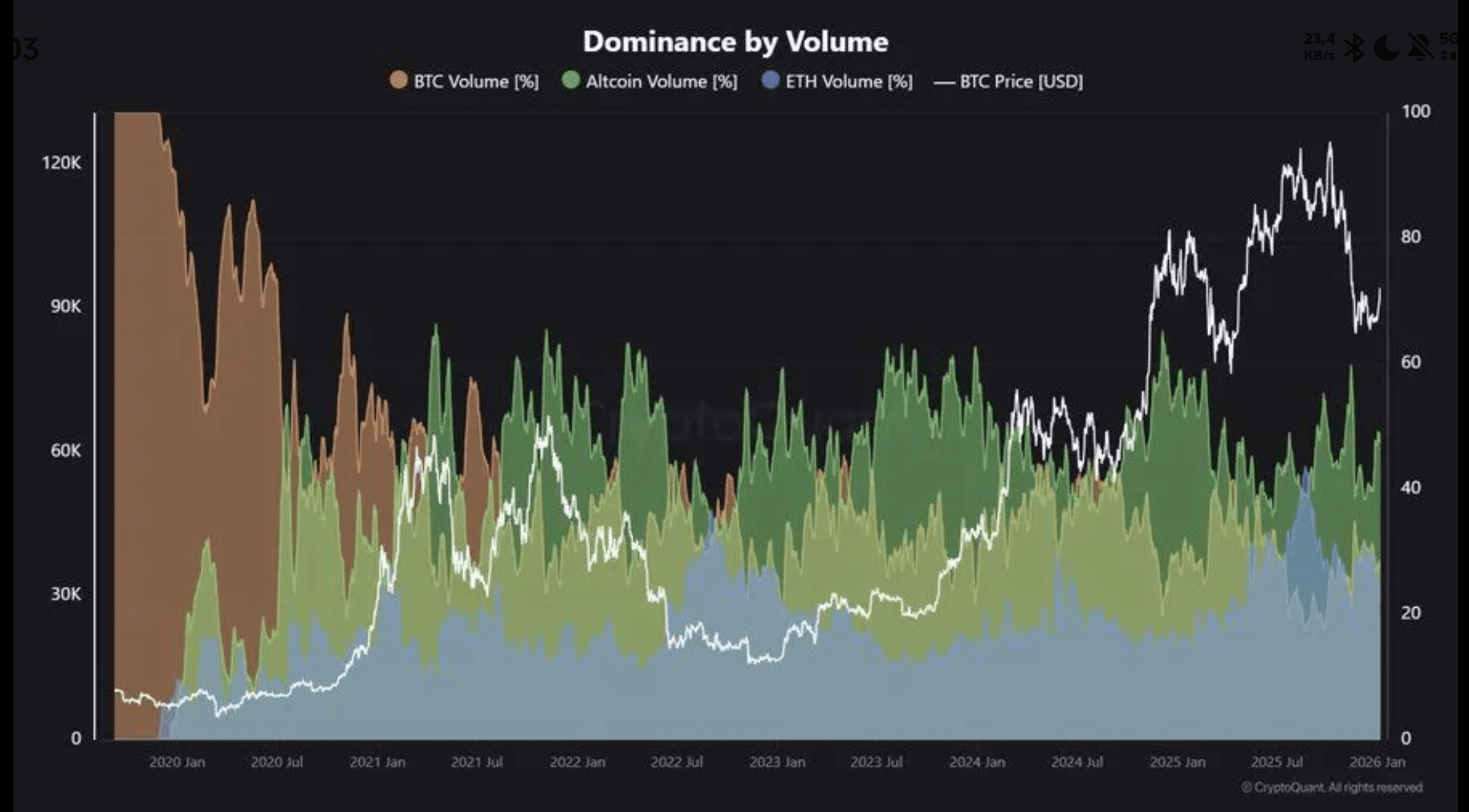
الشكل: مخطط CryptoQuant “السيطرة حسب حجم التداول” (حتى يناير 2026). انخفضت حصة البيتكوين من حجم التداول (باللون البني) مؤخرًا إلى قرب 50%، بينما تشكل البدائل (باللون الأخضر/الأزرق) الباقي. الخط الأبيض = سعر BTC (بالدولار الأمريكي).
حجم التداول والتدفقات. ستقود اتجاهات السيولة التقلبات. بعد نهاية عام هادئة (تشير Galaxy Digital إلى أحجام متداولة منخفضة وخروج ~4 مليارات دولار من صناديق بيتكوين الفورية المتداولة للبيتكوين Spot BTC ETFs في نوفمبر–ديسمبر 2025)، شهدت بداية 2026 عودة رأس المال إلى السوق. أفاد CoinMetrics أن صناديق بيتكوين الأمريكية المتداولة أوقفت سلسلة خروج التدفقات، لتجلب حوالي 400 مليون دولار صافي تدفقات داخلية في 5 يناير (وحوالي 925 مليون دولار خلال أول 3 أيام تداول). كما تحولت تدفقات الـستابل كوين – كمؤشر على رأس المال بالدولار المتجه إلى العملات المشفرة – إلى الإيجابية في يناير بعد أن وصلت إلى تدفقات صافية خارجة في أواخر 2025. معًا، تشير هذه إلى عودة قوة شراء جديدة إلى السوق. ينبغي على المستثمرين مراقبة دفاتر أوامر البورصات ومؤشرات حجم التداول: قد تؤكد زيادة الأحجام على Binance وبورصات أخرى استمرار الزخم. إذا ارتفعت أحجام التداول بالتزامن مع تحركات الأسعار، فمن المرجح أن تستمر الاتجاهات؛ وإذا بقيت الأحجام منخفضة، فقد تحدث تقلبات حادة مفاجئة.
كان ديسمبر 2025 هادئًا: كانت BTC/ETH تتحرك ضمن نطاق في الغالب، كما سيطرت عمليات خروج من صناديق الاستثمار المتداولة للبيتكوين (ETFs) (~4 مليارات دولار).
شهد يناير 2026 انعكاسًا: سجّلت صناديق بيتكوين الفورية المتداولة تدفقات داخلية قدرها حوالي 400 مليون دولار في 5 يناير، وحوالي 925 مليون دولار في الأسبوع الأول.
عادت التدفقات الصافية للـستابل كوين، ما يشير إلى عودة قوة الشراء.
معنويات السوق والاقتصاد الكلي. بشكل عام، المشاعر حذرة لكن متفائلة. كان مؤشر الخوف والجشع في العملات المشفرة في أوائل يناير يدور حول 40–45 (ضمن المنطقة المحايدة)، ما يعني أن المتداولين ليسوا في حالة حماس مبالغ. ومع ذلك، قد تؤدي العناوين الجيوسياسية والاقتصادية الكلية إلى تقلبات: على سبيل المثال، دفعت أخبار أزمة فنزويلية في أوائل يناير سعر BTC إلى الأسفل مؤقتًا، بينما استجابت التحوطات التقليدية (الذهب/النفط) بشكل متوقع. يؤكد تحليل TabTrader أن “مخاطرة المعنويات: محايدة” ويشير إلى أن رأس المال “يدور داخليًا بدلًا من الخروج”، حيث يستوعب البيتكوين التدفقات كخيار دفاعي افتراضي. حدث كبير يجب مراقبته: في 15 يناير، سيعقد الكونغرس الأمريكي جلسات استماع حول تشريعات هيكلة سوق العملات المشفرة. تُظهر البيانات التاريخية أن وضوح التنظيم غالبًا ما يسبق التدفقات إلى السوق. بالتالي، أي أخبار حول موافقات ETF أو القواعد قد تقلب الأسعار.
مؤشر الخوف والجشع في العملات المشفرة ~41 (محايد) في بداية يناير، ما يعني عدم وجود هلع ولا جشع.
تم أخذ الأحداث الكبرى على مستوى الاقتصاد الكلي/الجغرافيا السياسية (مثل محاضر مجلس الاحتياطي الفيدرالي، والصراعات الخارجية) في الحسبان؛ وقد تؤدي تقارير وظائف الولايات المتحدة لهذا الأسبوع وجلسات الاستماع في 15 يناير إلى إثارة تحركات.
يشير المحللون إلى أن شهر يناير غالبًا ما يُعد “نقاط انعطاف” في الدورات السابقة، وأن معالم تنظيمية قد تغيّر المعنويات.
لماذا يكون التقلب المبكر من العام طبيعيًا. باختصار، لا ينبغي أن يكون مفاجئًا أن تكون التقلبات المرتفعة في الربع الأول غير مفاجئة – فهي جزء من الدورة. غالبًا ما يكون نهاية العام مرحلة “تنظيف”: سيولة منخفضة، وأخذ أرباح/ضرائب، وإعادة موازنة كثيفة ينتج عنها تحركات باهتة. عندما يبدأ العام الجديد تدخل رؤوس أموال وسرديات جديدة. كما تلاحظ Galaxy Digital، غالبًا ما تهدأ أسواق العملات المشفرة في ديسمبر ثم تعيد التسعير في الربع الأول. تؤكد التحليلات التجريبية أن يناير كان تاريخيًا أكثر تقلبًا من غيره من الأشهر. على سبيل المثال، أفادت Amberdata أن الربع الأول 2025 شهد “تذبذبات سعرية شديدة” حتى مع أن البيتكوين كان يكسر قممًا تاريخية بشكل متكرر. وبناءً على هذا السياق، يجب على المستثمرين توقع تذبذب حول بداية العام والتخطيط وفقًا لذلك. إن الحفاظ على نظرة طويلة الأجل – “التقلب متأصل في العملات المشفرة” – يمكن أن يساعد في تجاوز التذبذبات. استخدام أدوات الوقت الحقيقي (رسوم Binance ولوحات البيانات على السلسلة) وتحديد مستويات إيقاف/خسارة محسوبة أفضل من البيع الذعري عند أي هبوط.
الدورات والدرامية الموسمية: تاريخيًا، كان كل يناير بمثابة “نقطة انعطاف” في دورات العملات المشفرة. الربع الأول 2025 وحده شهد قفزة للبيتكوين إلى حوالي 109 آلاف ثم هبوطًا بنحو 30% بسبب أحداث إخبارية.
تموضع نهاية العام: غالبًا ما “تُثبّت” الصناديق الأرباح بحلول ديسمبر، ما يؤدي إلى سيولة منخفضة. ثم تُحدث إعادة التخصيص في بداية العام تحركات أكبر. كما يوضح TabTrader، تميل رؤوس الأموال إلى الدوران داخليًا في أوائل يناير قبل أن تتدفق لاحقًا إلى الخارج.
ابقَ مستعدًا: قد تحدث تحركات حادة في أي اتجاه. يمكن أن يساعد استخدام أوامر وقف الخسارة وتنويع المحفظة والتحقق من بيانات مباشرة (مثل صفحات price pages لدى Binance) في إدارة المخاطر.
الخلاصة: راقب مستويات نطاق البيتكوين، وحجم تداول البدائل، وبيانات صناديق الاستثمار المتداولة/التدفقات، ومعنويات السوق في الربع الأول. لكن تذكر: التوتر في بداية العام أمر شائع، وليس علامة على أزمة. من خلال فهم هذه الديناميكيات والحفاظ على منظور طويل الأجل، يمكن للمستثمرين البقاء هادئين واتخاذ قرارات أكثر استنارة عندما يستقر السوق في 2026.