@BabylonLabs_io
كنت أتوقع أن تكون أكثر الأجزاء إثارة في بحثي حول بابل هي تصميم الحصص (التكديس).
لكنها لم تكن كذلك.
الجزء الذي ظل عالقًا في ذهني كان الإطار القانوني.
بدأت بقراءة معمقة حول البنية المعمارية لبابل المعتمدة على تقليل الثقة (trust-minimized)، وتنسيق المُدقّقين، وآليات تكديس البيتكوين، وكيف تتفاعل المكوّنات المختلفة للبروتوكول دون الاعتماد على مُشغّل مركزي. ثم انتقلت إلى الوثائق القانونية بدافع الفضول.
وهنا تغيّر منظورِي.
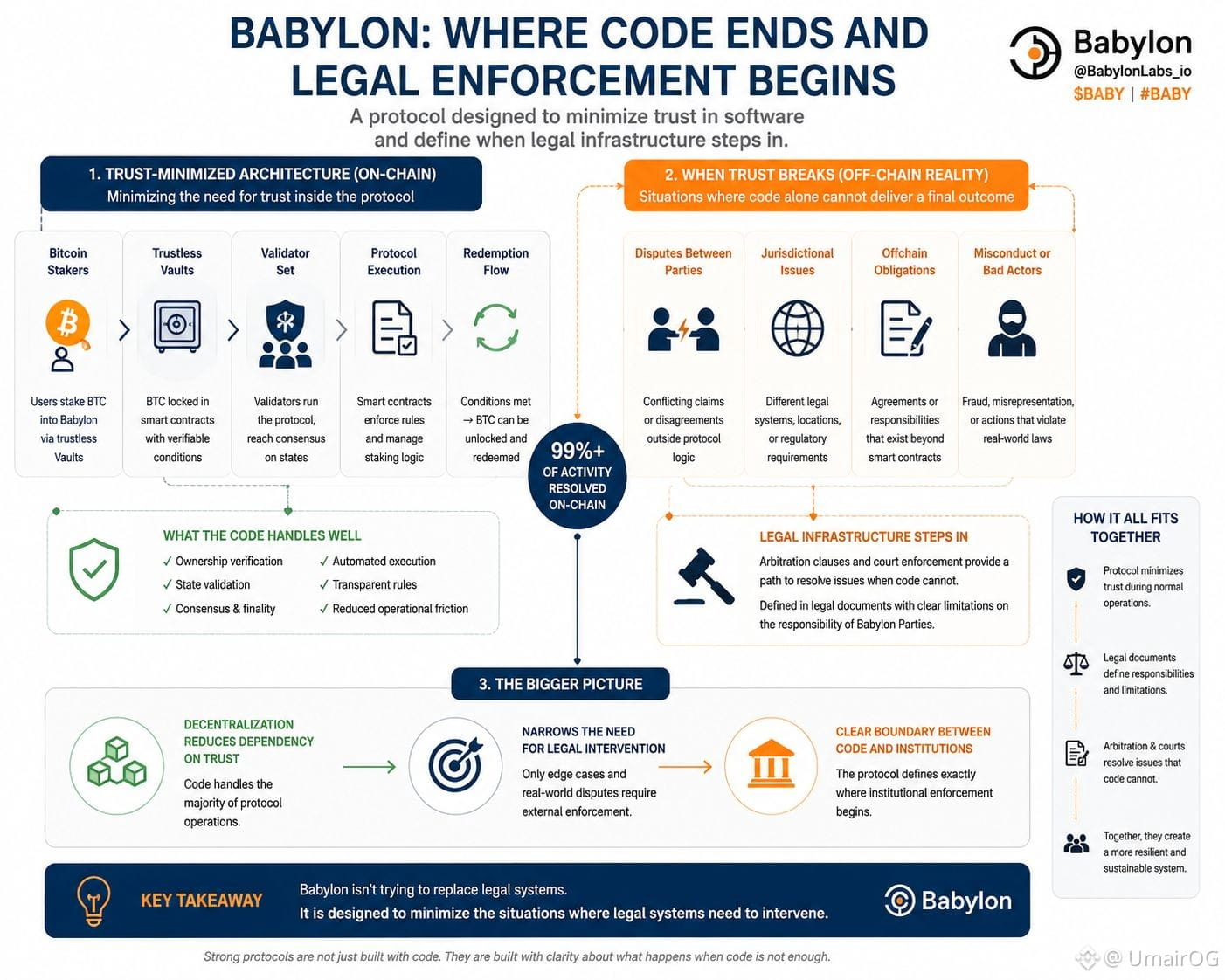
تشرح الوثائق التقنية كيفية تصميم البروتوكول لتقليل الثقة خلال التشغيل العادي. أما الوثائق القانونية فتوضح ما يحدث عندما تكون هناك منازعة قائمة وتتجاوز ما يمكن أن يبلغه الكود.
وهما حديثان مختلفان جدًا، ومع ذلك يصفان النظام البيئي نفسه.
يمكن للتوافق (consensus) أن يتحقق من الحالة. يمكن للعقود الذكية أن تُنفّذ منطقًا محددًا سلفًا. ويمكن للتشفير أن يثبت الملكية والتفويض. لكن لا يمكن لأي من هذه الأدوات أن تحسم كل خلاف ينطوي على أشخاص أو عقود أو جهات قانونية مختلفة.
وهنا تصبح التحكيم والإنفاذ القانوني جزءًا من التصميم بشكل هادئ وغير ملحوظ.
كلما قرأت أكثر، قلت قدرتي على رؤية بابل كبرمجيات تحاول استبدال المؤسسات القائمة. بدلًا من ذلك، رأيت بروتوكولًا يسعى إلى تقليل الحالات التي تحتاج فيها تلك المؤسسات إلى التدخل على الإطلاق.
بالنسبة لي، هذا هو تصور أكثر عملية للامركزية.
ليس BABY مرتبطًا بالابتكار التقني فحسب. بل إنه يعكس أيضًا حقيقة أن البنية التحتية المتينة غالبًا ما تعتمد على كودٍ قوي وقواعد قانونية محددة بوضوح.
ما الذي لفت انتباهك أكثر أثناء بحثك في بابل أو BABY؟
#baby $BABY $DEXE $BANK
#WTICrudeFuturesFall8% #AIFearsSink10SP500StocksOver40% #CXMTSurges472%OnShanghaiDebut
كنت أتوقع أن تكون أكثر الأجزاء إثارة في بحثي حول بابل هي تصميم الحصص (التكديس).
لكنها لم تكن كذلك.
الجزء الذي ظل عالقًا في ذهني كان الإطار القانوني.
بدأت بقراءة معمقة حول البنية المعمارية لبابل المعتمدة على تقليل الثقة (trust-minimized)، وتنسيق المُدقّقين، وآليات تكديس البيتكوين، وكيف تتفاعل المكوّنات المختلفة للبروتوكول دون الاعتماد على مُشغّل مركزي. ثم انتقلت إلى الوثائق القانونية بدافع الفضول.
وهنا تغيّر منظورِي.
تشرح الوثائق التقنية كيفية تصميم البروتوكول لتقليل الثقة خلال التشغيل العادي. أما الوثائق القانونية فتوضح ما يحدث عندما تكون هناك منازعة قائمة وتتجاوز ما يمكن أن يبلغه الكود.
وهما حديثان مختلفان جدًا، ومع ذلك يصفان النظام البيئي نفسه.
يمكن للتوافق (consensus) أن يتحقق من الحالة. يمكن للعقود الذكية أن تُنفّذ منطقًا محددًا سلفًا. ويمكن للتشفير أن يثبت الملكية والتفويض. لكن لا يمكن لأي من هذه الأدوات أن تحسم كل خلاف ينطوي على أشخاص أو عقود أو جهات قانونية مختلفة.
وهنا تصبح التحكيم والإنفاذ القانوني جزءًا من التصميم بشكل هادئ وغير ملحوظ.
كلما قرأت أكثر، قلت قدرتي على رؤية بابل كبرمجيات تحاول استبدال المؤسسات القائمة. بدلًا من ذلك، رأيت بروتوكولًا يسعى إلى تقليل الحالات التي تحتاج فيها تلك المؤسسات إلى التدخل على الإطلاق.
بالنسبة لي، هذا هو تصور أكثر عملية للامركزية.
ليس BABY مرتبطًا بالابتكار التقني فحسب. بل إنه يعكس أيضًا حقيقة أن البنية التحتية المتينة غالبًا ما تعتمد على كودٍ قوي وقواعد قانونية محددة بوضوح.
ما الذي لفت انتباهك أكثر أثناء بحثك في بابل أو BABY؟
#baby $BABY $DEXE $BANK
#WTICrudeFuturesFall8% #AIFearsSink10SP500StocksOver40% #CXMTSurges472%OnShanghaiDebut