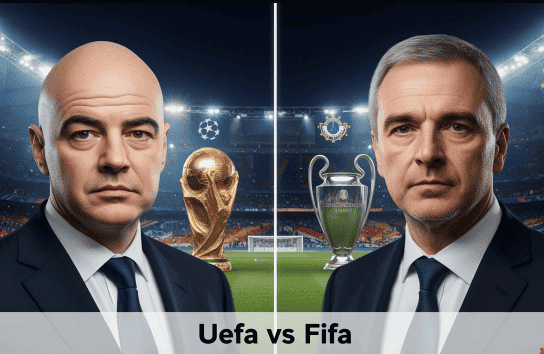
Why FIFA and UEFA Are Increasingly Divided
The relationship between the two organizations has become more complicated in recent years.

Several issues have created tension:
the expansion of the FIFA World Cup to 48 teams;
the new FIFA Club World Cup format;
the increasing number of international matches;
the distribution of financial resources;
FIFA's growing influence over global football decisions.
UEFA believes that constant expansion risks putting excessive pressure on clubs and players. More competitions mean more travel, more matches and a higher physical demand on athletes.
FIFA, however, argues that global expansion creates new opportunities for developing football nations and allows more countries to compete on the biggest stages.
The two organizations therefore represent different visions: one focused on worldwide growth, the other more concerned with maintaining competitive balance and sustainability.


Aleksander Čeferin and UEFA's Growing Influence
Aleksander Čeferin became UEFA president in 2016 and quickly became one of the most influential figures in international football.
The Slovenian lawyer built his reputation as a defender of the European football structure, particularly after opposing the European Super League project.
UEFA holds a unique position in world football because Europe remains the strongest economic market for the sport.
The Champions League, European Championships and domestic leagues generate enormous revenues every year, giving European federations significant political influence within FIFA.
When UEFA acts together, its position cannot easily be ignored.


The Balogun Case Adds More Tension
One of the episodes that contributed to the debate was the controversial situation involving United States striker Folarin Balogun.
According to several media reports, FIFA's decision regarding the suspension situation of the player during the World Cup created criticism among some European football officials.
Some federations reportedly expressed concerns about the possible impact on the credibility of disciplinary procedures.
FIFA defended its decisions, but the episode became another example of the wider disagreement between the two governing bodies.


Infantino Remains Powerful Despite Criticism
Despite the controversy, Gianni Infantino continues to maintain strong support among many football federations outside Europe.
During his presidency, FIFA has introduced several important initiatives:
expansion of international tournaments;
increased investment through the FIFA Forward program;
greater financial support for developing federations;
wider global participation in major competitions.
Supporters believe these reforms are helping football grow beyond its traditional markets.

However, critics argue that FIFA's strategy creates new challenges, including:
too many matches in the calendar;
possible conflicts between commercial interests and sporting values;
concerns about transparency and governance.
The debate surrounding the 2026 World Cup has also contributed to discussions about FIFA's organization and decision-making process.


Could UEFA Challenge Infantino's Future?
Many football fans believe that UEFA alone could decide the future of FIFA leadership.
The reality is more complex.
FIFA elections are based on a system where every member association has one vote, regardless of the size or economic importance of its football industry.
Europe remains highly influential, but UEFA does not control the majority of FIFA votes.
This explains why Infantino has focused heavily on strengthening relationships with federations in Africa, Asia, Oceania and other regions.
These alliances are crucial in FIFA's political landscape.


Who Could Replace Infantino?
At the moment, there is no clear successor ready to take over FIFA's presidency.
Several names are occasionally discussed by football observers, but any prediction remains uncertain.

The future leadership race will depend on:
political alliances;
the success of FIFA reforms;
the relationship between FIFA and UEFA;
future election dynamics.
A united European candidate could change the balance, but for now it remains only a possible scenario.


The Future of Global Football
The confrontation between FIFA and UEFA is likely to continue.

The biggest challenges ahead include:
protecting players from excessive workloads;
balancing financial growth with sporting traditions;
improving transparency;
creating a sustainable international calendar.
Football has always been more than a sport. It is also a global industry involving billions of fans, powerful organizations and enormous economic interests.
The decisions made in the coming years could reshape how football is managed around the world.


The FIFA-UEFA conflict is not simply a disagreement between two presidents. It represents two different ideas about the future of football.
FIFA wants a more global and expanded football ecosystem. UEFA wants to preserve the competitive quality and historical structure that made European football successful.
The challenge will be finding a balance between growth and tradition.

The question remains: will the football of tomorrow be driven mainly by global business interests, or will it continue to place sporting values, fairness and transparency at the center of the game?