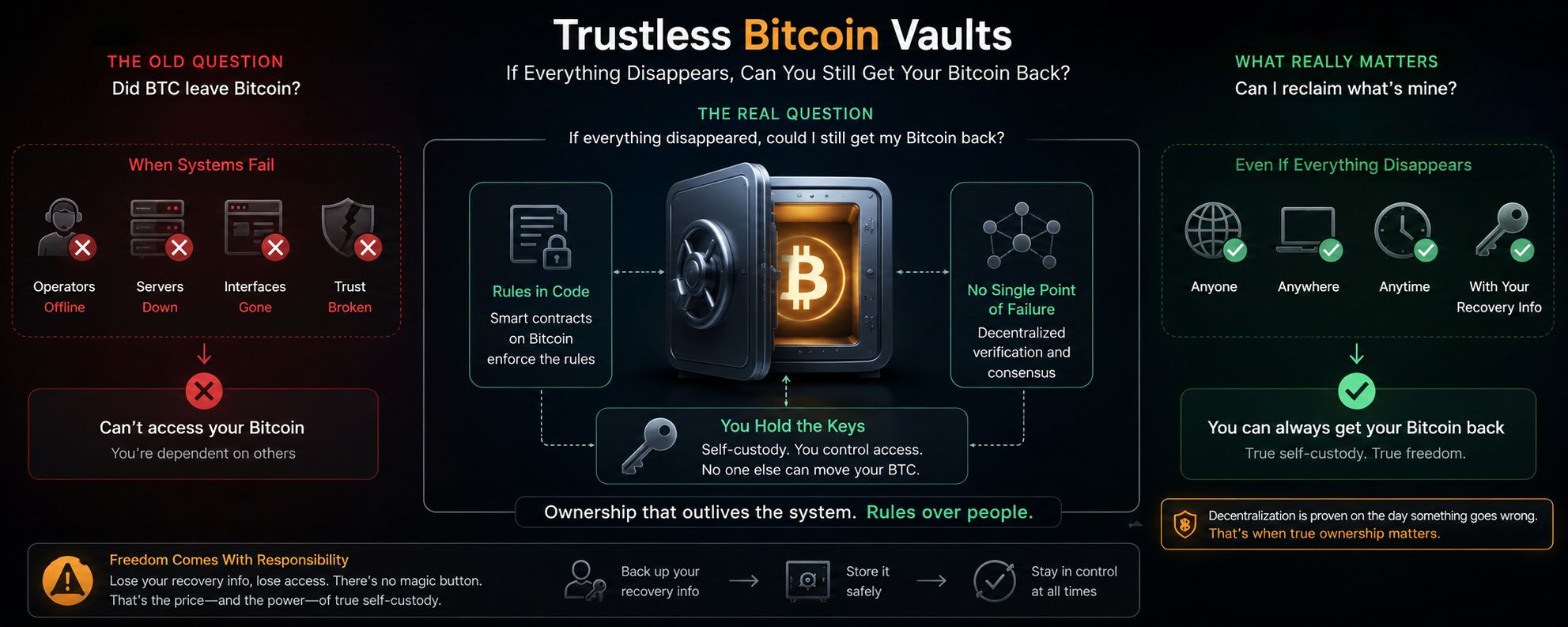

لقد بدأت أنظر إلى البيتكوين في التمويل اللامركزي (DeFi) بطريقة مختلفة قليلًا. طوال وقت طويل، كنت أظن أن أكبر سؤال هو ما إذا كانت عملة BTC ستغادر شبكة البيتكوين يومًا ما. الآن لست متأكدًا من ذلك. أعتقد أن السؤال الأكثر أهمية أبسط بكثير: إذا اختفى كل شيء حول البروتوكول فجأة، هل ما زلت قادرًا على استرداد بيتكوين الخاص بي؟
هذا هو الجزء الذي يظل عالقًا في ذهني.
عندما يكون كل شيء يعمل بشكل طبيعي، تبدو معظم الأنظمة آمنة. المشغّلون متصلون بالإنترنت، وتتم معالجة عمليات السحب، ويشعر كل شيء بالسلاسة. لكن اللامركزية لا يتم إثباتها فعلًا في يوم عادي. يتم إثباتها في اليوم الذي يحدث فيه شيء خاطئ.
ما أجدُه مثيرًا للاهتمام في خزائن البيتكوين دون ثقة (Trustless Bitcoin Vaults) ليس مجرد التكنولوجيا. بل الطريقة التي تعيد بها تعريف الملكية. بدلًا من مطالبة المستخدمين بالثقة في أن شخصًا ما سيكون موجودًا دائمًا، فإنهم يحاولون ضمان أن القواعد تتجاوز الأشخاص الذين يشغّلون النظام. بالنسبة لي، هذه فكرة أقوى بكثير من مجرد القول: "إن بيتكوين الخاص بك لم يغادر البيتكوين أبدًا."
بالطبع، هذه الحرية ليست تلقائية. امتلاك مزيد من التحكم يعني أيضًا تحمل مزيد من المسؤولية. إذا فقدت معلومات الاسترداد الخاصة بك، فلن توجد زرٌّ سحري يصلح ذلك. هذه هي تكلفة الحيازة الذاتية الحقيقية، وأعتقد فعلًا أن من الصحي الاعتراف بذلك بدلًا من التظاهر بأن كل نظام لامركزي خالٍ من المخاطر.
ربما هذا هو معيارنا المناسب لتقييم البنية التحتية للبيتكوين في المستقبل. ليس فقط من حيث مدى سهولة الإيداع، أو مدى سلاسة شكل الواجهة، بل من خلال سؤال واحد بسيط: إذا لم يجب أحد غدًا، هل ما زلت أستطيع استرداد ما هو ملكي؟
لأن في النهاية، لا تتعلق الملكية بمن يساعدك عندما يكون كل شيء يعمل. بل تتعلق بما إذا كان لديك خيار عندما لا يبقى أحد ليقدم المساعدة.
@BabylonLabs_io #baby $BABY
هذا هو الجزء الذي يظل عالقًا في ذهني.
عندما يكون كل شيء يعمل بشكل طبيعي، تبدو معظم الأنظمة آمنة. المشغّلون متصلون بالإنترنت، وتتم معالجة عمليات السحب، ويشعر كل شيء بالسلاسة. لكن اللامركزية لا يتم إثباتها فعلًا في يوم عادي. يتم إثباتها في اليوم الذي يحدث فيه شيء خاطئ.
ما أجدُه مثيرًا للاهتمام في خزائن البيتكوين دون ثقة (Trustless Bitcoin Vaults) ليس مجرد التكنولوجيا. بل الطريقة التي تعيد بها تعريف الملكية. بدلًا من مطالبة المستخدمين بالثقة في أن شخصًا ما سيكون موجودًا دائمًا، فإنهم يحاولون ضمان أن القواعد تتجاوز الأشخاص الذين يشغّلون النظام. بالنسبة لي، هذه فكرة أقوى بكثير من مجرد القول: "إن بيتكوين الخاص بك لم يغادر البيتكوين أبدًا."
بالطبع، هذه الحرية ليست تلقائية. امتلاك مزيد من التحكم يعني أيضًا تحمل مزيد من المسؤولية. إذا فقدت معلومات الاسترداد الخاصة بك، فلن توجد زرٌّ سحري يصلح ذلك. هذه هي تكلفة الحيازة الذاتية الحقيقية، وأعتقد فعلًا أن من الصحي الاعتراف بذلك بدلًا من التظاهر بأن كل نظام لامركزي خالٍ من المخاطر.
ربما هذا هو معيارنا المناسب لتقييم البنية التحتية للبيتكوين في المستقبل. ليس فقط من حيث مدى سهولة الإيداع، أو مدى سلاسة شكل الواجهة، بل من خلال سؤال واحد بسيط: إذا لم يجب أحد غدًا، هل ما زلت أستطيع استرداد ما هو ملكي؟
لأن في النهاية، لا تتعلق الملكية بمن يساعدك عندما يكون كل شيء يعمل. بل تتعلق بما إذا كان لديك خيار عندما لا يبقى أحد ليقدم المساعدة.
@BabylonLabs_io #baby $BABY