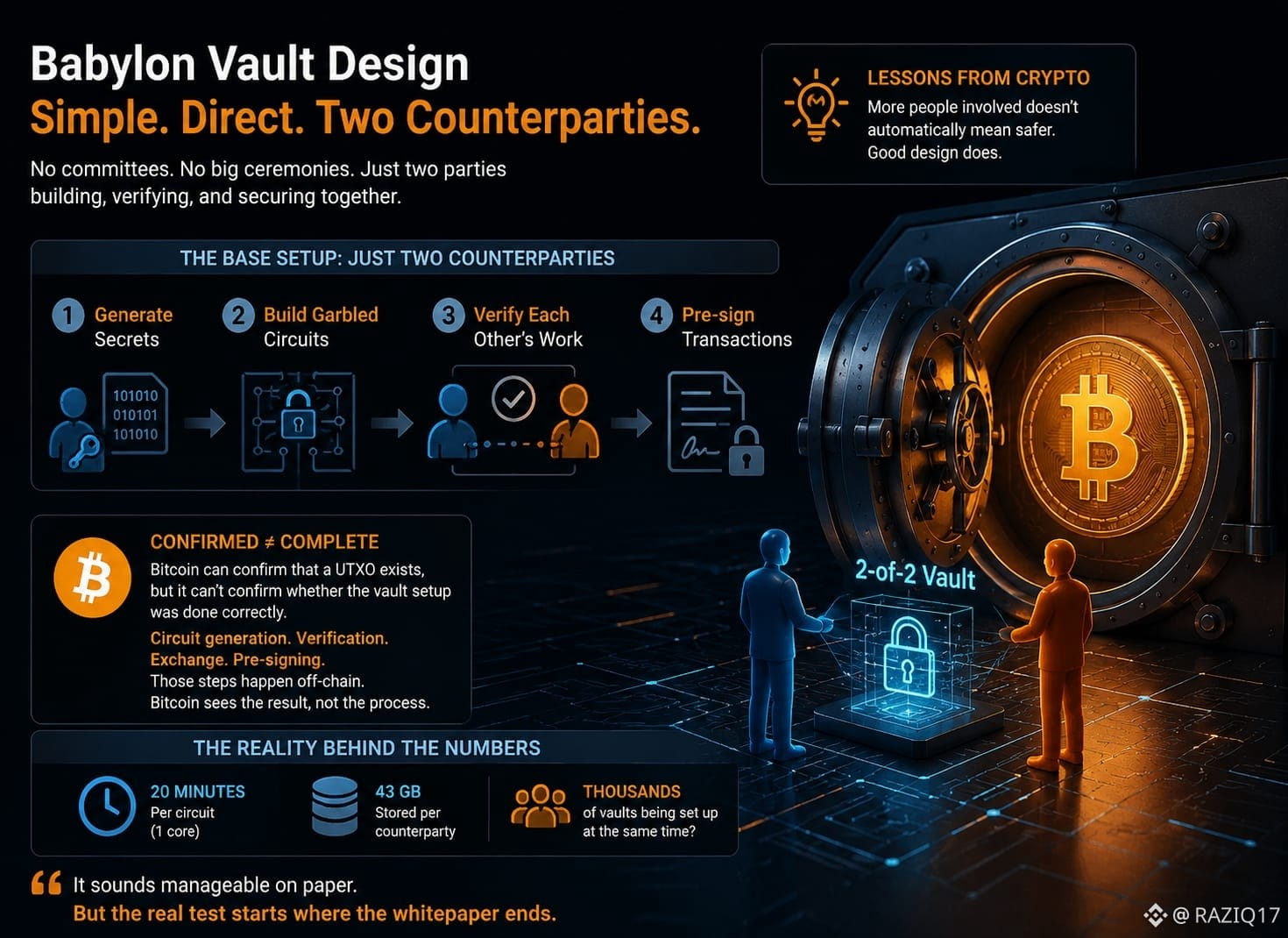
أعود دائمًا إلى تصميم "بايبلون" هذا لأنه يزيل واحدة من أكثر الأوهام المحبّبة في عالم العملات المشفّرة: فكرة أن إشراك عدد أكبر من الناس تلقائيًا يجعل شيئًا ما أكثر أمانًا. لست مقتنعًا بذلك. ليس هنا على الأقل. ما جذب انتباهي هو مدى بساطة الإعداد الأساسي فعلًا. طرفان فقط. لا لجنة مُوقّعين. لا حفل كبير. يقوم كلا الجانبين بتوليد أسرارهما الخاصة، وبناء الدوائر المشوَّهة، والتحقق من عمل الطرف الآخر، ثم فقط يتم توقيع معاملات الصرف مسبقًا. ثمة شيء مُطمئن ومباشر بشكل مُنعش في ذلك.🏛️
لقد مررت بما يكفي لأعرف أنه في عالم الكريبتو، كثيرًا ما يتعامل الناس مع كلمة "مؤكَّد" على أنها تعني أن كل شيء قد اكتمل. غالبًا لا يكون الأمر كذلك. يستطيع البيتكوين أن يبيّن لك أن UTXO موجود، لكنه لا يستطيع أن يخبرك إن كانت الأعمال خلف "الڤولت" قد أُنجزت فعليًا بشكل صحيح، أو ما إذا كانت الدائرتان قد تم توليدهما والتحقق منهما وتبادلهما دون اختصار أو التفاف. هذه هي النقطة التي ما زلت أفكر فيها باستمرار.🔍
الأرقام ليست صغيرة أيضًا. عشرون دقيقة لكل دائرة، نواة واحدة، و43GB مخزّنة لكل طرف مقابل. يبدو ذلك قابلًا للإدارة على الورق. لكنني لست متأكدًا مما قد يَبدو عليه الأمر عندما يتم إعداد آلاف الڤولتات في الوقت نفسه. ربما يتدرّج بشكل جيد، وربما لا. بعد مراقبة هذا السوق لسنوات، تعلّمت أن الاختبار الحقيقي عادة يبدأ حيث ينتهي نصّ الورقة البيضاء.⚖️
@BabylonLabs_io #baby $BABY
لقد مررت بما يكفي لأعرف أنه في عالم الكريبتو، كثيرًا ما يتعامل الناس مع كلمة "مؤكَّد" على أنها تعني أن كل شيء قد اكتمل. غالبًا لا يكون الأمر كذلك. يستطيع البيتكوين أن يبيّن لك أن UTXO موجود، لكنه لا يستطيع أن يخبرك إن كانت الأعمال خلف "الڤولت" قد أُنجزت فعليًا بشكل صحيح، أو ما إذا كانت الدائرتان قد تم توليدهما والتحقق منهما وتبادلهما دون اختصار أو التفاف. هذه هي النقطة التي ما زلت أفكر فيها باستمرار.🔍
الأرقام ليست صغيرة أيضًا. عشرون دقيقة لكل دائرة، نواة واحدة، و43GB مخزّنة لكل طرف مقابل. يبدو ذلك قابلًا للإدارة على الورق. لكنني لست متأكدًا مما قد يَبدو عليه الأمر عندما يتم إعداد آلاف الڤولتات في الوقت نفسه. ربما يتدرّج بشكل جيد، وربما لا. بعد مراقبة هذا السوق لسنوات، تعلّمت أن الاختبار الحقيقي عادة يبدأ حيث ينتهي نصّ الورقة البيضاء.⚖️
@BabylonLabs_io #baby $BABY