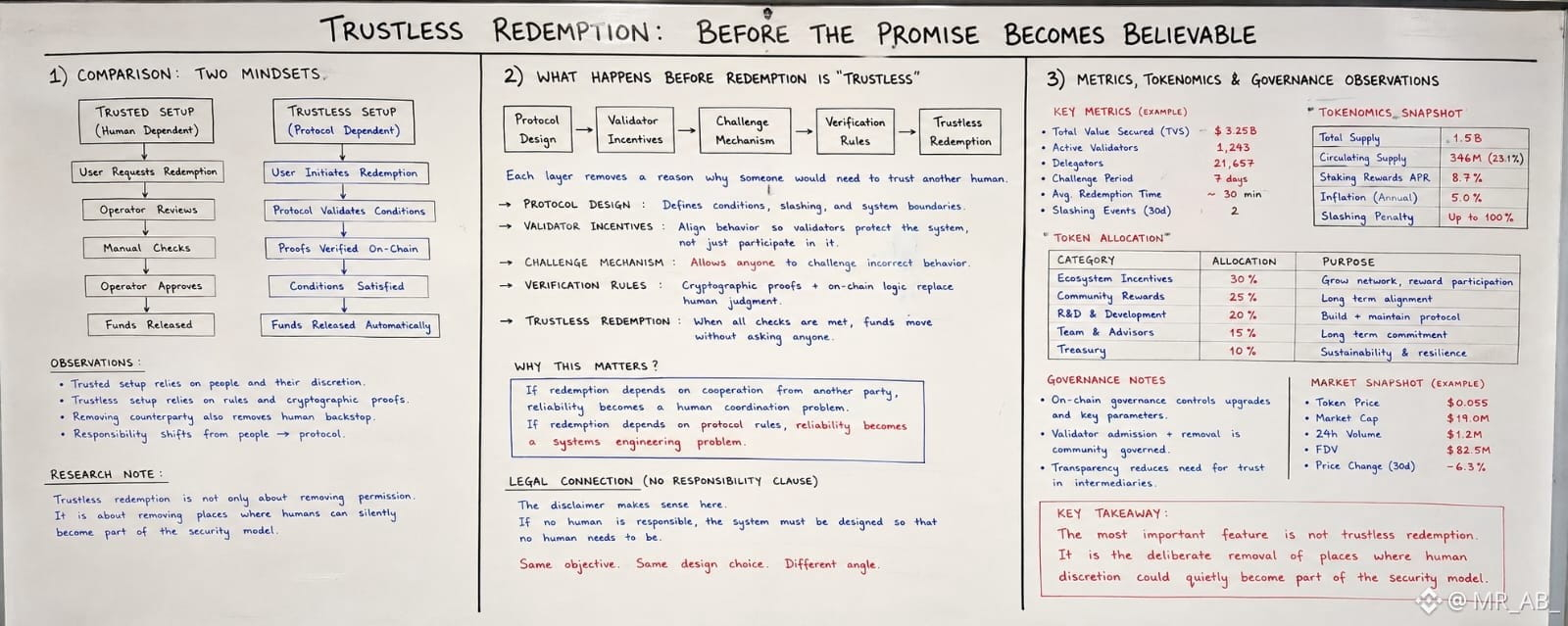
اعتقدت أن الجزء المثير للاهتمام هو أن بإمكان بيتكوين أن تُسترد دون طلب الإذن من أي شخص. اتضح أن الأمر هو كل ما يجب أن يحدث قبل أن يصبح هذا الوعد قابلاً للتصديق.
واصلت قراءة تدفق الاسترداد جنبًا إلى جنب مع بنية البروتوكول واللغة القانونية التي تقول إن أطراف بابل لن تكون مسؤولة عما يحدث. في البداية بدا أن هذه موضوعات منفصلة تمامًا. وبعد فترة بدأوا يصفون نفس خيار التصميم من زوايا مختلفة.
إن آلية الاسترداد دون ثقة ليست فقط بشأن إزالة طرف مقابل من المعاملة. بل إنها أيضًا تُزيل شخصًا يمكنه التدخل عندما يحدث خطأ ما. هذا يغيّر مكان تمركز المسؤولية. بدلًا من الاعتماد على مشغّل أو فريق دعم أو مسؤول، يدفع البروتوكول المسؤولية إلى إثباتات تشفيرية وسلوك المُصدِّقين وشروط محددة مسبقًا وبرمجيات إما تُحقق تلك الشروط أو لا تُحققها.
وهذا يفسر أيضًا سبب تخصيص التوثيق اهتمامًا كبيرًا لمحفزات المُصدِّقين وإجراءات التحدي وقواعد التحقق. إذا كان الاسترداد يعتمد على تعاون طرف آخر، تصبح الاعتمادية التشغيلية مشكلة تنسيق بشرية. وإذا كان الاسترداد يعتمد على قواعد البروتوكول وحدها، تصبح الاعتمادية التشغيلية مشكلة هندسة أنظمة.
جعل هذا التوضيح القانوني مزيدًا من المعنى بعد أن نظرت إليه بهذه الطريقة. لم يبدُ أنه منفصل عن البروتوكول. بل كان يعكس نفس الهدف مثل البنية، وهو تقليل الحالات التي يُتوقع فيها أن تحل الثقة في الأشخاص محل الثقة في البروتوكول نفسه.
كلما قارنت بين هذه المستندات، بدا لي أكثر فأكثر أن أهم ميزة ليست الاسترداد دون ثقة. بل كانت الإزالة المتعمدة للأماكن التي يمكن فيها للسلطة التقديرية البشرية أن تصبح بهدوء جزءًا من نموذج الأمان.
#baby $BABY @BabylonLabs_io
واصلت قراءة تدفق الاسترداد جنبًا إلى جنب مع بنية البروتوكول واللغة القانونية التي تقول إن أطراف بابل لن تكون مسؤولة عما يحدث. في البداية بدا أن هذه موضوعات منفصلة تمامًا. وبعد فترة بدأوا يصفون نفس خيار التصميم من زوايا مختلفة.
إن آلية الاسترداد دون ثقة ليست فقط بشأن إزالة طرف مقابل من المعاملة. بل إنها أيضًا تُزيل شخصًا يمكنه التدخل عندما يحدث خطأ ما. هذا يغيّر مكان تمركز المسؤولية. بدلًا من الاعتماد على مشغّل أو فريق دعم أو مسؤول، يدفع البروتوكول المسؤولية إلى إثباتات تشفيرية وسلوك المُصدِّقين وشروط محددة مسبقًا وبرمجيات إما تُحقق تلك الشروط أو لا تُحققها.
وهذا يفسر أيضًا سبب تخصيص التوثيق اهتمامًا كبيرًا لمحفزات المُصدِّقين وإجراءات التحدي وقواعد التحقق. إذا كان الاسترداد يعتمد على تعاون طرف آخر، تصبح الاعتمادية التشغيلية مشكلة تنسيق بشرية. وإذا كان الاسترداد يعتمد على قواعد البروتوكول وحدها، تصبح الاعتمادية التشغيلية مشكلة هندسة أنظمة.
جعل هذا التوضيح القانوني مزيدًا من المعنى بعد أن نظرت إليه بهذه الطريقة. لم يبدُ أنه منفصل عن البروتوكول. بل كان يعكس نفس الهدف مثل البنية، وهو تقليل الحالات التي يُتوقع فيها أن تحل الثقة في الأشخاص محل الثقة في البروتوكول نفسه.
كلما قارنت بين هذه المستندات، بدا لي أكثر فأكثر أن أهم ميزة ليست الاسترداد دون ثقة. بل كانت الإزالة المتعمدة للأماكن التي يمكن فيها للسلطة التقديرية البشرية أن تصبح بهدوء جزءًا من نموذج الأمان.
#baby $BABY @BabylonLabs_io