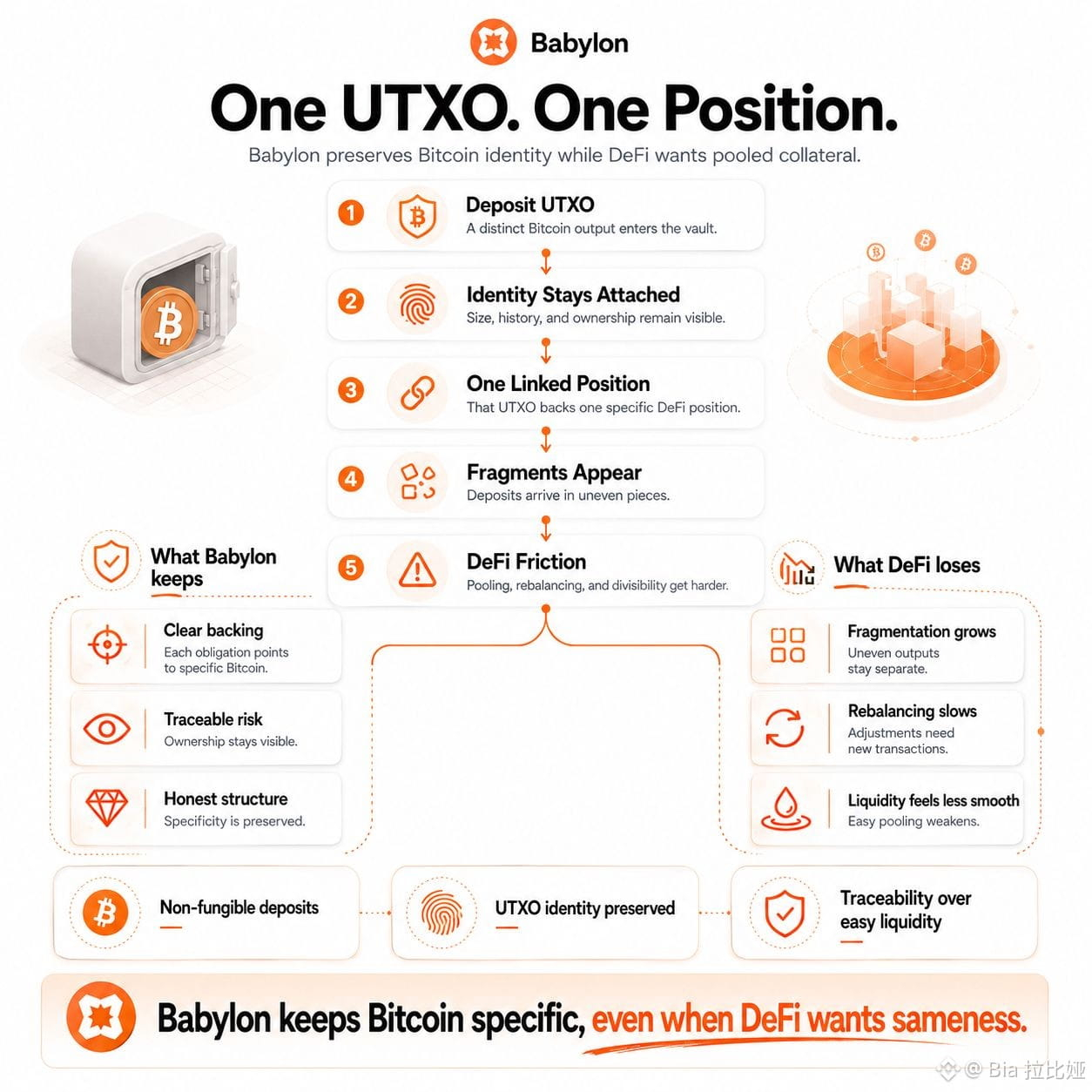
@BabylonLabs_io كنت أظن أن الجزء الأصعب هو قفل البيتكوين دون طمس ملكية الأصل. لكن بابيلون جعلني ألاحظ شيئًا أكثر هدوءًا: إيداعٌ في خزانة لا يتحول إلى ضمانٍ مُجمّع. بل يبقى UTXO واحدًا مع تاريخه الخاص بالحجم وموقع محدد مرتبط به.
يبدو ذلك آمنًا، لكن التمويل اللامركزي عادةً يريد العكس. فهو يفضّل ضمانًا يمكن تقسيمه وخلطه وإعادة موازنته والتعامل معه وكأن كل وحدة متشابهة. يحافظ بابيلون على هوية البيتكوين بينما تتصرف التطبيق وكأن تلك الهوية لا تكاد تهم. هنا تبدأ الاحتكاكات.
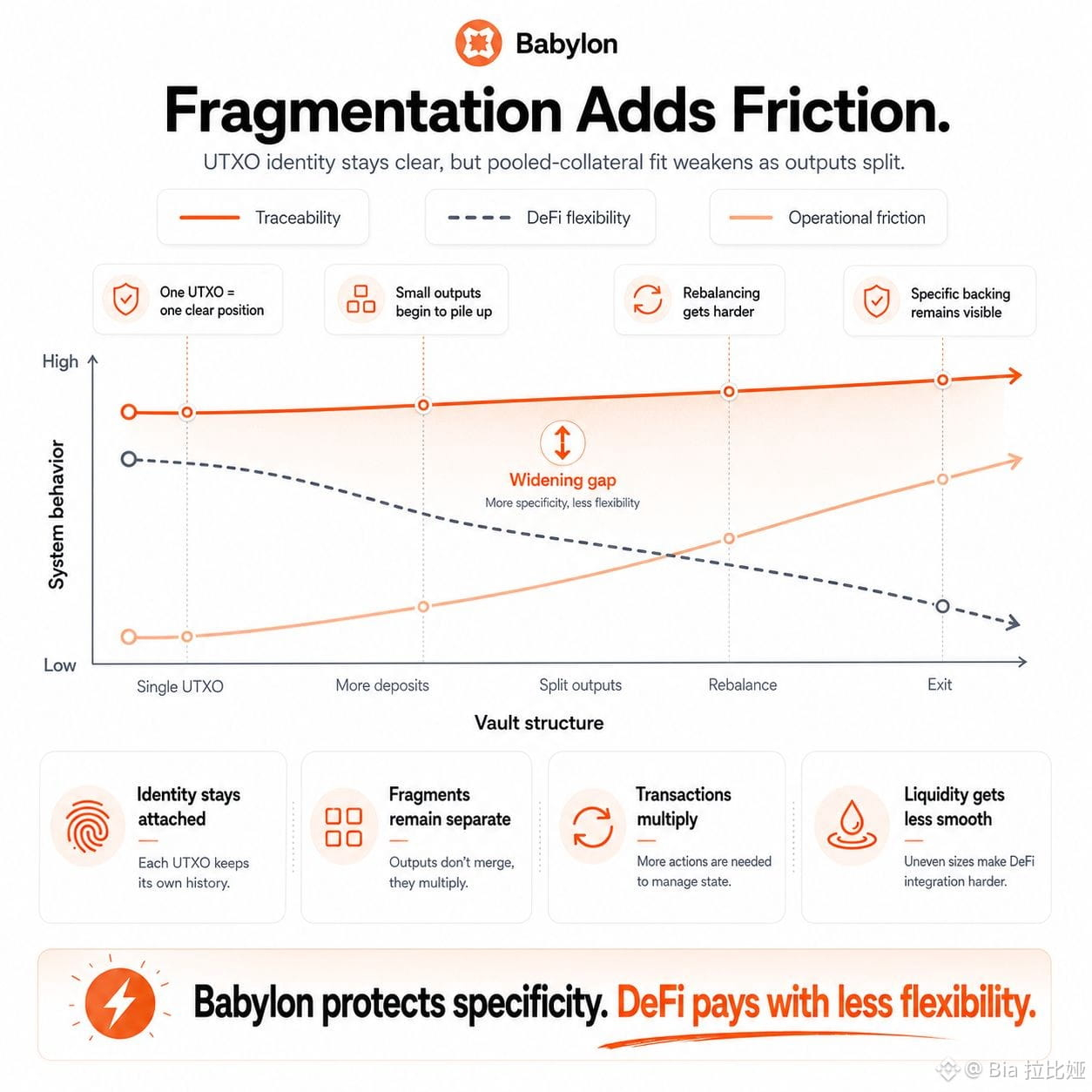
قد يَضمن UTXO واحدٌ موقفًا واحدًا بشكل واضح، لكن ماذا يحدث عندما تصل الإيداعات كعديد من المخرجات غير المتساوية؟ تتراكم قطع صغيرة. ولا يمكن تعديل القطع الكبيرة دون إنشاء معاملات جديدة. تظل المحاسبة دقيقة، ومع ذلك يصبح النظام فوضويًا لأن كل موقف يحمل مسار إنفاقه الخاص.
ومع ذلك، فإن هذه الضعف أيضًا حماية. يمكن لبابلون أن يبيّن أي بيتكوين يدعم أي التزام بدل إخفاء كل شيء داخل بركة مشتركة واحدة. $BABY تقع قرب تصميم يختار قابلية التتبع على السيولة السهلة، وربما يكون ذلك التبادل صادقًا.
ومع ذلك، أين يقع الضغط: الرسوم البطيئة أم الخروج الأصعب أم إعادة الموازنة أم أجزاءٌ متروكة؟ إذا كانت الخزانة تُبقي كل UTXO متميزًا، فهل يمكن للتمويل اللامركزي أن يبقى مرنًا دون الادعاء بأن تلك البيتكوينات قابلة للاستبدال عندما لا تكون كذلك فعلاً؟
#baby $BABY
يبدو ذلك آمنًا، لكن التمويل اللامركزي عادةً يريد العكس. فهو يفضّل ضمانًا يمكن تقسيمه وخلطه وإعادة موازنته والتعامل معه وكأن كل وحدة متشابهة. يحافظ بابيلون على هوية البيتكوين بينما تتصرف التطبيق وكأن تلك الهوية لا تكاد تهم. هنا تبدأ الاحتكاكات.
قد يَضمن UTXO واحدٌ موقفًا واحدًا بشكل واضح، لكن ماذا يحدث عندما تصل الإيداعات كعديد من المخرجات غير المتساوية؟ تتراكم قطع صغيرة. ولا يمكن تعديل القطع الكبيرة دون إنشاء معاملات جديدة. تظل المحاسبة دقيقة، ومع ذلك يصبح النظام فوضويًا لأن كل موقف يحمل مسار إنفاقه الخاص.
ومع ذلك، فإن هذه الضعف أيضًا حماية. يمكن لبابلون أن يبيّن أي بيتكوين يدعم أي التزام بدل إخفاء كل شيء داخل بركة مشتركة واحدة. $BABY تقع قرب تصميم يختار قابلية التتبع على السيولة السهلة، وربما يكون ذلك التبادل صادقًا.
ومع ذلك، أين يقع الضغط: الرسوم البطيئة أم الخروج الأصعب أم إعادة الموازنة أم أجزاءٌ متروكة؟ إذا كانت الخزانة تُبقي كل UTXO متميزًا، فهل يمكن للتمويل اللامركزي أن يبقى مرنًا دون الادعاء بأن تلك البيتكوينات قابلة للاستبدال عندما لا تكون كذلك فعلاً؟
#baby $BABY