#baby $BABY @BabylonLabs_io
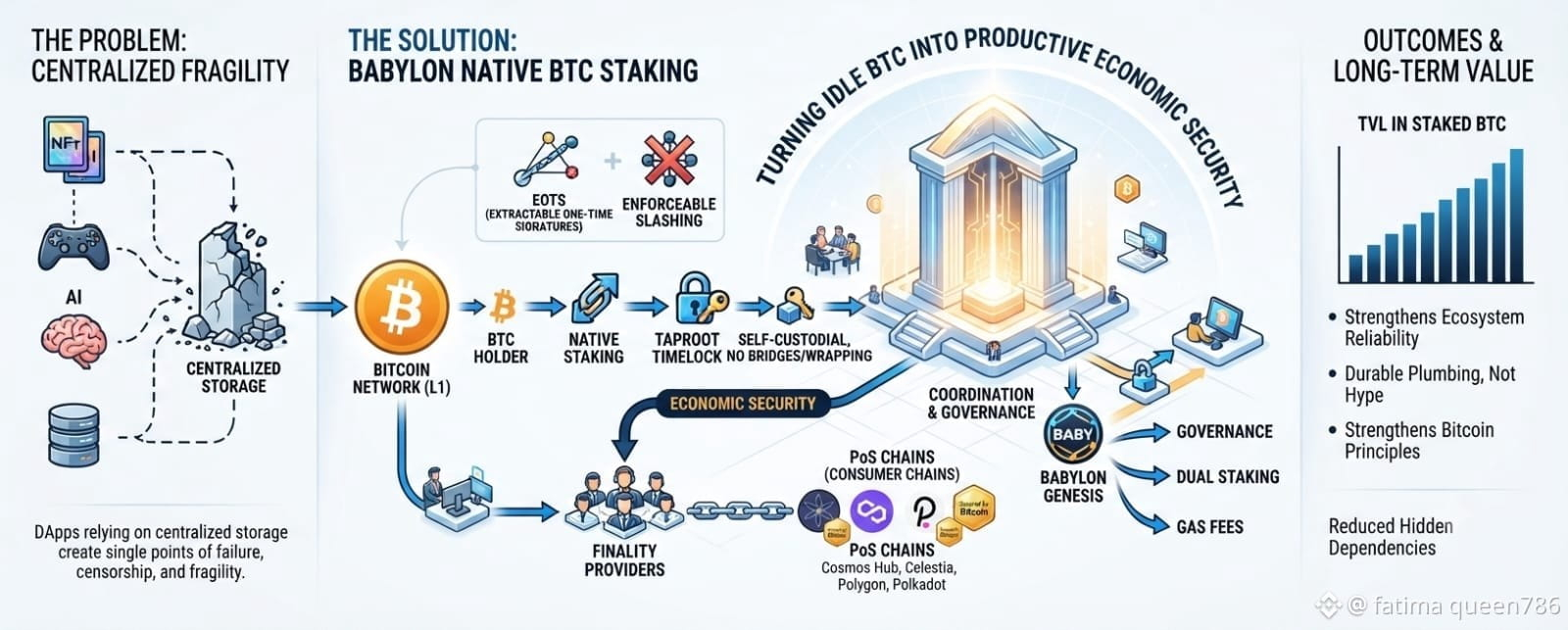
لا تزال العديد من التطبيقات اللامركزية المزعومة تعتمد على تخزين مركزي للـNFTs وحالات الألعاب وأوزان الذكاء الاصطناعي والواجهات. وهذا يخلق هشاشة حقيقية—فقد تؤدي مشكلات التوفر أو الرقابة أو مزودي الخدمة إلى تقويض حتى المنطق القوي الموجود على السلسلة. يجب أن تقلل البنية التحتية الحقيقية هذه الاعتمادات الخفية.
يتصدى Babylon لطبقة تأسيسية: الأمان الاقتصادي لسلاسل PoS. فهو يمكّن حاملي BTC من إيداع البيتكوين الأصلي مباشرة على شبكة Bitcoin—بشكل حيازة ذاتية (self-custodial)، دون جسور أو تغليف أو تحويلات حيازة. تُقيَّد العملات بمدد زمنية عبر مخرجات Taproot؛ ويُفوِّض المُشاركون إلى مزودي Finality الذين يقدمون نهائية سريعة إلى شبكات PoS المتصلة باستخدام التشفير مثل Extractable One-Time Signatures لفرض آليات الإيقاف (slashing) بشكل قابل للتنفيذ. وتنسق Babylon Genesis السوق والحوكمة والإيداع المزدوج باستخدام رمز BABY.
التصميم عملي: تُرسِّخ Bitcoin الوزن الاقتصادي والتسوية، بينما يتولى التنسيق الأخف مهمة التفويض. ترتبط التكاليف برسوم BTC؛ وفكّ الإيداع (unbonding) متعمد من أجل السلامة. يظهر التقدم في مزودي Finality المحترفين، وأدوات التفويض والمراقبة، والتكاملات التي توسّع الشبكات المؤمَّنة عبر Bitcoin. يعمل BABY على تشغيل الغاز والحوكمة وأمن التنسيق—ويلتقط القيمة عبر الاستخدام الحقيقي لا عبر الضجيج.
وصلت TVL في BTC المرهونة إلى حجم ملموس، ما يعكس رأسمالاً ملتزماً. تشمل المخاطر تقلب الرسوم وتنوع المزودين وحالات حافة تقنية، لكن نموذج الحيازة الذاتية يتجنب الكثير من مخاطر الجسور والحيازة الشائعة في أماكن أخرى.
بالنسبة للمستثمرين على المدى الطويل، تعد Babylon بنية تحتية هادئة تعزز النظام البيئي عبر الاعتمادية. فهي تحول BTC غير المستخدم إلى أمان منتج دون المساس بمبادئ Bitcoin. وفي سوق مليء بالضجيج، تُراكم هذه المواسير المتينة بهدوء—وهذا غالباً ما تكون فيه الخيارات الحقيقية مخفية.
لا تزال العديد من التطبيقات اللامركزية المزعومة تعتمد على تخزين مركزي للـNFTs وحالات الألعاب وأوزان الذكاء الاصطناعي والواجهات. وهذا يخلق هشاشة حقيقية—فقد تؤدي مشكلات التوفر أو الرقابة أو مزودي الخدمة إلى تقويض حتى المنطق القوي الموجود على السلسلة. يجب أن تقلل البنية التحتية الحقيقية هذه الاعتمادات الخفية.
يتصدى Babylon لطبقة تأسيسية: الأمان الاقتصادي لسلاسل PoS. فهو يمكّن حاملي BTC من إيداع البيتكوين الأصلي مباشرة على شبكة Bitcoin—بشكل حيازة ذاتية (self-custodial)، دون جسور أو تغليف أو تحويلات حيازة. تُقيَّد العملات بمدد زمنية عبر مخرجات Taproot؛ ويُفوِّض المُشاركون إلى مزودي Finality الذين يقدمون نهائية سريعة إلى شبكات PoS المتصلة باستخدام التشفير مثل Extractable One-Time Signatures لفرض آليات الإيقاف (slashing) بشكل قابل للتنفيذ. وتنسق Babylon Genesis السوق والحوكمة والإيداع المزدوج باستخدام رمز BABY.
التصميم عملي: تُرسِّخ Bitcoin الوزن الاقتصادي والتسوية، بينما يتولى التنسيق الأخف مهمة التفويض. ترتبط التكاليف برسوم BTC؛ وفكّ الإيداع (unbonding) متعمد من أجل السلامة. يظهر التقدم في مزودي Finality المحترفين، وأدوات التفويض والمراقبة، والتكاملات التي توسّع الشبكات المؤمَّنة عبر Bitcoin. يعمل BABY على تشغيل الغاز والحوكمة وأمن التنسيق—ويلتقط القيمة عبر الاستخدام الحقيقي لا عبر الضجيج.
وصلت TVL في BTC المرهونة إلى حجم ملموس، ما يعكس رأسمالاً ملتزماً. تشمل المخاطر تقلب الرسوم وتنوع المزودين وحالات حافة تقنية، لكن نموذج الحيازة الذاتية يتجنب الكثير من مخاطر الجسور والحيازة الشائعة في أماكن أخرى.
بالنسبة للمستثمرين على المدى الطويل، تعد Babylon بنية تحتية هادئة تعزز النظام البيئي عبر الاعتمادية. فهي تحول BTC غير المستخدم إلى أمان منتج دون المساس بمبادئ Bitcoin. وفي سوق مليء بالضجيج، تُراكم هذه المواسير المتينة بهدوء—وهذا غالباً ما تكون فيه الخيارات الحقيقية مخفية.