تعود فكرة واحدة في كل مرة أنظر فيها إلى البيتكوين. ربما ليست أكبر قيوده هي قابلية التوسع أو نطاق التبني، بل حقيقة أن قيمة كبيرة جدًا تبقى خاملة. عندما يصبح الأصل موثوقًا على نطاق واسع، هل يجب أن يكون دوره الوحيد هو الانتظار حتى تتم المعاملة التالية؟
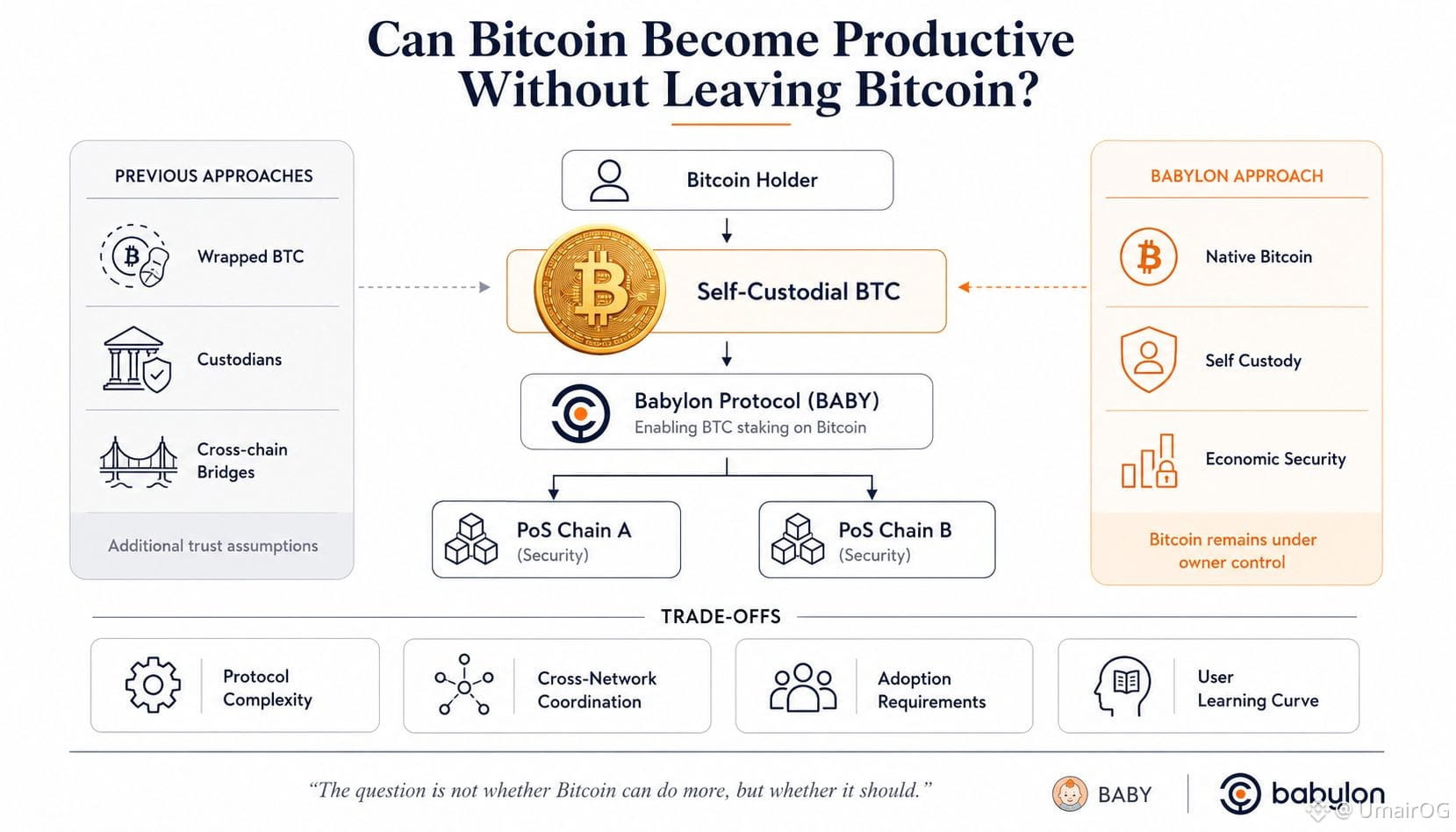
لقد شكّل هذا السؤال العديد من التجارب عبر السنوات. أراد المطورون أن تساهم الأهمية الاقتصادية للبيتكوين في بنية تحتية أوسع لسلاسل الكتل، لكن معظم المقاربات تطلب من المستخدمين لف BTC، أو الثقة بجهات حفظ، أو الاعتماد على جسور عبر السلاسل. ورغم أن هذه الأساليب خلقت إمكانات جديدة، فقد طلبت أيضًا من حاملي البيتكوين قبول طبقات إضافية من المخاطر رأى كثيرون أنها لا تتسق مع الحفظ الذاتي.
يستكشف بابيلون (Babylon) مشروعًا يتجه في اتجاه مختلف. فمن خلال منظومة BABY الخاصة به، يتيح بابيلون إتاحة إيداع/تكديس BTC محفوظ ذاتيًا مباشرة على شبكة البيتكوين، بهدف تمكين سلاسل الكتل المشاركة في آلية إثبات الحصة (Proof-of-Stake) من الاستفادة من أمان اقتصادي مدعوم بالبيتكوين دون الحاجة إلى الأصول المُلفّفة. وبدلًا من تغيير البيتكوين نفسه، يحاول التصميم توسيع كيفية استخدام ثِقَلِه الاقتصادي مع بقاء الملكية لدى الحامل.
لا يعني ذلك أن النموذج خالٍ من المفاضلات. تعتمد منظومة BABY على تصميم بروتوكول آمن، وتنسيق موثوق بين الشبكات المختلفة، وتبني فعّال ذي معنى. ومع ازدياد ترابط الأنظمة، تصبح أيضًا أكثر صعوبة على المستخدمين لتقييمها، مما يجعل البساطة تنازلًا وليست ضمانًا.
إذا نجح بابيلون، فقد تكون الجهات المستفيدة الرئيسية هي شبكات PoS التي تسعى إلى تعزيز الأمان، إضافةً إلى حاملي البيتكوين على المدى الطويل الذين يرغبون في مزيد من المنفعة دون التخلي عن الحفظ الذاتي. وقد يظل آخرون يفضلون الدور التقليدي للبيتكوين ويرون القليل من القيمة في إضافة طبقة أخرى من البنية التحتية.
قد لا يكون السؤال الأكثر إثارة هو ما إذا كان بإمكان BABY جعل البيتكوين أكثر إنتاجية، بل ما إذا كان كل أصل رقمي ناضج سيتعرض في النهاية لضغط ليصبح نشطًا اقتصاديًا—أم أن البقاء بسيطًا هو ما يحفظ قيمته على المدى الطويل.
#baby $BABY @BabylonLabs_io
لقد شكّل هذا السؤال العديد من التجارب عبر السنوات. أراد المطورون أن تساهم الأهمية الاقتصادية للبيتكوين في بنية تحتية أوسع لسلاسل الكتل، لكن معظم المقاربات تطلب من المستخدمين لف BTC، أو الثقة بجهات حفظ، أو الاعتماد على جسور عبر السلاسل. ورغم أن هذه الأساليب خلقت إمكانات جديدة، فقد طلبت أيضًا من حاملي البيتكوين قبول طبقات إضافية من المخاطر رأى كثيرون أنها لا تتسق مع الحفظ الذاتي.
يستكشف بابيلون (Babylon) مشروعًا يتجه في اتجاه مختلف. فمن خلال منظومة BABY الخاصة به، يتيح بابيلون إتاحة إيداع/تكديس BTC محفوظ ذاتيًا مباشرة على شبكة البيتكوين، بهدف تمكين سلاسل الكتل المشاركة في آلية إثبات الحصة (Proof-of-Stake) من الاستفادة من أمان اقتصادي مدعوم بالبيتكوين دون الحاجة إلى الأصول المُلفّفة. وبدلًا من تغيير البيتكوين نفسه، يحاول التصميم توسيع كيفية استخدام ثِقَلِه الاقتصادي مع بقاء الملكية لدى الحامل.
لا يعني ذلك أن النموذج خالٍ من المفاضلات. تعتمد منظومة BABY على تصميم بروتوكول آمن، وتنسيق موثوق بين الشبكات المختلفة، وتبني فعّال ذي معنى. ومع ازدياد ترابط الأنظمة، تصبح أيضًا أكثر صعوبة على المستخدمين لتقييمها، مما يجعل البساطة تنازلًا وليست ضمانًا.
إذا نجح بابيلون، فقد تكون الجهات المستفيدة الرئيسية هي شبكات PoS التي تسعى إلى تعزيز الأمان، إضافةً إلى حاملي البيتكوين على المدى الطويل الذين يرغبون في مزيد من المنفعة دون التخلي عن الحفظ الذاتي. وقد يظل آخرون يفضلون الدور التقليدي للبيتكوين ويرون القليل من القيمة في إضافة طبقة أخرى من البنية التحتية.
قد لا يكون السؤال الأكثر إثارة هو ما إذا كان بإمكان BABY جعل البيتكوين أكثر إنتاجية، بل ما إذا كان كل أصل رقمي ناضج سيتعرض في النهاية لضغط ليصبح نشطًا اقتصاديًا—أم أن البقاء بسيطًا هو ما يحفظ قيمته على المدى الطويل.
#baby $BABY @BabylonLabs_io