لنجرب فهم القصة الحقيقية: ما هو الأمر بالفعل.
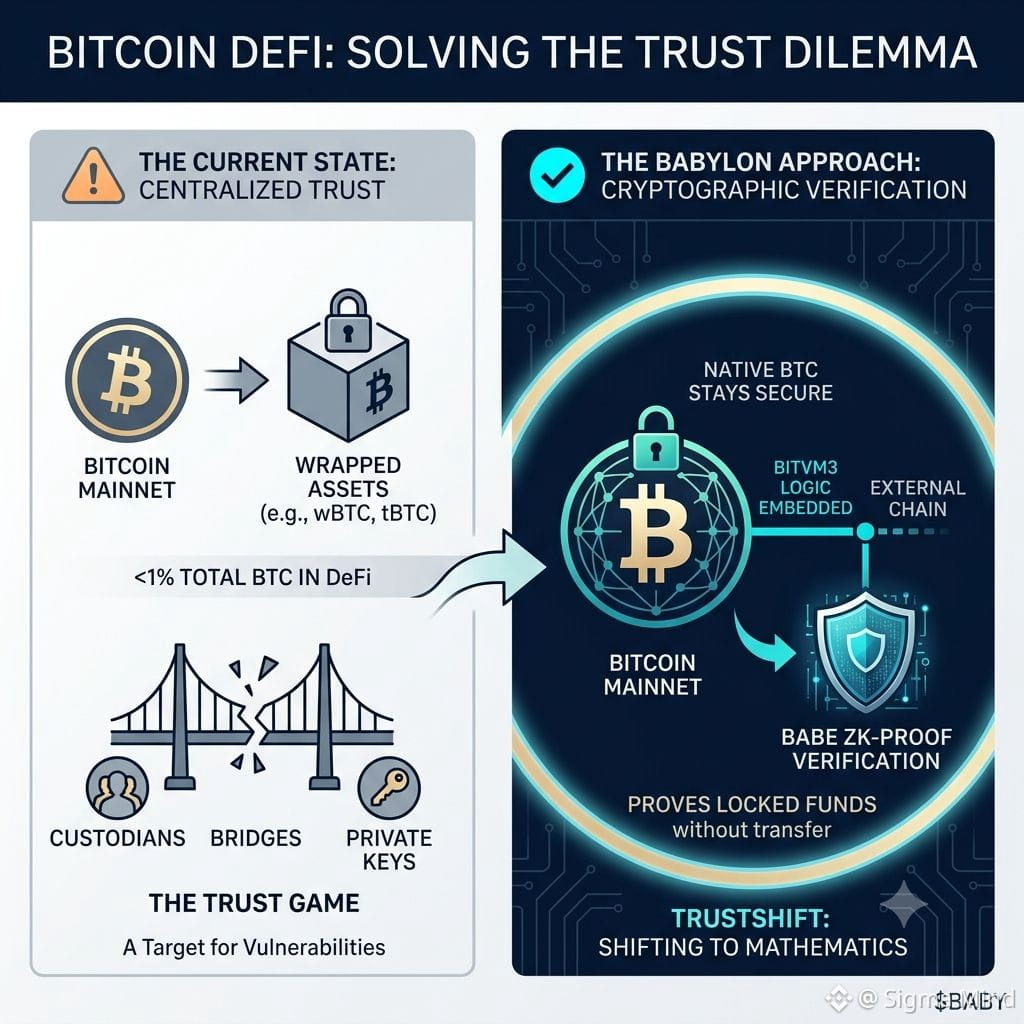
إليك أكثر المقارنات “لدغًا” بالبيانات: القيمة السوقية لبيتكوين البالغة 1.8 تريليون دولار—ومع ذلك فإن بيتكوين الأصلية التي يمكنها المشاركة بأمان في التمويل اللامركزي (DeFi) أقل من 1%.
يستلزم الربط مفاتيح خاصة، بينما تعتمد الأصول المعبأة على أمناء حفظ. وهذا ما زال لعبة ثقة. أي شخص قضى وقتًا كافيًا في عالم الكريبتو يعرف أن الأنظمة المبنية على “ثق بي” تصبح في النهاية أهدافًا.
بعد اختبار حل Babylon’s TBV، أعتقد أن هذا النهج قد يكون مختلفًا أخيرًا.
@BabylonLabs_io دع البيتكوين تبقى حيث هي، بينما تصبح ضمانًا برمجيًا لسلسلة خارجية. لا يوجد نقل عبر السلاسل، ولا أصل مُعبّأ. BitVM3 تضمّن المنطق داخل بيتكوين، بينما يستخدم BABE إثباتات المعرفة الصفرية للتحقق من أن البيتكوين مُقيّدة فعليًا قبل قبول الضمان.
بدلًا من الوثوق بالأمناء أو الجسور أو multisigs، يُحوّل النموذج عملية التحقق نحو الرياضيات.
$BABY
مع ذلك، ما زلت أحتفظ بمركز صغير فقط.
حتى مع إثباتات تشفيرية مثالية، فإن التصفية والتنفيذ ما زالا يعتمدان على مُجمِّع السلسلة الخارجية (sequencer). إذا توقفت عملية الـ sequencer أثناء الأسواق المتقلبة، فقد يتجاوز السعر حد التصفية قبل التنفيذ. الإثبات صحيح، لكن التوقيت هو نقطة الضعف.
في الوقت الحالي، ما يزال تمويل بيتكوين اللامركزي يتعين عليه القتال مع عدو يُسمّى الوقت.
هل تعتقد أن ZK-Rollups يمكنها في النهاية القضاء على هذا الاحتكاك؟ لنتناقش في التعليقات.
@BabylonLabs_io #baby $BABY
إليك أكثر المقارنات “لدغًا” بالبيانات: القيمة السوقية لبيتكوين البالغة 1.8 تريليون دولار—ومع ذلك فإن بيتكوين الأصلية التي يمكنها المشاركة بأمان في التمويل اللامركزي (DeFi) أقل من 1%.
يستلزم الربط مفاتيح خاصة، بينما تعتمد الأصول المعبأة على أمناء حفظ. وهذا ما زال لعبة ثقة. أي شخص قضى وقتًا كافيًا في عالم الكريبتو يعرف أن الأنظمة المبنية على “ثق بي” تصبح في النهاية أهدافًا.
بعد اختبار حل Babylon’s TBV، أعتقد أن هذا النهج قد يكون مختلفًا أخيرًا.
@BabylonLabs_io دع البيتكوين تبقى حيث هي، بينما تصبح ضمانًا برمجيًا لسلسلة خارجية. لا يوجد نقل عبر السلاسل، ولا أصل مُعبّأ. BitVM3 تضمّن المنطق داخل بيتكوين، بينما يستخدم BABE إثباتات المعرفة الصفرية للتحقق من أن البيتكوين مُقيّدة فعليًا قبل قبول الضمان.
بدلًا من الوثوق بالأمناء أو الجسور أو multisigs، يُحوّل النموذج عملية التحقق نحو الرياضيات.
$BABY
مع ذلك، ما زلت أحتفظ بمركز صغير فقط.
حتى مع إثباتات تشفيرية مثالية، فإن التصفية والتنفيذ ما زالا يعتمدان على مُجمِّع السلسلة الخارجية (sequencer). إذا توقفت عملية الـ sequencer أثناء الأسواق المتقلبة، فقد يتجاوز السعر حد التصفية قبل التنفيذ. الإثبات صحيح، لكن التوقيت هو نقطة الضعف.
في الوقت الحالي، ما يزال تمويل بيتكوين اللامركزي يتعين عليه القتال مع عدو يُسمّى الوقت.
هل تعتقد أن ZK-Rollups يمكنها في النهاية القضاء على هذا الاحتكاك؟ لنتناقش في التعليقات.
@BabylonLabs_io #baby $BABY