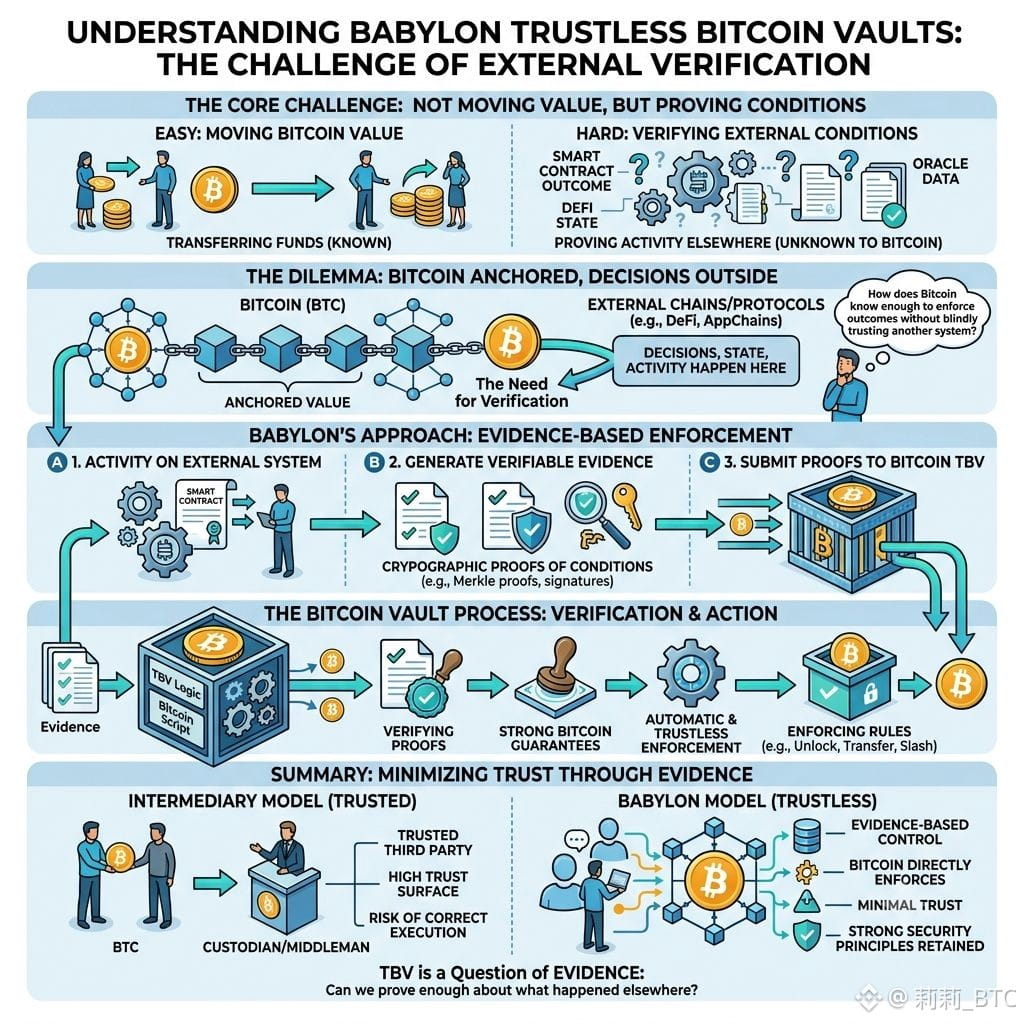
أ أصعب جزء في جعل عملة البيتكوين مفيدة في أماكن أخرى ليس نقل القيمة. بل هو إثبات أن الشروط المحيطة بتلك القيمة قد تحققت بالفعل.
هذا هو الجزء من خزائن «بابيلون» غير الثابتة التي أجدها الأكثر إثارة للاهتمام.
عندما أنظر إلى BabylonLabs_io، أعود دائمًا إلى التحقق. إذا ظلّت البيتكوين مرتبطة بالبيتكوين بينما تعتمد القرارات على النشاط أو الحالة خارج البيتكوين، فإن التحدي الحقيقي يصبح واضحًا: كيف تعرف البيتكوين ما يكفي لفرض النتيجة الصحيحة دون أن تثق بشكل أعمى في نظام آخر؟
بالنسبة لي، هذا هو المكان الذي تصبح فيه TBV أكثر بكثير من مجرد قصة «خدمة بيتكوين».
المشكلة التصميمية الأعمق هي تحويل الظروف الخارجية إلى شيء يمكن للبيتكوين التحقق منه مع ضمانات قوية بما يكفي للتحكم فيما يحدث بعد ذلك. وهذا يخلق نموذج أمان مختلفًا جدًا عن مجرد تسليم الأصول إلى وسيط والاعتماد عليه لتنفيذ الأمور بشكل صحيح.
أعتقد لهذا السبب أن التحقق أهم من الميزة الرئيسية.
قد تمتلك الخزنة منطقًا متقدمًا، لكن إذا كان البرهان الذي يربط الأحداث الخارجية بإنفاذ البيتكوين من الجانب الضعيف، فإن التعقيد لا يؤدي إلا إلى خلق سطح ثقة إضافي.
كلما درست هذه الفكرة أكثر، زاد ما أرى TBV كسؤال عن الأدلة:
هل يمكن لنظام أن يثبت قدرًا كافيًا مما حدث في مكان آخر لكي تفرض البيتكوين القواعد دون التنازل عن مبادئ الأمان التي جعلت الأصل ذا قيمة في المقام الأول؟
بالنسبة لي، هذا هو المكان الذي تصبح فيه المعمارية مثيرة للاهتمام حقًا.
$BABY @BabylonLabs_io #baby
هذا هو الجزء من خزائن «بابيلون» غير الثابتة التي أجدها الأكثر إثارة للاهتمام.
عندما أنظر إلى BabylonLabs_io، أعود دائمًا إلى التحقق. إذا ظلّت البيتكوين مرتبطة بالبيتكوين بينما تعتمد القرارات على النشاط أو الحالة خارج البيتكوين، فإن التحدي الحقيقي يصبح واضحًا: كيف تعرف البيتكوين ما يكفي لفرض النتيجة الصحيحة دون أن تثق بشكل أعمى في نظام آخر؟
بالنسبة لي، هذا هو المكان الذي تصبح فيه TBV أكثر بكثير من مجرد قصة «خدمة بيتكوين».
المشكلة التصميمية الأعمق هي تحويل الظروف الخارجية إلى شيء يمكن للبيتكوين التحقق منه مع ضمانات قوية بما يكفي للتحكم فيما يحدث بعد ذلك. وهذا يخلق نموذج أمان مختلفًا جدًا عن مجرد تسليم الأصول إلى وسيط والاعتماد عليه لتنفيذ الأمور بشكل صحيح.
أعتقد لهذا السبب أن التحقق أهم من الميزة الرئيسية.
قد تمتلك الخزنة منطقًا متقدمًا، لكن إذا كان البرهان الذي يربط الأحداث الخارجية بإنفاذ البيتكوين من الجانب الضعيف، فإن التعقيد لا يؤدي إلا إلى خلق سطح ثقة إضافي.
كلما درست هذه الفكرة أكثر، زاد ما أرى TBV كسؤال عن الأدلة:
هل يمكن لنظام أن يثبت قدرًا كافيًا مما حدث في مكان آخر لكي تفرض البيتكوين القواعد دون التنازل عن مبادئ الأمان التي جعلت الأصل ذا قيمة في المقام الأول؟
بالنسبة لي، هذا هو المكان الذي تصبح فيه المعمارية مثيرة للاهتمام حقًا.
$BABY @BabylonLabs_io #baby