#baby $BABY
قضيت بعض الوقت في القراءة عن بابل، وأرسلني ذلك في رحلة عميقة لم يكن لها علاقة كبيرة بالعوائد.
الفكرة التي كانت تعود باستمرار كانت بسيطة بشكل مدهش: ماذا لو لم تكن أكبر ابتكارات هي إضافة شيء جديد، بل إزالة الأشياء التي اعتدنا عليها لسنوات؟
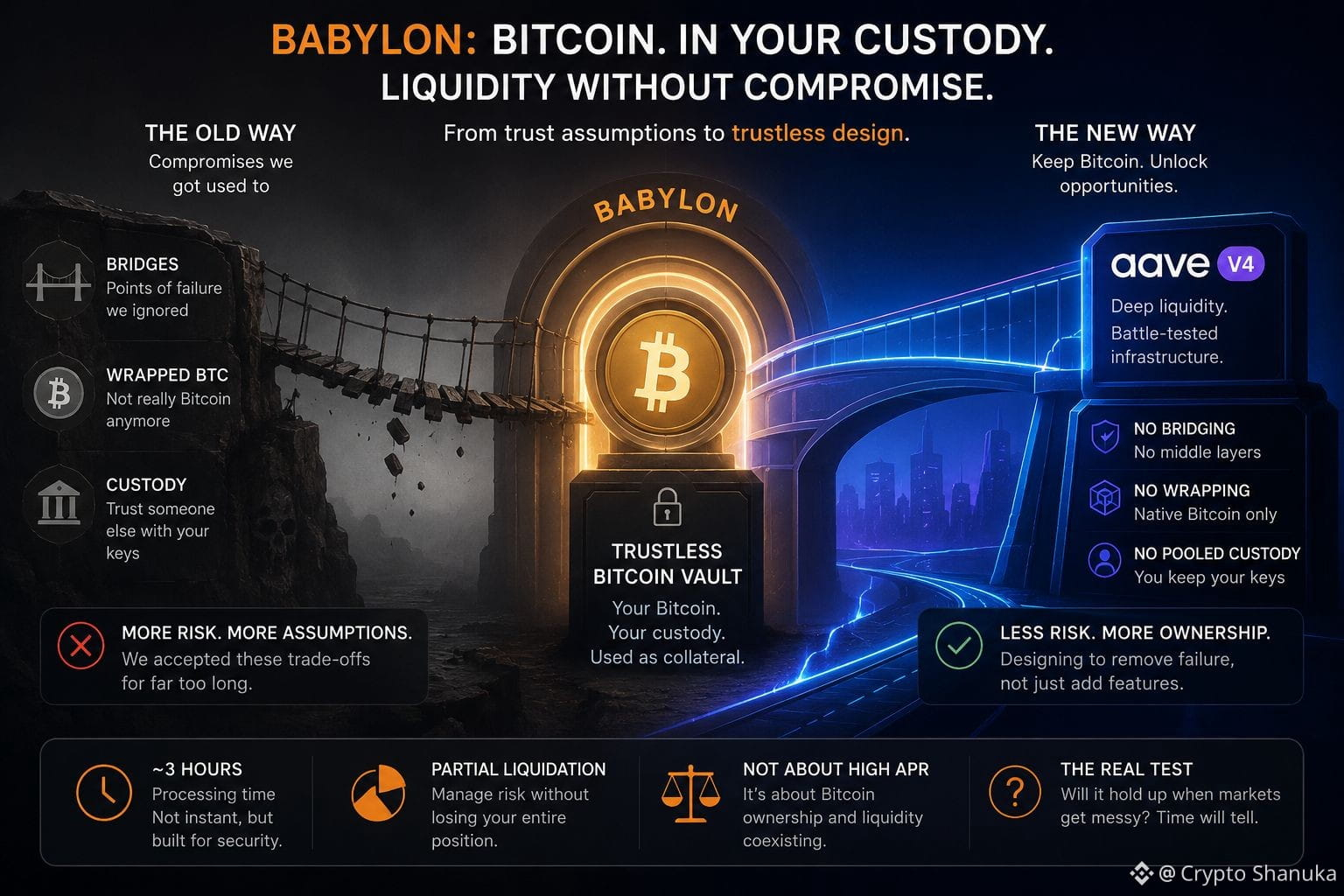
لطالما كان استخدام بيتكوين في التمويل اللامركزي يعني التنازل عن شيء ما. غلّفه. اربطه. وثق بوسيط حفظ. وفي مكان ما على طول الطريق بدأت تلك التنازلات تبدو عادية، تقريبًا كأنها جزء من بيتكوين نفسها.
يبدو أن بابل تتساءل عن هذا الافتراض. بدلًا من السؤال عن كيفية نقل بيتكوين إلى مكان آخر، تتساءل عما إذا كان بإمكان بيتكوين أن تبقى في مكانها الصحيح وأن تصبح مفيدة كضمان. هذه طريقة مختلفة جدًا للنظر إلى المشكلة.
كما وجدتُ الرابط مع Aave مثيرًا للاهتمام. بدلًا من بناء منظومة إقراض معزولة أخرى، تتمثل الفكرة في الاتصال بالسيولة الموجودة بالفعل. ومن الناحية النظرية، يبدو ذلك أكثر كفاءة بكثير من تجزئة رأس المال عبر بروتوكول آخر جديد.
لكن هذا لا يعني أن كل شيء تم حله. فقد جعلني تأخر المعالجة أتوقف دقيقة. في بعض ظروف السوق، لا يهم أن تمر بضع ساعات. وفي ظروف أخرى، قد تشعر بأنها إلى الأبد.
الأنظمة التي تعمل بدون ثقة لا تلغي التنازلات؛ إنها ببساطة تستبدل مجموعة بأخرى.
بالنسبة لي، السؤال الحقيقي ليس ما إذا كان الناس سيغيرون عاداتهم. إذا أثبت بروتوكول ما نفسه من خلال الاعتمادية والأمان والسيولة العميقة، فعادة ما يتكيف المستخدمون أسرع مما نتوقع. التحدي الأكبر هو إثبات أن هذه الأفكار لا تزال تعمل عندما تصبح الأسواق فوضوية، لأن عندها يتم اختبار كل تصميم في النهاية.
شيء ممتع أن نرى كيف سيتكشف الأمر.@BabylonLabs_io #BABY #baby
قضيت بعض الوقت في القراءة عن بابل، وأرسلني ذلك في رحلة عميقة لم يكن لها علاقة كبيرة بالعوائد.
الفكرة التي كانت تعود باستمرار كانت بسيطة بشكل مدهش: ماذا لو لم تكن أكبر ابتكارات هي إضافة شيء جديد، بل إزالة الأشياء التي اعتدنا عليها لسنوات؟
لطالما كان استخدام بيتكوين في التمويل اللامركزي يعني التنازل عن شيء ما. غلّفه. اربطه. وثق بوسيط حفظ. وفي مكان ما على طول الطريق بدأت تلك التنازلات تبدو عادية، تقريبًا كأنها جزء من بيتكوين نفسها.
يبدو أن بابل تتساءل عن هذا الافتراض. بدلًا من السؤال عن كيفية نقل بيتكوين إلى مكان آخر، تتساءل عما إذا كان بإمكان بيتكوين أن تبقى في مكانها الصحيح وأن تصبح مفيدة كضمان. هذه طريقة مختلفة جدًا للنظر إلى المشكلة.
كما وجدتُ الرابط مع Aave مثيرًا للاهتمام. بدلًا من بناء منظومة إقراض معزولة أخرى، تتمثل الفكرة في الاتصال بالسيولة الموجودة بالفعل. ومن الناحية النظرية، يبدو ذلك أكثر كفاءة بكثير من تجزئة رأس المال عبر بروتوكول آخر جديد.
لكن هذا لا يعني أن كل شيء تم حله. فقد جعلني تأخر المعالجة أتوقف دقيقة. في بعض ظروف السوق، لا يهم أن تمر بضع ساعات. وفي ظروف أخرى، قد تشعر بأنها إلى الأبد.
الأنظمة التي تعمل بدون ثقة لا تلغي التنازلات؛ إنها ببساطة تستبدل مجموعة بأخرى.
بالنسبة لي، السؤال الحقيقي ليس ما إذا كان الناس سيغيرون عاداتهم. إذا أثبت بروتوكول ما نفسه من خلال الاعتمادية والأمان والسيولة العميقة، فعادة ما يتكيف المستخدمون أسرع مما نتوقع. التحدي الأكبر هو إثبات أن هذه الأفكار لا تزال تعمل عندما تصبح الأسواق فوضوية، لأن عندها يتم اختبار كل تصميم في النهاية.
شيء ممتع أن نرى كيف سيتكشف الأمر.@BabylonLabs_io #BABY #baby