



Introduction
In traditional organizations, decision-making power is usually concentrated in the hands of a small group, such as executives or a board of directors. Blockchain projects take a very different approach. Instead of central leadership, many rely on governance tokens to distribute control across a global community of users.
Governance tokens are a foundational building block of decentralized finance and decentralized autonomous organizations. They give everyday users a voice in how protocols evolve, how funds are used, and how rules are changed, making governance more transparent and community-driven.
What Are Governance Tokens?
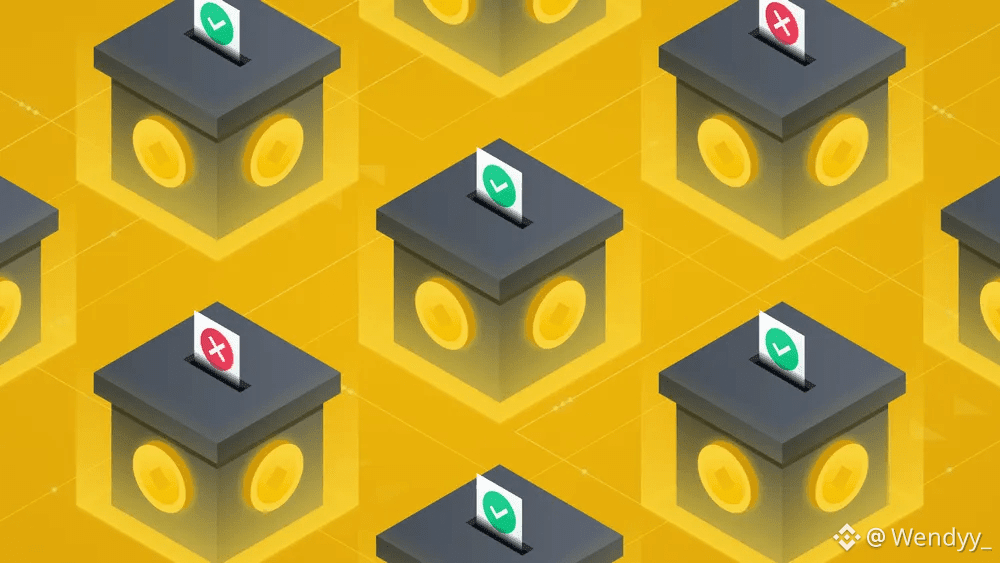
Governance tokens are cryptocurrencies that grant holders the right to vote on proposals that shape a blockchain project. These proposals may involve protocol upgrades, fee changes, treasury spending, partnerships, or long-term strategy.
In most systems, voting power is proportional to the number of tokens held, often summarized as one token equaling one vote. By distributing these tokens to users, contributors, and stakeholders, projects decentralize decision-making and align the interests of the community with the success of the protocol itself.
How Governance Tokens Work
Governance tokens are typically distributed to users who actively participate in a project. This participation might include lending assets, providing liquidity, staking tokens, or contributing to the ecosystem in other ways. Once users hold governance tokens, they can vote on proposals or delegate their voting power to someone they trust.
Voting is usually handled through smart contracts, which means results can be executed automatically once a proposal passes. This removes the need for intermediaries and ensures that governance decisions are enforced exactly as agreed.
One of the earliest and most influential examples comes from MakerDAO. The Maker protocol, which supports the DAI stablecoin, is governed by holders of the MKR token. These holders vote on critical issues such as risk parameters, fees, and protocol upgrades, helping maintain the stability of the system.
Another well-known example is Compound, a lending and borrowing platform that distributes COMP tokens to users based on on-chain activity. The more users interact with the protocol, the more governance power they earn. In 2020, Compound fully decentralized control by giving governance authority entirely to token holders.
Popular Governance Tokens in Crypto
Many leading blockchain projects rely on governance tokens to coordinate their communities. Uniswap uses the UNI token to let users vote on changes to one of the largest decentralized exchanges in the world. PancakeSwap follows a similar model on BNB Smart Chain through its CAKE token.
Lending protocol Aave allows token holders to vote on upgrades and ecosystem funding, while metaverse platform Decentraland gives landowners and token holders a say in how its virtual world evolves. NFT-focused communities such as ApeCoin DAO also rely heavily on governance tokens to guide development and treasury decisions.
Each project defines its own governance rules. Some tokens only vote on specific topics, while others influence nearly every aspect of a protocol. In some cases, governance tokens may also come with financial incentives, but voting rights are their primary purpose.
Advantages of Governance Tokens
Governance tokens help eliminate the misalignment of interests often seen in centralized systems. Because users who vote are also stakeholders, they are incentivized to make decisions that support the long-term health of the project.
They also encourage strong community engagement. Token holders are motivated to participate, propose ideas, and debate changes openly. Since votes and proposals are recorded on-chain, the process is transparent and difficult to manipulate, reinforcing trust in the system.
Challenges and Risks
Despite their benefits, governance tokens are not without problems. One major concern is the so-called whale issue. If a small number of holders control a large share of tokens, they can dominate votes and push decisions that benefit themselves rather than the broader community.
Even with fair distribution, majority rule does not always lead to optimal outcomes. History has shown that collective decisions can sometimes favor short-term gains or influential insiders. Designing governance systems that balance inclusivity, expertise, and long-term thinking remains an ongoing challenge.
The Future of Governance Tokens
Governance tokens are still evolving. As DAOs and Web3 projects mature, new voting mechanisms may emerge to reduce the influence of large holders and improve participation. Delegation models, reputation-based voting, and more nuanced governance frameworks are already being explored.
Regulation may also play a role in shaping the future. In some jurisdictions, governance tokens could be classified as securities, potentially changing how they are issued and used. How regulators respond will likely influence how governance tokens develop over time.
Closing Thoughts
Governance tokens are a cornerstone of decentralization in the crypto ecosystem. By giving users real decision-making power, they transform communities from passive users into active stewards of blockchain projects.
While challenges remain, governance tokens have already proven their value in driving innovation across DeFi, DAOs, and Web3. As distribution models and voting systems improve, they may become an even more important tool for building open, user-owned digital networks.