

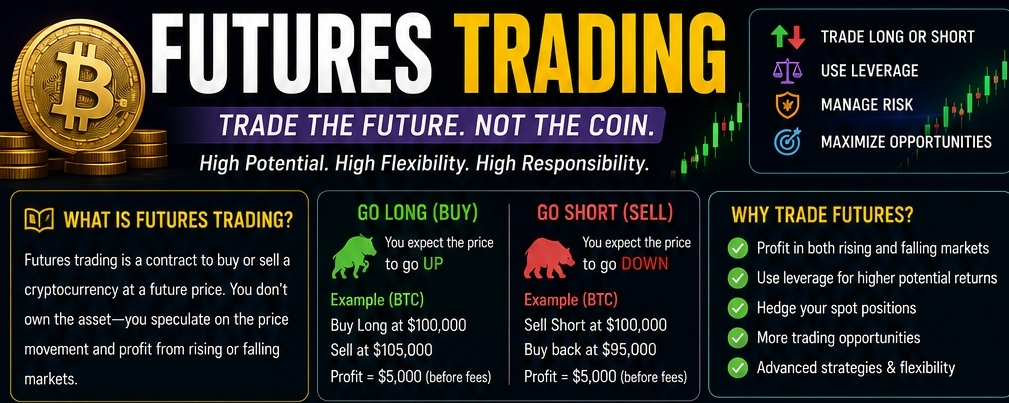

يُعد تداول العقود الآجلة للعملات المشفرة أحد أقوى أساليب التداول في سوق العملات المشفرة. على عكس التداول الفوري، لا تقوم بشراء العملة المشفرة الفعلية أو امتلاكها. بدلاً من ذلك، تتداول عقدًا يتتبع سعر الأصل، مما يتيح لك تحقيق ربح محتمل من الأسواق التي ترتفع وكذلك التي تنخفض.
ومع ذلك، تنطوي تداولات العقود الآجلة أيضًا على مخاطر أعلى، خاصة عند استخدام الرافعة المالية.
ما هو تداول العقود الآجلة؟
تداول العقود الآجلة هو عقد مالي يتكهن فيه المتداولون بسعر العملة المشفرة في المستقبل دون امتلاك الأصل.
مثال:
BTC = 100,000 دولار
تفتح مركز Long (شراء).
يصعد BTC إلى 105,000 دولار.
أنت تغلق الصفقة وتحقق ربحًا (قبل الرسوم).
إذا انخفض BTC بدلًا من ذلك، ستفقد صفقتك قيمتها.
مزايا تداول العقود الآجلة
✅ ربح في الأسواق الصاعدة (شراء/Long)
✅ ربح في الأسواق الهابطة (بيع/Short)
✅ استخدم الرافعة المالية
✅ التحوّط للاستثمارات الفورية الموجودة
مخاطر تداول العقود الآجلة
❌ خطر التصفية (Liquidation)
❌ تقلبات عالية
❌ تداول بدافع المشاعر
❌ قد تزداد الخسائر بسرعة مع الرافعة المالية العالية
مصطلحات شائعة في تداول العقود الآجلة
عقد مستقبلي (Futures Contract)
اتفاق للتداول بسعر عملة رقمية دون امتلاكها.
مركز Long (شراء)
شراء لأنك تتوقع أن السعر سيرتفع.
مثال:
BTC = 100,000 دولار
شراء (Buy Long)
بيع عند 105,000 دولار
ربح إذا زاد السعر.
مركز بيع (Short Position)
البيع لأنك تتوقع أن السعر سينخفض.
مثال:
BTC = 100,000 دولار
فتح مركز بيع (Open Short)
الشراء مجددًا عند 95,000 دولار
ربح إذا انخفض السعر.
الرافعة المالية (Leverage)
رأس مال مقترض يزيد من تعرضك في السوق.
مثال:
رافعة مالية 10×
يسمح رأس مال بقيمة 100 دولار بفتح مركز بقيمة 1,000 دولار.
الرافعة المالية الأعلى تزيد من فرص الأرباح وكذلك فرص الخسائر.
الهامش (Margin)
مبلغ المال المطلوب لفتح مركز برافعة مالية.
مثال:
المركز = 5,000 دولار
الرافعة المالية = 10×
الهامش المطلوب = 500 دولار
الهامش الأولي
الحد الأدنى من المبلغ المطلوب لفتح صفقة عقود آجلة.
هامش الصيانة (Maintenance Margin)
الحد الأدنى من رصيد الحساب المطلوب لإبقاء المركز مفتوحًا.
قد يؤدي النزول تحت هذا المستوى إلى التصفية.
التصفية (Liquidation)
الإغلاق التلقائي للمركز عندما تصبح الخسائر كبيرة جدًا بحيث لا يمكنها دعم الهامش المطلوب.
PnL غير محقق (Unrealized PnL)
الربح أو الخسارة في صفقة مفتوحة.
PnL محقق (Realized PnL)
الربح أو الخسارة بعد إغلاق الصفقة.
سعر الدخول (Entry Price)
السعر الذي يتم عنده فتح المركز.
سعر الخروج (Exit Price)
سعر إغلاق المركز.
سعر مارك
سعر مرجعي تستخدمه العديد من المنصات لحساب الربح/الخسارة غير المحقق و لتحديد التصفية، مما يساعد على تقليل تأثير الارتفاعات/الهبوطات قصيرة الأجل.
سعر الفهرس (Index Price)
متوسط سعر السوق المحسوب من عدة منصات.
وقف الخسارة (Stop Loss - SL)
أمر يغلق الصفقة تلقائيًا عند مستوى خسارة محدد مسبقًا للمساعدة في إدارة المخاطر.
جني الربح (TP)
أمر يغلق الصفقة تلقائيًا عند الوصول إلى مستوى ربح مستهدف.
أمر سوق (Market Order)
يتم التنفيذ فورًا بأفضل سعر متاح في السوق.
أمر محدد (Limit Order)
يتم التنفيذ فقط بالسعر الذي تحدده أو بسعر أفضل.
أمر وقف-حد (Stop-Limit Order)
يضع أمرًا محددًا (Limit) بعد الوصول إلى سعر وقف محدد.
هامش عبر الحساب (Cross Margin)
يستخدم رصيد الحساب المتاح لدعم المراكز المفتوحة.
قد يقلل فرصة التصفية لكنه يعرض جزءًا أكبر من رصيد حسابك للمخاطر.
هامش معزول (Isolated Margin)
المبلغ المعزول (الهامش) المخصص لمركز محدد فقط هو المعرض للخطر.
سعر التمويل (Funding Rate)
دفع دوري يتم تبادله بين متداولي الشراء والبيع في عقود البيربتوال (Perpetual Futures) حسب ظروف السوق.
الفائدة المفتوحة (OI)
إجمالي عدد عقود العقود الآجلة المفتوحة التي لم يتم إغلاقها بعد.
الحجم (Volume)
إجمالي الكمية المتداولة خلال فترة زمنية محددة.
التقلب (Volatility)
حجم وتواتر تحركات الأسعار.
بشكل عام، تعني التقلبات الأعلى فرصة أكبر ومخاطر أكبر.
الدعم
منطقة سعر قد يزيد فيها الاهتمام بالشراء.
المقاومة
منطقة سعر قد يزيد فيها الاهتمام بالبيع.
اختراق (Breakout)
تحرك السعر بما يتجاوز الدعم أو المقاومة مع زخم قوي.
اختراق كاذب (Fake Breakout)
يتحرك السعر لفترة قصيرة عبر مستوى مهم ثم يعكس اتجاهه.
نسبة المخاطرة إلى العائد (Risk-Reward Ratio)
يقارن الربح المحتمل من صفقة بالمخسارة المحتملة.
يبحث العديد من المتداولين عن إعدادات يكون فيها العائد المحتمل أكبر بشكل واضح من المخاطر.
الاتجاه (Trend)
الاتجاه العام للسوق.
اتجاه صاعد (Uptrend)
اتجاه هابط (Downtrend)
جانبي
صعودي (Bullish)
توقع أن الأسعار قد ترتفع.
اتجاه هبوطي
توقع أن الأسعار قد تنخفض.
سكالبينغ
تداول قصير جدًا مع العديد من الصفقات الصغيرة.
تداول يومي (Day Trading)
فتح وإغلاق المراكز في نفس اليوم.
تداول التأرجح (Swing)
الاحتفاظ بالمراكز لعدة أيام أو أسابيع لالتقاط تحركات سعر أكبر.
تداول المراكز
الاحتفاظ بالصفقات لفترات أطول بناءً على اتجاهات أوسع في السوق.
استراتيجية تداول العقود الآجلة الأساسية
الخطوة 1
حدّد الاتجاه العام.
الخطوة 2
انتظر تأكيد الدعم أو المقاومة أو الاختراق (Breakout).
الخطوة 3
اختر مستوى رافعة مناسب لمستواك وخبرتك.
الخطوة 4
ضع وقف خسارة قبل الدخول في الصفقة.
الخطوة 5
حدّد هدف جني الربح (take-profit).
الخطوة 6
تجنب تغيير خطتك بسبب العواطف.
الخطوة 7
راجع صفقاتك وتعلّم من النتائج.
أخطاء شائعة يرتكبها المبتدئون
❌ استخدام رافعة مالية مفرطة.
❌ التداول بدون وقف خسارة (Stop-Loss).
❌ الإفراط في التداول.
❌ مطاردة الارتفاعات والبيع الذعِر
❌ تجاهل اتجاه السوق.
❌ السماح للعواطف بتوجيه القرارات.
❌ المخاطرة بأموال أكثر مما يستطيعون تحمّل خسارته.
الخلاصة النهائية
يمكن أن يوفر تداول العقود الآجلة مرونة أكبر من التداول الفوري (Spot)، لأن المتداولين يمكنهم فتح مراكز في الأسواق الصاعدة والهابطة. ومع ذلك، فإنه يحمل مخاطر أعلى بكثير بسبب الرافعة المالية. لذلك، فإن وجود خطة تداول قوية، وإدارة مخاطر منضبطة، وتعلم مستمر أهم من محاولة التنبؤ بكل حركة في السوق.
#تداول_العقود_الآجلة #كريبتو #بيتكوين #BNB #SOL #رافعة_مالية #إدارة_المخاطر #BinanceSquare #تعليم_التداول #اعمل_بحثك_بنفسك (DYOR)