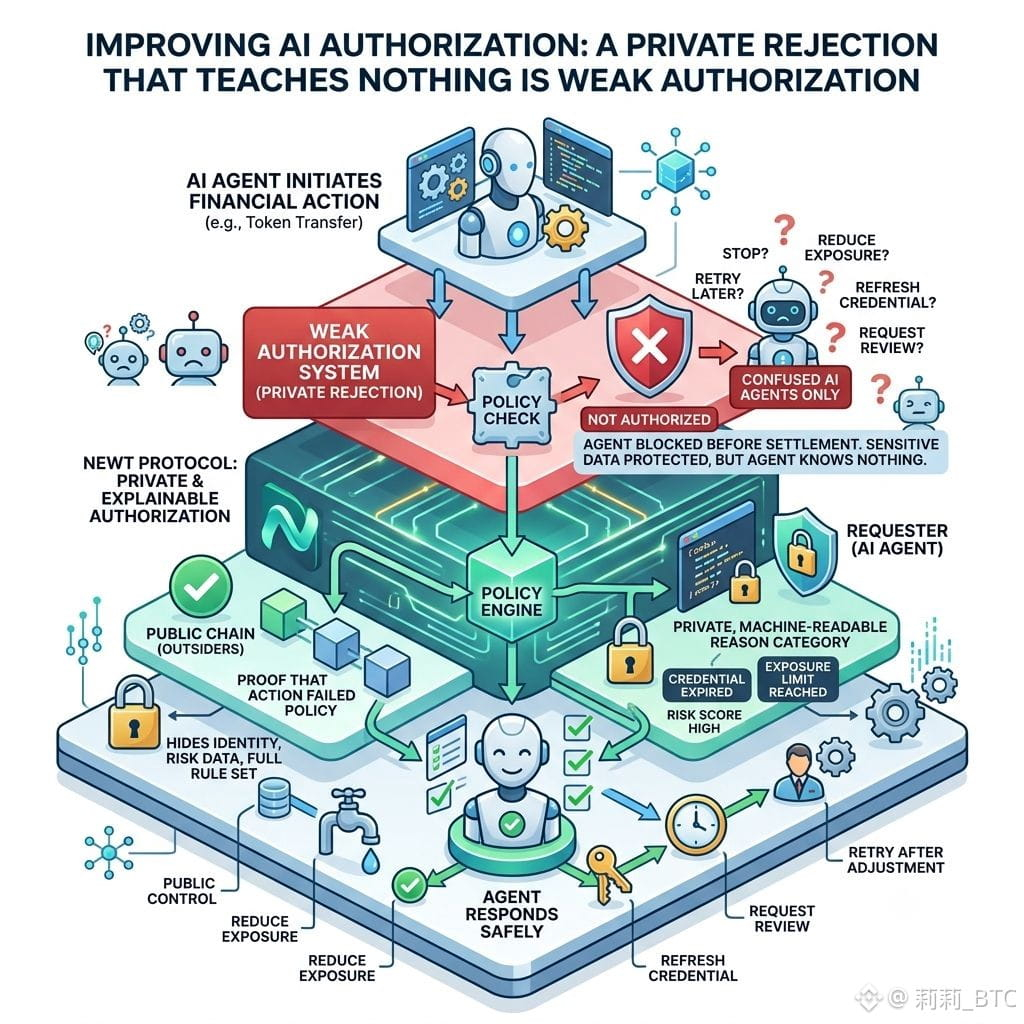
إن الرفض الخاص الذي لا يعلّم شيئًا ما يزال نظام تفويضًا ضعيفًا.
هذا ما أستمر في التفكير فيه مع NewtonProtocol.
إذا تم حظر وكيل ذكاء اصطناعي قبل التسوية، فقد تحمي عبارة “غير مصرح” البيانات الحساسة—لكنها لا تخبر الوكيل ما إذا كان يجب أن يتوقف، أو يحاول مرة أخرى لاحقًا، أو يقلّل من التعرض، أو يُحدّث اعتمادًا، أو يطلب مراجعة.
بالنسبة لي، يصبح NEWT أكثر فائدة عندما يعمل الخصوصية وقابلية التفسير معًا.
قد لا تحتاج السلسلة العامة إلا إلى إثبات أن الإجراء خالف سياسة.
يجب أن يتلقى مقدم الطلب سببًا خاصًا مُقروءًا آليًا فئة دون كشف الهوية أو بيانات المخاطر أو المجموعة الكاملة من القواعد.
هذا ما أراقبه مع Newt.
يجب أن يخفي التفويض الجيد ما لا يحتاج الغرباء إلى معرفته، مع منح المستخدم المتأثر أو الوكيل ما يكفي من المعلومات للرد بأمان.
$NEWT @NewtonProtocol #Newt
هذا ما أستمر في التفكير فيه مع NewtonProtocol.
إذا تم حظر وكيل ذكاء اصطناعي قبل التسوية، فقد تحمي عبارة “غير مصرح” البيانات الحساسة—لكنها لا تخبر الوكيل ما إذا كان يجب أن يتوقف، أو يحاول مرة أخرى لاحقًا، أو يقلّل من التعرض، أو يُحدّث اعتمادًا، أو يطلب مراجعة.
بالنسبة لي، يصبح NEWT أكثر فائدة عندما يعمل الخصوصية وقابلية التفسير معًا.
قد لا تحتاج السلسلة العامة إلا إلى إثبات أن الإجراء خالف سياسة.
يجب أن يتلقى مقدم الطلب سببًا خاصًا مُقروءًا آليًا فئة دون كشف الهوية أو بيانات المخاطر أو المجموعة الكاملة من القواعد.
هذا ما أراقبه مع Newt.
يجب أن يخفي التفويض الجيد ما لا يحتاج الغرباء إلى معرفته، مع منح المستخدم المتأثر أو الوكيل ما يكفي من المعلومات للرد بأمان.
$NEWT @NewtonProtocol #Newt