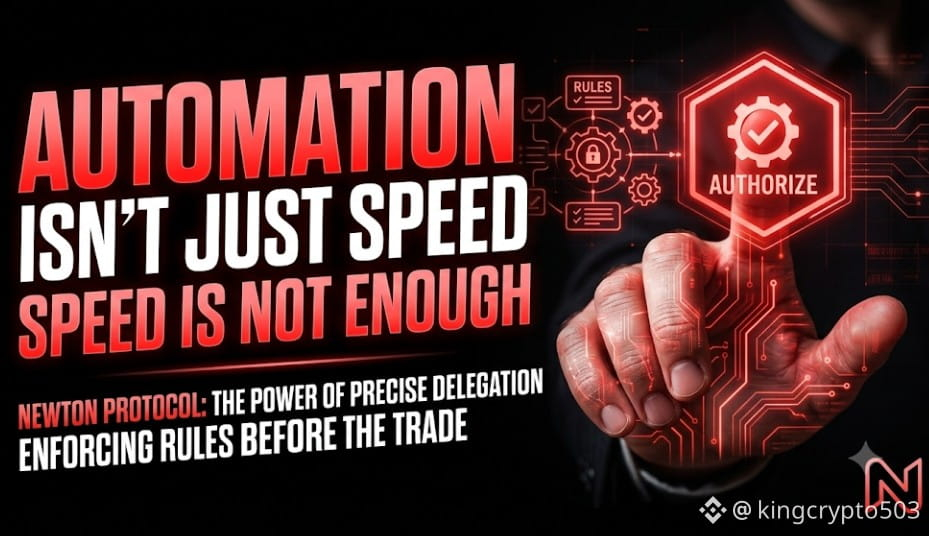
يَفترض معظم الناس أن الأتمتة تتعلق بالسرعة أساسًا: نقرّات أقل، تنفيذ أسرع، احتكاك أقل. كان هذا افتراضي الأول أيضًا. لكن كلما فكّرت في أنظمة مثل Newton Protocol، شعرت أكثر أن هذه الفكرة ناقصة.
المهم ليس فقط أن تتم عملية التداول تلقائيًا. المهم هو أن القواعد يمكنها أن تقف أمام التداول قبل أن يُنفَّذ أي شيء. يقدّم Newton نفسه كطبقة تفويض وترخيص على السلسلة (onchain) ومحرك سياسات (policy engine)، مُصمّم لفرض حدود الإنفاق، والفحص، وغيرها من الصلاحيات في لحظة التفويض بدلًا من القيام بذلك بعد وقوع الأمر. يبدو الأمر تقنيًا، لكن التحول الحقيقي شبه بديهي: تتوقف عن الوثوق في مستقبلك بأن يتذكر كل القيود.
هذا يذكّرني بالخدمة الدورية (autopay) لدفع فاتورة. ليست القيمة في عملية الدفع نفسها. القيمة أن القرار مُتَّخذ مسبقًا وفق قواعد واضحة، قبل أن تتدخل عوامل التشتيت أو الذعر أو الثقة المفرطة.
هذه هي النقطة التي غالبًا ما يفوتها الناس. عندما تتوسع الأتمتة، لا تكون النتيجة من الدرجة الثانية مجرد راحة. بل إن رأس المال يمكن أن يتحرك أكثر تحت أذونات صريحة، مع اعتماد أقل على حكم بشري فردي أو روبوتات غامضة. في سوق تكون فيه المالية على السلسلة بالفعل تتعامل مع مئات المليارات من التدفقات الشهرية، تصبح الفروقات بين “الأتمتة” و“الأتمتة المُفوَّضة” مهمة جدًا.
ربما لا يكون السؤال الأعمق هو ما إذا كانت الآلات تستطيع التداول نيابةً عنا. بل هل يمكننا أن نجعل التفويض يبدو دقيقًا بما يكفي لكي نثق به. وهذه ما تزال مشكلة مفتوحة، حتى عندما يبدو الكود أنيقًا.
#Newt @NewtonProtocol l $VANRY $BEL #newt #newt $NEWT
المهم ليس فقط أن تتم عملية التداول تلقائيًا. المهم هو أن القواعد يمكنها أن تقف أمام التداول قبل أن يُنفَّذ أي شيء. يقدّم Newton نفسه كطبقة تفويض وترخيص على السلسلة (onchain) ومحرك سياسات (policy engine)، مُصمّم لفرض حدود الإنفاق، والفحص، وغيرها من الصلاحيات في لحظة التفويض بدلًا من القيام بذلك بعد وقوع الأمر. يبدو الأمر تقنيًا، لكن التحول الحقيقي شبه بديهي: تتوقف عن الوثوق في مستقبلك بأن يتذكر كل القيود.
هذا يذكّرني بالخدمة الدورية (autopay) لدفع فاتورة. ليست القيمة في عملية الدفع نفسها. القيمة أن القرار مُتَّخذ مسبقًا وفق قواعد واضحة، قبل أن تتدخل عوامل التشتيت أو الذعر أو الثقة المفرطة.
هذه هي النقطة التي غالبًا ما يفوتها الناس. عندما تتوسع الأتمتة، لا تكون النتيجة من الدرجة الثانية مجرد راحة. بل إن رأس المال يمكن أن يتحرك أكثر تحت أذونات صريحة، مع اعتماد أقل على حكم بشري فردي أو روبوتات غامضة. في سوق تكون فيه المالية على السلسلة بالفعل تتعامل مع مئات المليارات من التدفقات الشهرية، تصبح الفروقات بين “الأتمتة” و“الأتمتة المُفوَّضة” مهمة جدًا.
ربما لا يكون السؤال الأعمق هو ما إذا كانت الآلات تستطيع التداول نيابةً عنا. بل هل يمكننا أن نجعل التفويض يبدو دقيقًا بما يكفي لكي نثق به. وهذه ما تزال مشكلة مفتوحة، حتى عندما يبدو الكود أنيقًا.
#Newt @NewtonProtocol l $VANRY $BEL #newt #newt $NEWT