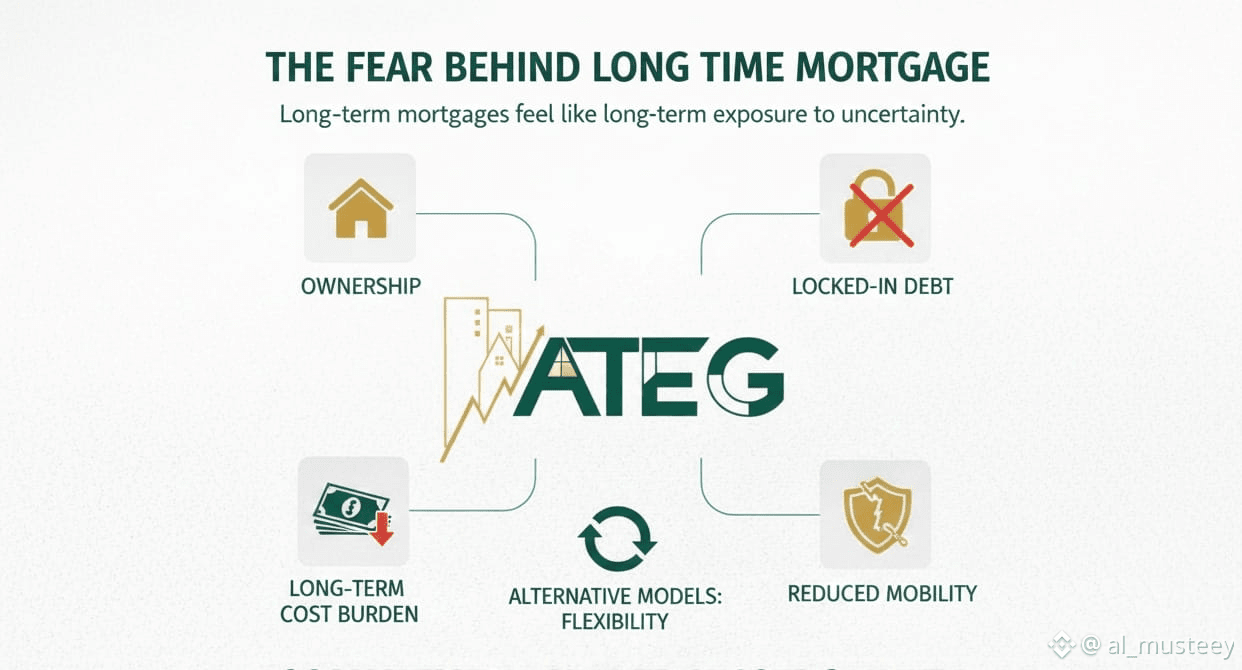
🏠 𝐇𝐔𝐌𝐀 𝐓𝐇𝐄 𝐅𝐄𝐀𝐑 𝐁𝐄𝐇𝐈𝐍𝐃 𝐋𝐎𝐍𝐆 𝐓𝐄𝐑𝐌 𝐌𝐎𝐑𝐓𝐆𝐀𝐆𝐄𝐒
تُباع الرهون العقارية غالبًا كاستقرار.
بالنسبة للكثيرين، يشعرون بأنها عدم يقين طويل الأمد.
تفترض الرهون العقارية التي تمتد من 20 إلى 30 عامًا مستقبلاً يمكن التنبؤ به: دخل ثابت، عمل مستقر، ومعدل تضخم تحت السيطرة. نادرًا ما تتطابق الواقع مع ذلك. تتغير المهن. تتطور احتياجات الأسرة. تتقلب الصحة. ومع ذلك، تظل الديون ثابتة.
تضخم الفائدة الضغط. على مدى عقود، غالبًا ما يسدد المقترضون أكثر بكثير من قيمة العقار. الخروج مبكرًا مكلف، مما يقلل من القدرة على التنقل ويثبط المخاطرة.
التأثير ليس ماليًا فقط.
إنه يشكل السلوك. حركات المهنة، ريادة الأعمال، الانتقال - كلها مؤجلة لحماية القدرة على السداد.
على الرغم من الابتكار المالي، تظل هياكل الرهن العقاري دون تغيير إلى حد كبير - محسّنة لأمان الائتمان، وليس مرونة الحياة.
هنا تتدخل ATEG.
من خلال تقليل التعرض للديون طويلة الأجل، وتقليل الحواجز للدخول، ومحاذاة الالتزامات السكنية مع التكيف الواقعي، فإنه يوفر مسارًا أكثر مرونة لامتلاك المنزل.
𝐊𝐄𝐘 𝐓𝐀𝐊𝐄𝐖𝐀𝐘:
الخوف وراء الرهون العقارية طويلة الأجل ليس حول امتلاك منزل.
إنه حول الارتباط بمستقبل لا يمكن لأحد التنبؤ به بدقة.
تُباع الرهون العقارية غالبًا كاستقرار.
بالنسبة للكثيرين، يشعرون بأنها عدم يقين طويل الأمد.
تفترض الرهون العقارية التي تمتد من 20 إلى 30 عامًا مستقبلاً يمكن التنبؤ به: دخل ثابت، عمل مستقر، ومعدل تضخم تحت السيطرة. نادرًا ما تتطابق الواقع مع ذلك. تتغير المهن. تتطور احتياجات الأسرة. تتقلب الصحة. ومع ذلك، تظل الديون ثابتة.
تضخم الفائدة الضغط. على مدى عقود، غالبًا ما يسدد المقترضون أكثر بكثير من قيمة العقار. الخروج مبكرًا مكلف، مما يقلل من القدرة على التنقل ويثبط المخاطرة.
التأثير ليس ماليًا فقط.
إنه يشكل السلوك. حركات المهنة، ريادة الأعمال، الانتقال - كلها مؤجلة لحماية القدرة على السداد.
على الرغم من الابتكار المالي، تظل هياكل الرهن العقاري دون تغيير إلى حد كبير - محسّنة لأمان الائتمان، وليس مرونة الحياة.
هنا تتدخل ATEG.
من خلال تقليل التعرض للديون طويلة الأجل، وتقليل الحواجز للدخول، ومحاذاة الالتزامات السكنية مع التكيف الواقعي، فإنه يوفر مسارًا أكثر مرونة لامتلاك المنزل.
𝐊𝐄𝐘 𝐓𝐀𝐊𝐄𝐖𝐀𝐘:
الخوف وراء الرهون العقارية طويلة الأجل ليس حول امتلاك منزل.
إنه حول الارتباط بمستقبل لا يمكن لأحد التنبؤ به بدقة.