لقد كنت أستكشف @OpenGradient مؤخرًا، وبصراحة، الطريقة كلها صدمتني. أغلب مقدّمي الخدمات يعاملون التحقق كأنه أمر ثانوي، لكن هذا يبدو مختلفًا عن الأمر الأول.
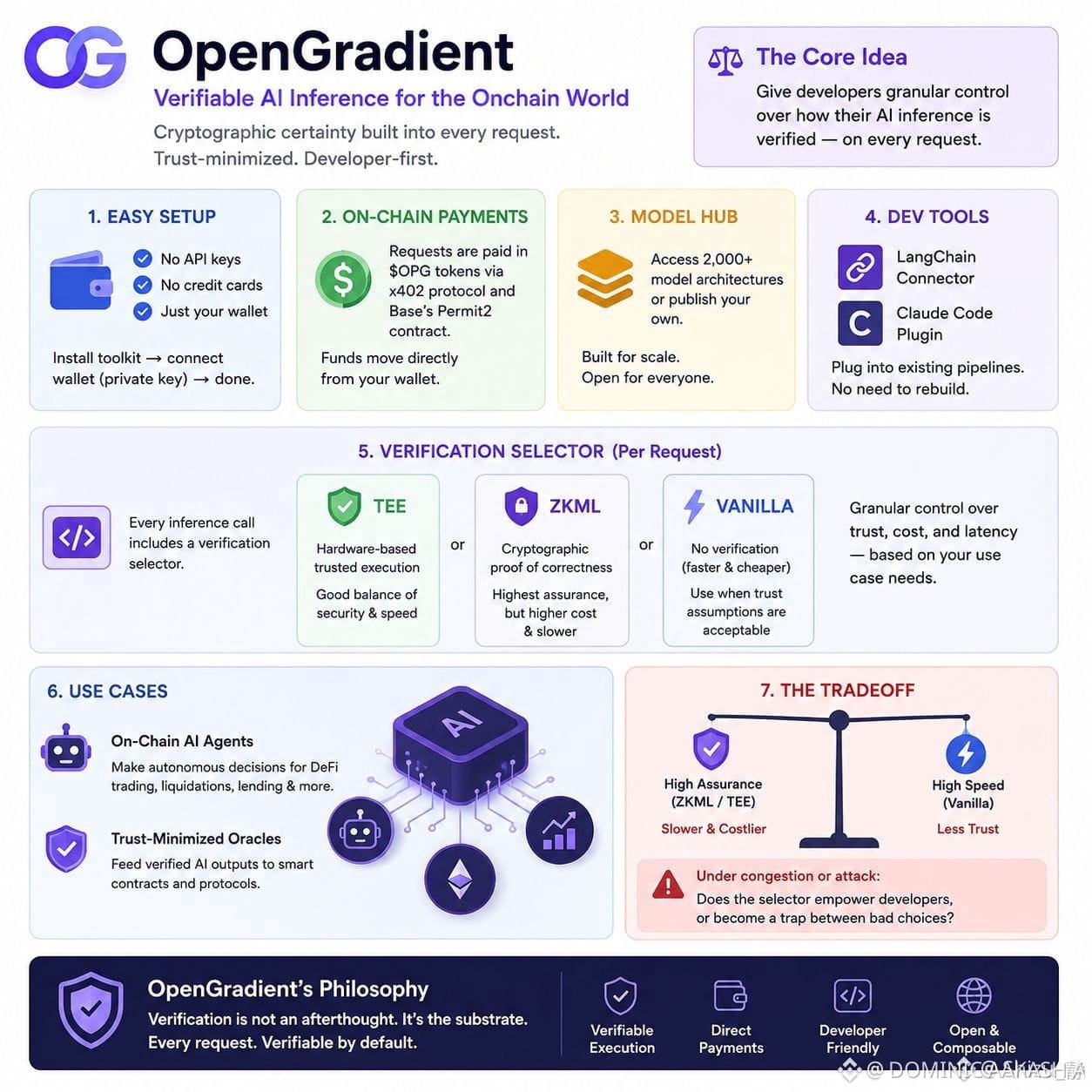
أدهشني الإعداد. لا مفاتيح API؛ فقط اربط محفظتك بمفتاحها الخاص وابدأ. كل طلب تتم تسويته عبر رموز OpenGradient من خلال x402 وBases Permit2. تتحرك الأموال مباشرة. لكن الذي يزعجني هو التالي: إذا تأرجح سعر OPG بقوة، تصبح تكاليف الاستدلال غير قابلة للتنبؤ بين ليلة وضحاها. هذه الطبقة الاقتصادية تحت واجهة الاستخدام السلسة—لا أحد يتحدث عنها بعد.
داخل OpenGradient يوجد Model Hub يدّعي دعم أكثر من ألفي بنية معمارية. لكن البارز الحقيقي هو محدد التحقق المدمج داخل كل استدعاء. TEE أو ZKML أو الوضع العادي Vanilla—تختار ما يناسب حالتك وما يمكن أن تتحمله. تحكم دقيق في مستوى الثقة مثل هذا لم أرَه في مكان آخر. لكن اليقين التشفيري لـ ZKML يأتي بتأخير حاد وتكلفة حوسبة أعلى مقارنةً بوضع vanilla. إذا كانت وكيلك على السلسلة يحتاج إلى قرارات فورية من أجل تصفية DeFi، فإن فجوة الزمن حتى الإخراج تُفشل كل شيء.
يأتي OpenGradient أيضًا مع موصل LangChain وإضافة Claude Code جاهزة من الصندوق. هذا ذكي لأن مسارات العمل الحالية تبقى كما هي. ما زلت أتخيل وكلاء مستقلين يمدّون البيانات المُتحقَّق منها إلى العقود الذكية—وهنا يتألق هذا العمود الفقري الذي تقل فيه الحاجة إلى الثقة فعلاً. بدون ذلك، أنت تشغّل مجرد «أوراكل» عمياء تتظاهر بأنها ذكاء اصطناعي.
انظر، يبدو أن OpenGradient يحمل «يقينًا تشفيريًا» مدمجًا في البنية التحتية نفسها، وليس مضافًا كإضافة لاحقة. لكن عندما يحدث ازدحام ويُجبر البناؤون على الاختيار بين تحقق بطيء ومكلف أو سرعة رخيصة وغير موثوقة—هل يبقى هذا المحدد إحساسًا بالحرية، أم يتحول بهدوء إلى فخ دخلنا إليه طواعية؟
#opg
$OPG
$RAVE
$GWEI
أدهشني الإعداد. لا مفاتيح API؛ فقط اربط محفظتك بمفتاحها الخاص وابدأ. كل طلب تتم تسويته عبر رموز OpenGradient من خلال x402 وBases Permit2. تتحرك الأموال مباشرة. لكن الذي يزعجني هو التالي: إذا تأرجح سعر OPG بقوة، تصبح تكاليف الاستدلال غير قابلة للتنبؤ بين ليلة وضحاها. هذه الطبقة الاقتصادية تحت واجهة الاستخدام السلسة—لا أحد يتحدث عنها بعد.
داخل OpenGradient يوجد Model Hub يدّعي دعم أكثر من ألفي بنية معمارية. لكن البارز الحقيقي هو محدد التحقق المدمج داخل كل استدعاء. TEE أو ZKML أو الوضع العادي Vanilla—تختار ما يناسب حالتك وما يمكن أن تتحمله. تحكم دقيق في مستوى الثقة مثل هذا لم أرَه في مكان آخر. لكن اليقين التشفيري لـ ZKML يأتي بتأخير حاد وتكلفة حوسبة أعلى مقارنةً بوضع vanilla. إذا كانت وكيلك على السلسلة يحتاج إلى قرارات فورية من أجل تصفية DeFi، فإن فجوة الزمن حتى الإخراج تُفشل كل شيء.
يأتي OpenGradient أيضًا مع موصل LangChain وإضافة Claude Code جاهزة من الصندوق. هذا ذكي لأن مسارات العمل الحالية تبقى كما هي. ما زلت أتخيل وكلاء مستقلين يمدّون البيانات المُتحقَّق منها إلى العقود الذكية—وهنا يتألق هذا العمود الفقري الذي تقل فيه الحاجة إلى الثقة فعلاً. بدون ذلك، أنت تشغّل مجرد «أوراكل» عمياء تتظاهر بأنها ذكاء اصطناعي.
انظر، يبدو أن OpenGradient يحمل «يقينًا تشفيريًا» مدمجًا في البنية التحتية نفسها، وليس مضافًا كإضافة لاحقة. لكن عندما يحدث ازدحام ويُجبر البناؤون على الاختيار بين تحقق بطيء ومكلف أو سرعة رخيصة وغير موثوقة—هل يبقى هذا المحدد إحساسًا بالحرية، أم يتحول بهدوء إلى فخ دخلنا إليه طواعية؟
#opg
$OPG
$RAVE
$GWEI