لماذا نجحت 4 وفشل 1: داخل التحقيق الحقيقي في ويب3 لدى @TheDAOLabs
لا يموت ويب3 بسبب أفكار سيئة. يموت بسبب بنية سيئة.
كشفت DAO Labs الستار عن كيفية اختيار مشاريع Social Mining فعليًا. بدون مبالغة. بدون سعي وراء تأثير KOL. بل تحقيق.
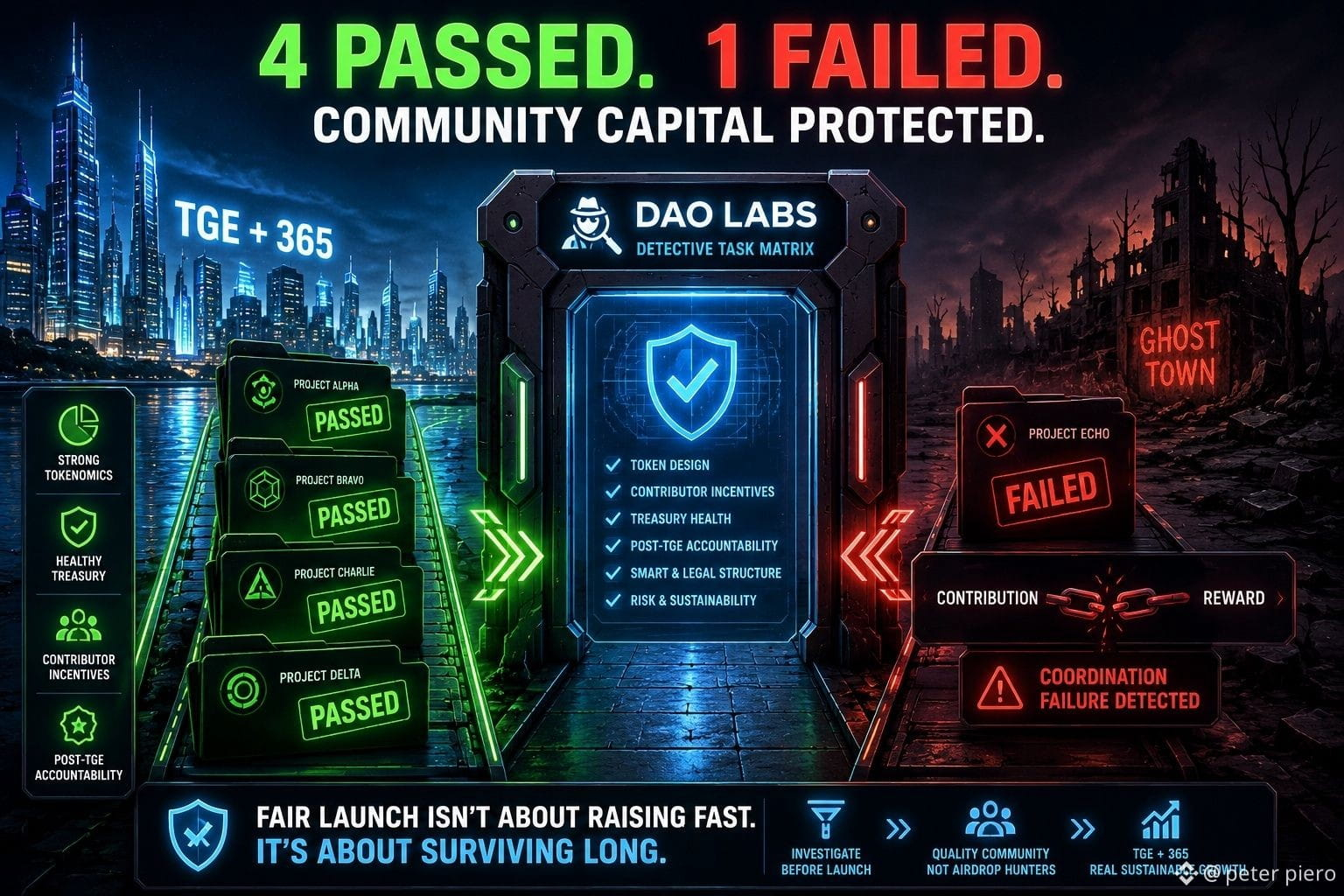
الإطار: مصفوفة مهام المحققين — يقوم فريق BD بمراجعة تصميم الرمز، وحوافز المساهمين، وصحة الخزينة، والمساءلة بعد TGE _قبل_ أن تلامس أي مشاريع Social Mining Hub.
النتائج: تم قبول 4 مشاريع. وخالف مشروع واحد العقد وتم استبعاده.
ما الذي علمتنا إياه المخالفة:
لم تكن المشكلة خللًا في عقد ذكي. بل كانت خللًا في التنسيق. انهارت مكافأة المساهمة، وتداركت المنظومة ذلك قبل تعرّض رأس مال المجتمع للخطر. هذه هي المساءلة في العملات المشفرة — ليس بعد وقوع “الاحتيال”، بل قبل الإطلاق.
لماذا هذا مهم لسلامة ويب3:
تُحسّن منصات الإطلاق التقليدية من أجل “جمع الأموال بسرعة”. تُحسّن DAO Labs Fair Launchpad من أجل “الاستمرار طويلًا”. تقييم قبل TGE + معايير بعد TGE = عدد أقل من المدن الشبح، ومشاريع أكثر عند TGE+365.
تعمل Social Mining Hubs لأنها مبنية على هذا الفلتر. لن تحصل على 10,000 صياد هدايا جوائز (airdrops). ستحصل على 1,000 مساهم يفهمون اللعبة، لأن الجهات الخبيثة لا تجتاز مرحلة BD.
رأيي: حجم المجتمع مجرد مقياس للزينة. جودة المجتمع هي أصل. أنظمة مثل هذا هي الطريقة التي ننتقل بها من المضاربة إلى البنية التحتية.
اقرأ التفصيل الكامل من فريق BD في DAO Labs: https://dao-labs.com/posts/4-successes-1-failure-lessons-from-evaluating-web3-projects
إذا كانت منصة الإطلاق الخاصة بك لا تقوم بالتحقيق، فماذا تفعل بالضبط؟
#DAOLabs #SocialMining #Web3 #FairLaunch
لا يموت ويب3 بسبب أفكار سيئة. يموت بسبب بنية سيئة.
كشفت DAO Labs الستار عن كيفية اختيار مشاريع Social Mining فعليًا. بدون مبالغة. بدون سعي وراء تأثير KOL. بل تحقيق.
الإطار: مصفوفة مهام المحققين — يقوم فريق BD بمراجعة تصميم الرمز، وحوافز المساهمين، وصحة الخزينة، والمساءلة بعد TGE _قبل_ أن تلامس أي مشاريع Social Mining Hub.
النتائج: تم قبول 4 مشاريع. وخالف مشروع واحد العقد وتم استبعاده.
ما الذي علمتنا إياه المخالفة:
لم تكن المشكلة خللًا في عقد ذكي. بل كانت خللًا في التنسيق. انهارت مكافأة المساهمة، وتداركت المنظومة ذلك قبل تعرّض رأس مال المجتمع للخطر. هذه هي المساءلة في العملات المشفرة — ليس بعد وقوع “الاحتيال”، بل قبل الإطلاق.
لماذا هذا مهم لسلامة ويب3:
تُحسّن منصات الإطلاق التقليدية من أجل “جمع الأموال بسرعة”. تُحسّن DAO Labs Fair Launchpad من أجل “الاستمرار طويلًا”. تقييم قبل TGE + معايير بعد TGE = عدد أقل من المدن الشبح، ومشاريع أكثر عند TGE+365.
تعمل Social Mining Hubs لأنها مبنية على هذا الفلتر. لن تحصل على 10,000 صياد هدايا جوائز (airdrops). ستحصل على 1,000 مساهم يفهمون اللعبة، لأن الجهات الخبيثة لا تجتاز مرحلة BD.
رأيي: حجم المجتمع مجرد مقياس للزينة. جودة المجتمع هي أصل. أنظمة مثل هذا هي الطريقة التي ننتقل بها من المضاربة إلى البنية التحتية.
اقرأ التفصيل الكامل من فريق BD في DAO Labs: https://dao-labs.com/posts/4-successes-1-failure-lessons-from-evaluating-web3-projects
إذا كانت منصة الإطلاق الخاصة بك لا تقوم بالتحقيق، فماذا تفعل بالضبط؟
#DAOLabs #SocialMining #Web3 #FairLaunch