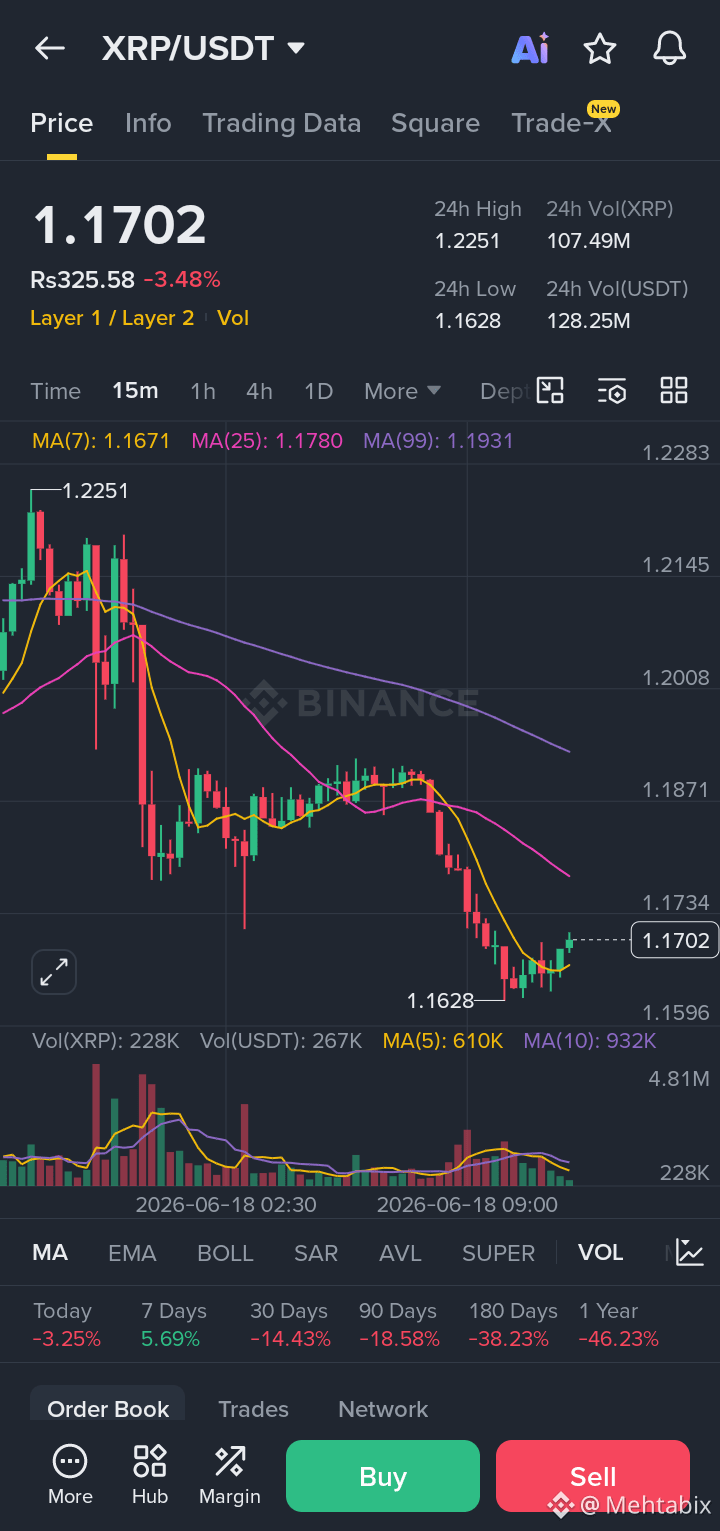
Yes—$XRP could be entering a phase where volatility and trading opportunities increase, but it’s not guaranteed and depends on a few key drivers rather than any single signal.
In crypto markets, XRP often becomes more volatile when several conditions start aligning at the same time:
One common trigger is liquidity rotation—when capital moves out of large-cap assets like BTC and ETH into mid-cap coins such as XRP. This tends to create sharper price swings in both directions, especially when sentiment shifts quickly.
Another factor is regulatory or legal narrative changes. XRP has historically reacted strongly to legal clarity and policy updates around Ripple and institutional usage. Even indirect headlines can cause rapid spikes in volume and volatility.
A third driver is derivatives positioning. When leverage builds up in futures markets, XRP can experience “liquidity hunts,” where price moves sharply to clear overleveraged long or short positions before stabilizing again.
From a technical behavior standpoint, XRP often becomes more active when it compresses into a tight range for an extended period. That kind of consolidation typically precedes expansion—meaning a breakout phase where volatility increases.
So the key idea is this: $XRP doesn’t become volatile randomly—it usually does so when market attention, leverage, and liquidity rotation converge.
If you want, I can �break down whether XRP currently looks more like it’s in accumulation (quiet buildup) or distribution (pre-drop or pre-breakout pressure) based on typical trading signals.
#USStocksSlipAfterFedRateDecision #Fed4thConsecutiveRateHold #GoldHoldsLoss
In crypto markets, XRP often becomes more volatile when several conditions start aligning at the same time:
One common trigger is liquidity rotation—when capital moves out of large-cap assets like BTC and ETH into mid-cap coins such as XRP. This tends to create sharper price swings in both directions, especially when sentiment shifts quickly.
Another factor is regulatory or legal narrative changes. XRP has historically reacted strongly to legal clarity and policy updates around Ripple and institutional usage. Even indirect headlines can cause rapid spikes in volume and volatility.
A third driver is derivatives positioning. When leverage builds up in futures markets, XRP can experience “liquidity hunts,” where price moves sharply to clear overleveraged long or short positions before stabilizing again.
From a technical behavior standpoint, XRP often becomes more active when it compresses into a tight range for an extended period. That kind of consolidation typically precedes expansion—meaning a breakout phase where volatility increases.
So the key idea is this: $XRP doesn’t become volatile randomly—it usually does so when market attention, leverage, and liquidity rotation converge.
If you want, I can �break down whether XRP currently looks more like it’s in accumulation (quiet buildup) or distribution (pre-drop or pre-breakout pressure) based on typical trading signals.
#USStocksSlipAfterFedRateDecision #Fed4thConsecutiveRateHold #GoldHoldsLoss