

الذكاء الاصطناعي يتقدم بسرعة مذهلة. وكلاء الذكاء الاصطناعي يصبحون أكثر ذكاءً، والنماذج تصبح أكثر قوة، والأتمتة تعيد تشكيل صناعات كاملة ببطء. ولكن خلف كل هذه الابتكارات يكمن سؤال رئيسي لا تزال صناعة التكنولوجيا تكافح للإجابة عليه:
من يحصل على المكافآت فعليًا عندما يخلق الذكاء الاصطناعي قيمة؟
تتم تدريب معظم أنظمة الذكاء الاصطناعي اليوم باستخدام كميات هائلة من المعلومات العامة، المحتوى الذي ينتجه المجتمع، مساهمات المطورين، وإبداع البشر. ومع ذلك، نادرًا ما يحصل الأشخاص الذين يساهمون في هذا النظام البيئي على الاعتراف، أو الملكية، أو المكافآت المالية. القيمة التي تنتجها الذكاء الاصطناعي غالبًا ما تُلتقط بواسطة منصات مركزية بينما يبقى المساهمون غير مرئيين.
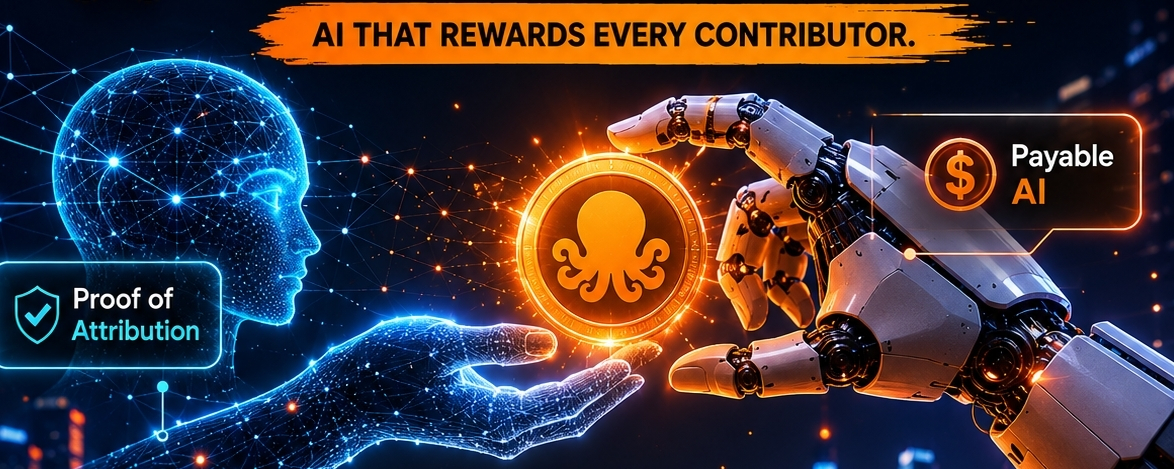
That is the problem @OpenLedger OpenLedger is trying to solve through its vision of Payable AI.
Instead of treating AI as a closed system controlled by a few large entities, OpenLedger is building infrastructure for an open and transparent AI economy where contributors can finally participate in the value they help create.
At the center of this model is Proof of Attribution (PoA), a mechanism designed to track and verify contributions on-chain. Whether someone contributes datasets, develops AI models, powers infrastructure, or builds applications, those contributions can be transparently recorded and potentially rewarded within the ecosystem.
This changes the economics of AI completely.
In the traditional AI model, contributors provide value while platforms capture profits. In the Payable AI model, value distribution becomes more transparent, decentralized, and community-driven. The goal is not just to build smarter AI, but to create a system where the people behind the intelligence are economically acknowledged.
This narrative is becoming increasingly important as AI agents continue to evolve. Future AI systems are expected to automate workflows, generate media, manage tasks, and even participate in digital economies autonomously. As these systems generate billions of dollars in value, conversations around attribution and ownership become impossible to ignore.
OpenLedger positions itself at the intersection of two of the strongest technological trends today: artificial intelligence and blockchain.
Blockchain introduces transparency, verification, and ownership. AI introduces scalability and automation. Together, they create the foundation for decentralized intelligence economies where participation itself can become monetized.
What makes this narrative powerful is that it extends beyond speculation. The idea of Payable AI directly addresses some of the largest concerns surrounding the future of artificial intelligence — data ownership, contributor fairness, centralized control, and accountability.
Instead of AI becoming an extractive industry where only large corporations benefit, OpenLedger is pushing a model where ecosystems grow through shared incentives and transparent contribution tracking.
In many ways, this represents a shift from “platform-owned AI” toward “community-powered AI.”
As the AI sector continues expanding globally, infrastructure projects focused on attribution and economic fairness may become one of the defining narratives of the next crypto cycle. Markets tend to reward industries that solve real structural problems, and the lack of fair value distribution in AI is becoming more visible every day.
The future of AI may not only depend on how intelligent machines become.
It may also depend on who owns the value they create.
That is the long-term vision behind Payable AI by @OpenLedger.