


Alpha Gems Daily
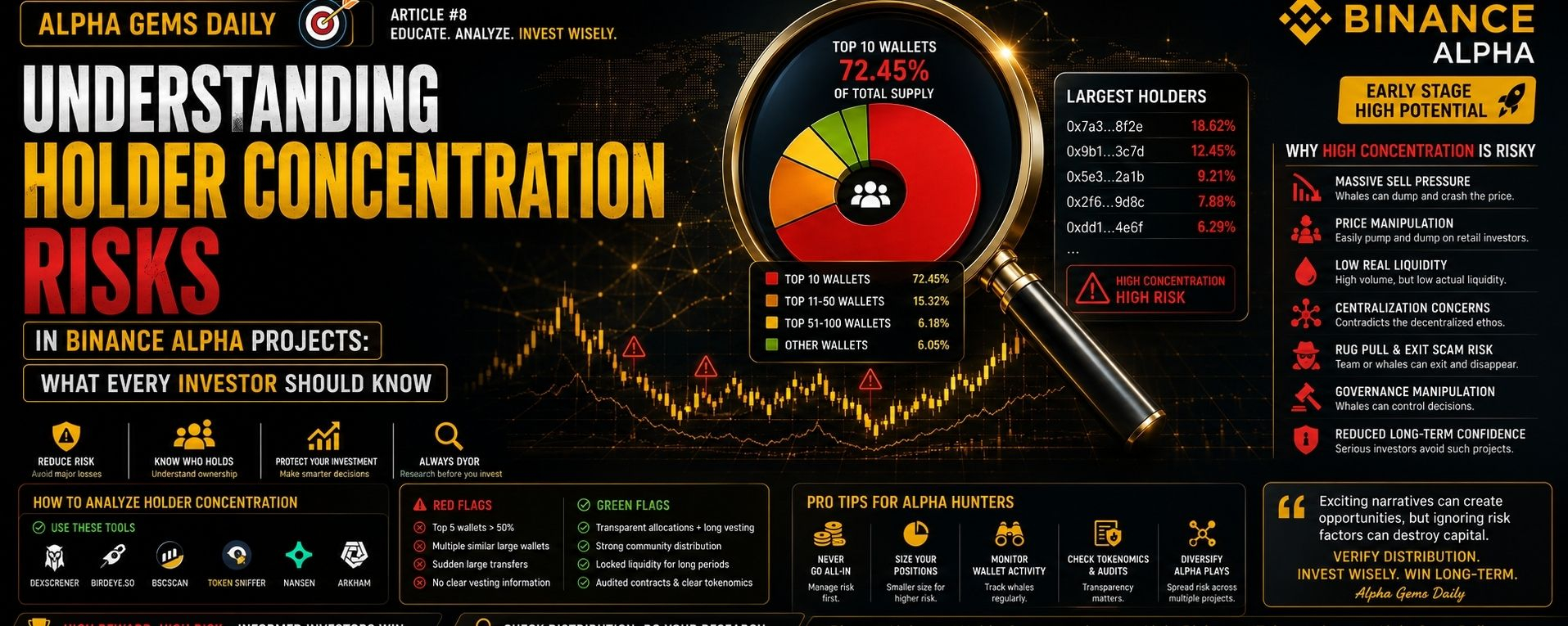
In the high-risk, high-reward world of Binance Alpha projects, one of the most critical yet often overlooked factors is holder concentration.
While many early-stage tokens show explosive growth, extreme concentration of token supply in a few wallets can dramatically increase risk. This article explains what holder concentration is, why it matters, and how to evaluate it properly.
What Is Holder Concentration?
Holder concentration measures how evenly (or unevenly) a token’s supply is distributed among wallets.
It is typically calculated by looking at:
Percentage held by the top 10, 20, or 50 wallets
Distribution between team, investors, liquidity pools, and community
Locked vs unlocked tokens
Healthy Range:
Top 10 wallets holding under 30-40% is generally considered reasonable for early projects.
High Risk Zone:
Top 10 wallets holding 60-85%+ (common in many Alpha projects).
Major Risks of High Holder Concentration
Massive Sell Pressure
If one or two large holders (whales) decide to sell even a portion of their stack, the price can crash rapidly. Retail buyers often absorb these sells, resulting in heavy losses.
Price Manipulation
Concentrated holders can easily coordinate pumps by buying aggressively, then dump tokens on excited retail investors chasing the momentum.
Low Real Liquidity
Even with high trading volume, large sell orders can cause extreme slippage. The token may appear liquid until a whale exits.
Centralization Concerns
High concentration contradicts the “decentralized” ethos of crypto. It raises questions about true ownership and project control.
Rug Pull & Exit Scam Risk
In worst-case scenarios, team wallets or early investors with large allocations can sell everything and disappear, leaving the token near zero.
Governance Manipulation
If the project has voting mechanisms, whales can control decisions in their favor.
Reduced Long-Term Confidence
Serious investors and institutions tend to avoid projects with extreme concentration, limiting organic growth.
Real-World Context in Binance Alpha
Many projects on Binance Alpha are still in early stages, so some concentration is normal (team allocations, initial investors, liquidity).
However, when concentration exceeds 70%, caution is essential — even if the project has strong fundamentals or narrative. Always check:
Are large wallets team/vesting wallets?
What is the vesting/unlock schedule?
Are tokens locked in contracts?
How to Analyze Holder Concentration
Recommended Tools:
DexScreener or Birdeye.so (Holder tab)
Blockchain explorers (BscScan, Solscan, Tonviewer)
Token Sniffer or Honeypot.is
Nansen or Arkham Intelligence (for advanced tracking)
Red Flags:
Top 5 wallets > 50%
Multiple wallets with similar large holdings (possible coordinated group)
Sudden large transfers from team wallets
No clear vesting information
Green Flags:
Transparent team allocations with long vesting
Strong community distribution
Locked liquidity for extended periods
Pro Tips for Alpha Hunters
Never go all-in on highly concentrated tokens.
Size your positions according to risk — smaller allocations for high-concentration projects.
Monitor large wallet activity regularly.
Favor projects with clear tokenomics and audited smart contracts.
Diversify across multiple Alpha projects to reduce single-token risk.
Final Thoughts
Holder concentration is one of the most important risk factors in Binance Alpha. While some concentration is expected in early-stage gems, extreme levels significantly raise the probability of sharp drawdowns and unexpected losses.
Successful Alpha hunting requires balancing exciting narratives with solid risk management. Always verify token distribution before committing capital.
This is Article #8 on Alpha Gems Daily. Understanding risk factors like this is essential for long-term success in early-stage crypto.
What are your experiences with holder concentration? Drop your questions or suggest the next topic below 👇
#BinanceAlpha #HolderConcentration #AlphaRisks #Tokenomics #AlphaGemsDaily #DYOR