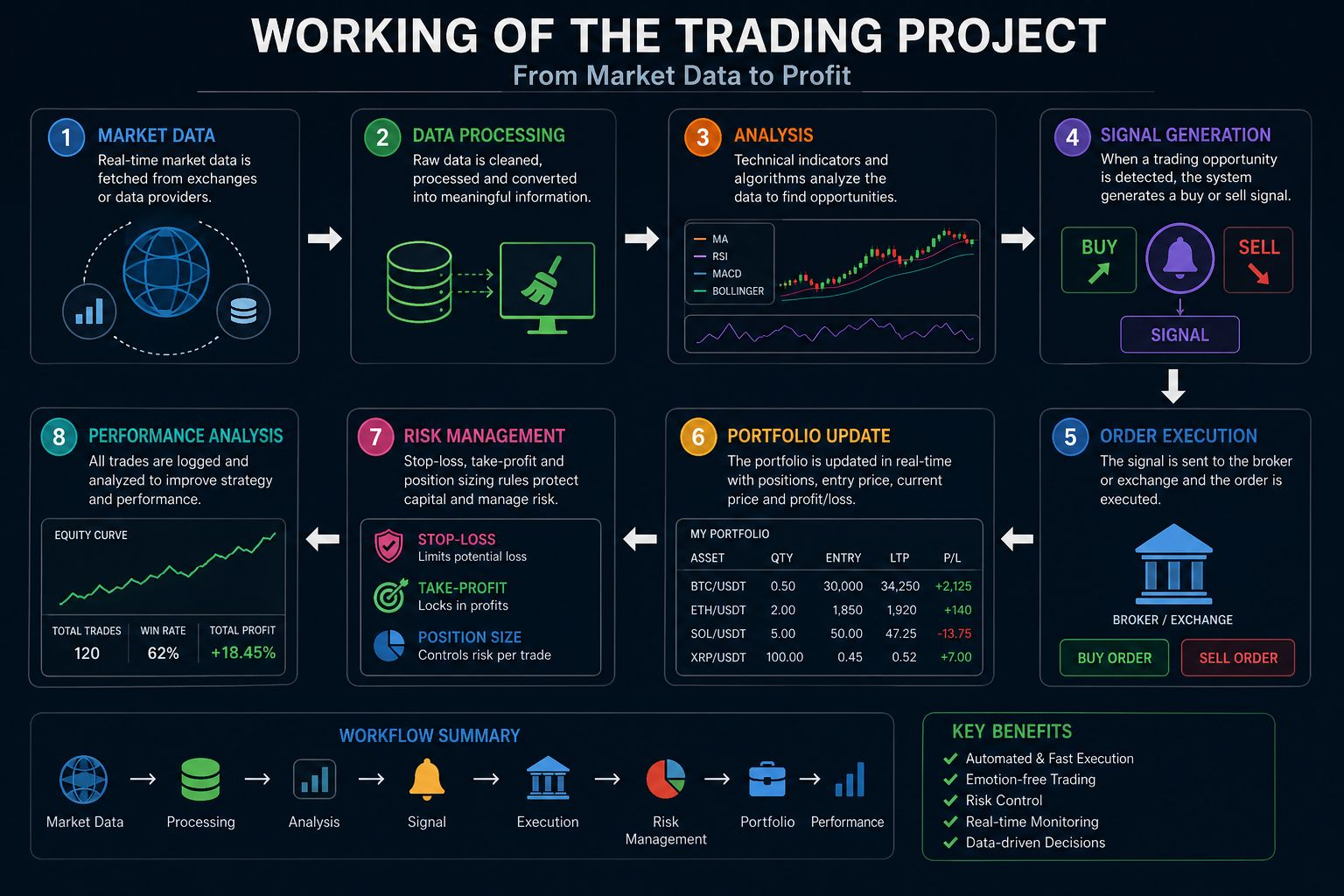


Trading is one of the most talked-about ways to participate in financial markets, but many beginners jump in without understanding the foundation. This article breaks down the core concepts you need before placing your first trade.
📌 What is Trading?
Trading is the process of buying and selling financial assets (such as stocks, currencies, or cryptocurrencies) with the goal of making a profit from price movements.
Unlike traditional business, you don’t create a product — you profit from changes in value over time.
👉 Example:
You buy a stock at $50
Price rises to $60
You sell → profit = $10
Trading can happen in seconds, minutes, days, or even months depending on your style.
📌 Trading vs Investing
Many people confuse trading with investing, but they are very different approaches.
🔹 Trading
Short-term focus
Frequent buying and selling
Based on price charts and market trends
Higher risk, faster results
🔹 Investing
Long-term focus (years)
Buy and hold strategy
Based on company growth or economic value
Lower stress, slower returns
👉 Simple way to understand:
Trader = “I want profit from price movement”
Investor = “I believe in long-term growth”
Both are valid — your choice depends on your personality, time, and risk tolerance.
📌 How Financial Markets Work
Financial markets are places where buyers and sellers come together to trade assets.
These markets are powered by supply and demand:
More buyers → price goes up 📈
More sellers → price goes down 📉
Everything you see on a chart is simply a reflection of this battle.
Types of Markets:
Stock Market (companies)
Forex Market (currencies)
Crypto Market
Commodity Market (gold, oil)
Today, most trading happens electronically through platforms like MetaTrader 4 or TradingView.
📌 Participants in the Market
The market is not just you and your phone — it includes powerful players.
🔹 Retail Traders
Individuals like you
Trade with small capital
Often influenced by emotions
🔹 Institutional Traders
Big companies, hedge funds
Trade millions or billions
Use advanced strategies and data
🔹 Banks
Major players in forex markets
Control large liquidity
Influence currency prices
👉 Important Insight:
Markets often move based on institutional activity, not retail traders.
📌 Liquidity & Volatility
These are two of the most important concepts in trading.
🔹 Liquidity
Liquidity means how easily you can buy or sell an asset without affecting its price.
High liquidity → smooth trading, stable prices
Low liquidity → sudden price jumps
👉 Example:
Major currencies like USD/EUR = high liquidity
Small crypto coins = low liquidity
🔹 Volatility
Volatility refers to how fast and how much price moves.
High volatility → big price swings (more profit & risk)
Low volatility → slow, steady movement
👉 Example:
Crypto markets = highly volatile
Large stocks = relatively stable
⚠️ Why These Concepts Matter
If you don’t understand:
How markets move
Who controls them
How fast prices change
👉 You’re basically gambling, not trading.
📌 Final Thoughts
Trading is not just clicking “buy” and “sell.” It’s a structured skill based on:
Understanding market behavior
Knowing the difference between trading and investing
Recognizing key players
Managing liquidity and volatility