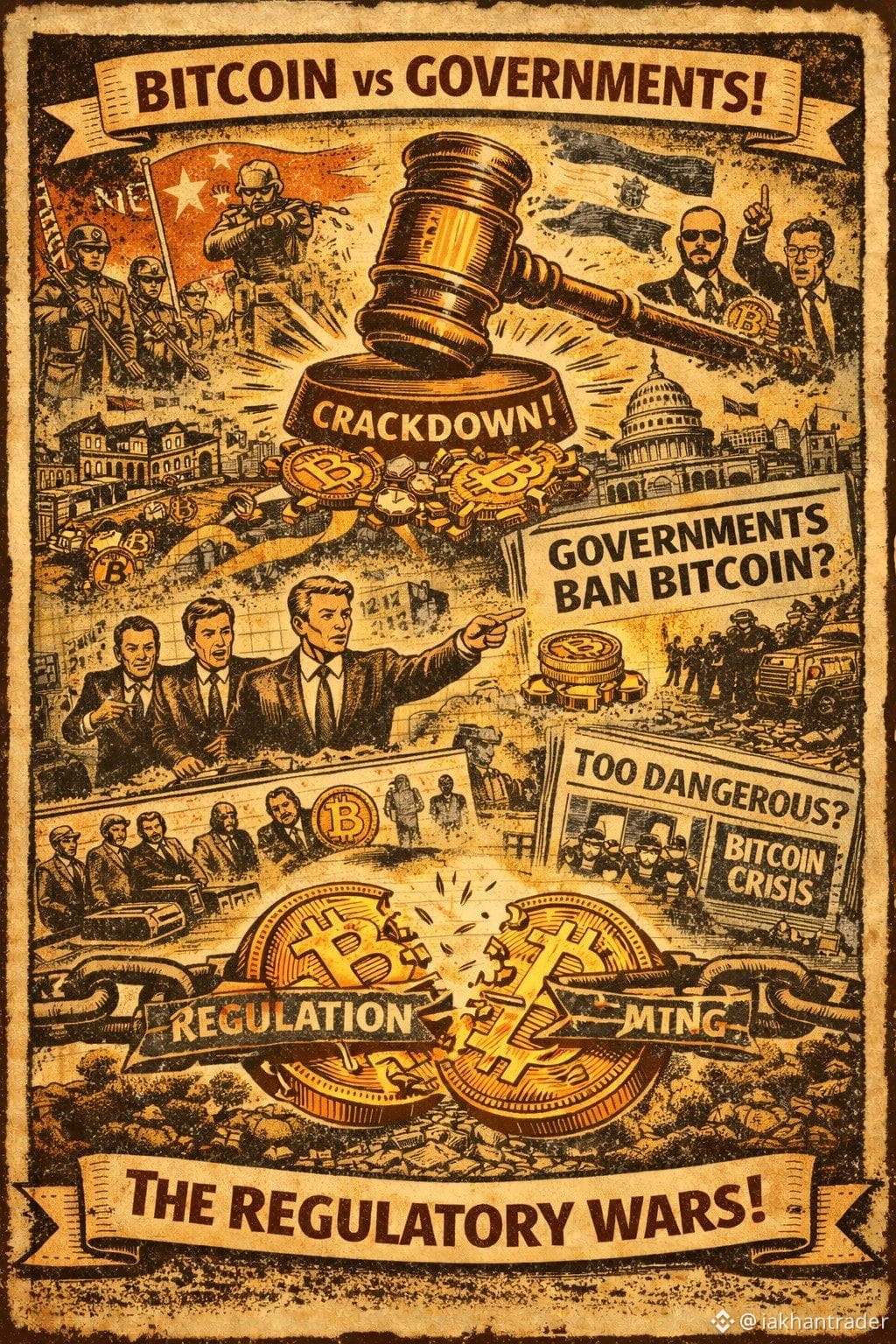
🎬 𝐄𝐩𝐢𝐬𝐨𝐝𝐞 𝐅𝐨𝐮𝐫: 𝐁𝐢𝐭𝐜𝐨𝐢𝐧 𝐯𝐬 𝐆𝐨𝐯𝐞𝐫𝐧𝐦𝐞𝐧𝐭𝐬 — 𝐓𝐡𝐞 𝐑𝐞𝐠𝐮𝐥𝐚𝐭𝐨𝐫𝐲 𝐖𝐚𝐫𝐬
Bitcoin had survived crashes.
It had survived hacks.
It had survived being called a scam.
Now it would face something far more powerful.
Governments.
For years, Bitcoin operated on the edges of the financial system.
Ignored. Doubted. Mocked.
But when it crossed into billions…
Then trillions in market value…
Ignoring it was no longer an option.
𝐓𝐡𝐞 𝐅𝐢𝐫𝐬𝐭 𝐖𝐚𝐯𝐞 𝐨𝐟 𝐑𝐞𝐬𝐢𝐬𝐭𝐚𝐧𝐜𝐞
Regulators began asking questions.
Who controls it?
Who can shut it down?
Who is responsible?
The uncomfortable answer:
No one.
And that made it dangerous.
Countries started issuing warnings.
Banks restricted crypto transactions.
Exchanges were pressured to comply with strict regulations.
The message was clear:
“If you want to operate in our system, you play by our rules.”
But Bitcoin was never designed to ask permission.
𝐓𝐡𝐞 𝐂𝐡𝐢𝐧𝐚 𝐒𝐡𝐨𝐜𝐤
Then came one of the biggest blows.
China banned Bitcoin mining and trading multiple times over the years, culminating in a major crackdown in 2021.
At one point, China controlled a massive portion of global Bitcoin hash power.
When the ban hit, the network’s hash rate dropped sharply.
Many believed this was the end.
But within months, mining operations relocated — to the United States, Kazakhstan, and other regions.
Hash rate recovered.
Stronger than before.
Bitcoin did not die.
It migrated.
𝐀𝐦𝐞𝐫𝐢𝐜𝐚 𝐄𝐧𝐭𝐞𝐫𝐬 𝐭𝐡𝐞 𝐀𝐫𝐞𝐧𝐚
Meanwhile, in the United States, debates intensified.
$BTC
𝐄𝐩𝐢𝐬𝐨𝐝𝐞 𝐅𝐨𝐮𝐫 𝐞𝐧𝐝𝐬 𝐡𝐞𝐫𝐞.
𝐁𝐮𝐭 𝐭𝐡𝐞 𝐰𝐚𝐫 𝐛𝐞𝐭𝐰𝐞𝐞𝐧 𝐜𝐨𝐝𝐞 𝐚𝐧𝐝 𝐜𝐨𝐧𝐭𝐫𝐨𝐥 𝐡𝐚𝐬 𝐨𝐧𝐥𝐲 𝐣𝐮𝐬𝐭 𝐛𝐞𝐠𝐮𝐧.
Bitcoin had survived crashes.
It had survived hacks.
It had survived being called a scam.
Now it would face something far more powerful.
Governments.
For years, Bitcoin operated on the edges of the financial system.
Ignored. Doubted. Mocked.
But when it crossed into billions…
Then trillions in market value…
Ignoring it was no longer an option.
𝐓𝐡𝐞 𝐅𝐢𝐫𝐬𝐭 𝐖𝐚𝐯𝐞 𝐨𝐟 𝐑𝐞𝐬𝐢𝐬𝐭𝐚𝐧𝐜𝐞
Regulators began asking questions.
Who controls it?
Who can shut it down?
Who is responsible?
The uncomfortable answer:
No one.
And that made it dangerous.
Countries started issuing warnings.
Banks restricted crypto transactions.
Exchanges were pressured to comply with strict regulations.
The message was clear:
“If you want to operate in our system, you play by our rules.”
But Bitcoin was never designed to ask permission.
𝐓𝐡𝐞 𝐂𝐡𝐢𝐧𝐚 𝐒𝐡𝐨𝐜𝐤
Then came one of the biggest blows.
China banned Bitcoin mining and trading multiple times over the years, culminating in a major crackdown in 2021.
At one point, China controlled a massive portion of global Bitcoin hash power.
When the ban hit, the network’s hash rate dropped sharply.
Many believed this was the end.
But within months, mining operations relocated — to the United States, Kazakhstan, and other regions.
Hash rate recovered.
Stronger than before.
Bitcoin did not die.
It migrated.
𝐀𝐦𝐞𝐫𝐢𝐜𝐚 𝐄𝐧𝐭𝐞𝐫𝐬 𝐭𝐡𝐞 𝐀𝐫𝐞𝐧𝐚
Meanwhile, in the United States, debates intensified.
$BTC
𝐄𝐩𝐢𝐬𝐨𝐝𝐞 𝐅𝐨𝐮𝐫 𝐞𝐧𝐝𝐬 𝐡𝐞𝐫𝐞.
𝐁𝐮𝐭 𝐭𝐡𝐞 𝐰𝐚𝐫 𝐛𝐞𝐭𝐰𝐞𝐞𝐧 𝐜𝐨𝐝𝐞 𝐚𝐧𝐝 𝐜𝐨𝐧𝐭𝐫𝐨𝐥 𝐡𝐚𝐬 𝐨𝐧𝐥𝐲 𝐣𝐮𝐬𝐭 𝐛𝐞𝐠𝐮𝐧.