
Today I want to explain something very important about the future of robotics and digital infrastructure the $ROBO Fabric Foundation. Think of this not just as a blockchain project, but as a system designed to organize how robots and humans will work together in the coming decades.
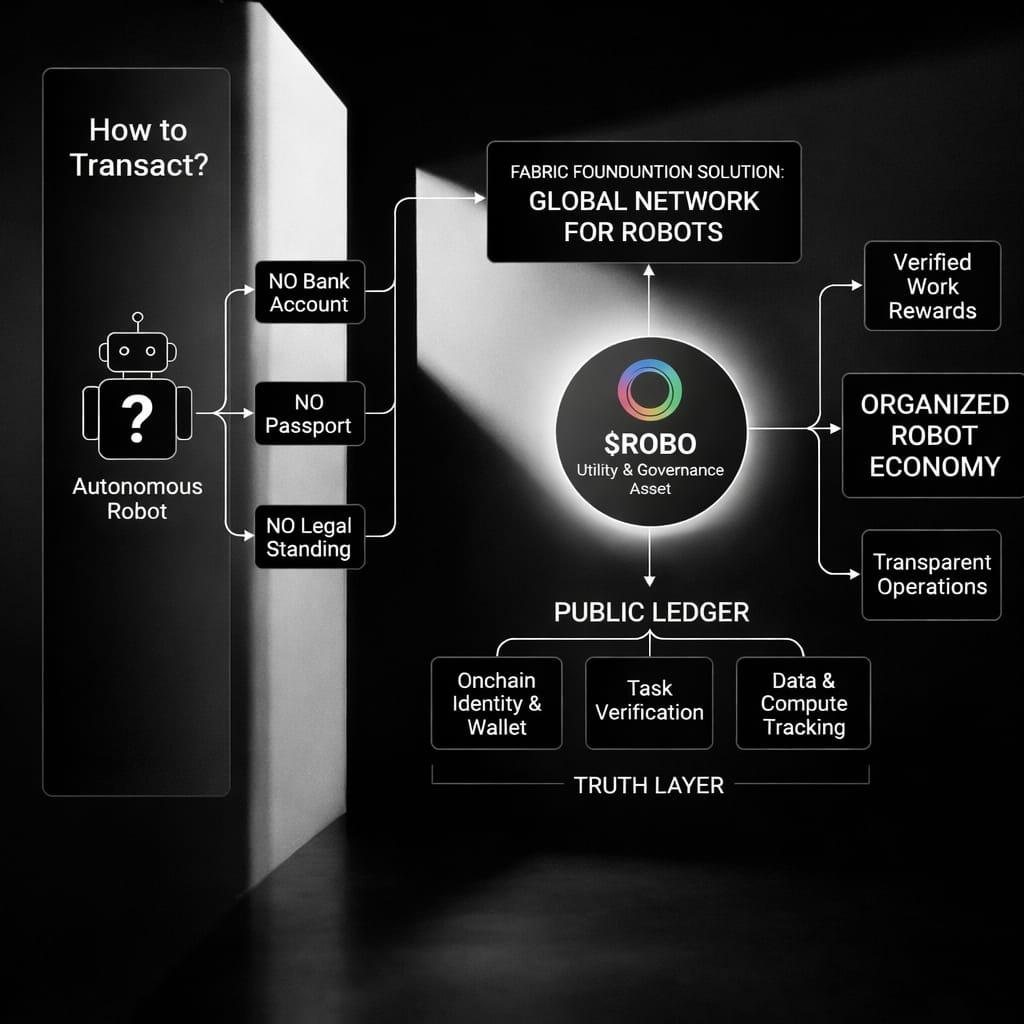
Let us begin with a simple question. If robots become autonomous and start performing tasks independently, how will they transact? A robot cannot open a bank account. It cannot hold a passport. It cannot sign legal papers the way humans do. So how will it receive payments, verify its identity, or prove it completed a task?
This is where Fabric comes in.
The Fabric Foundation is building an open global network specifically for general-purpose robots. When I say general-purpose, I mean robots that can perform multiple tasks like warehouse management, delivery, inspection, or even assistance roles not just one repetitive factory action.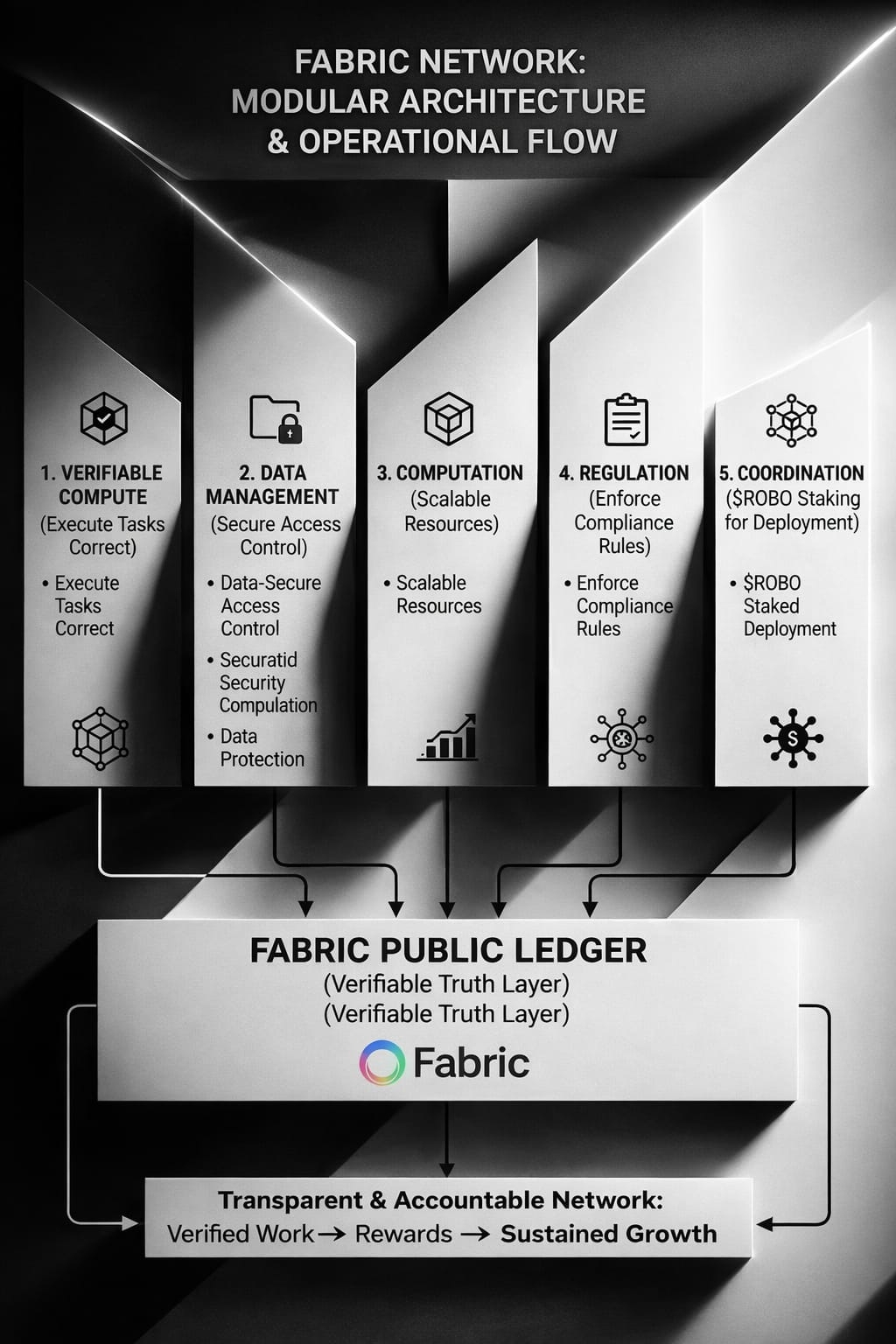
Now imagine thousands of such robots operating across different cities. They are completing jobs, exchanging data, and using computing resources. Without a structured system, there would be confusion no transparency, no clear rules, no accountability. Fabric introduces a public ledger as a “truth layer.”
Think of it like a digital notebook that records everything clearly. If a robot completes a delivery task, that activity can be verified. If it consumes computing power, that can be tracked. Nothing is hidden.
At the center of this system is $ROBO. This is the utility and governance asset of the network. All transaction fees, identity verification processes, and protocol-level activities are powered by $ROBO.
For example, if a robot needs to access certain data or computing resources, it pays fees in $ROBO. If a developer wants to build applications on the Fabric network, they must stake $ROBO. This ensures that participants are committed and aligned with the system.
Now let me explain the architecture in a simple way.
Fabric uses a modular structure. Imagine building a smart city. You would not combine electricity, water supply, law enforcement, and transportation into one single pipe. Each has its own system, but they work together.
Similarly, Fabric separates: Verifiable computing to ensure tasks are executed correctly.
Data management — to control secure access.
Computation — to provide scalable resources.
Regulation — to enforce compliance rules.
All of these connect back to the public ledger. This creates accountability across the network.
Another important concept is coordination. When new robots are introduced into the network, participants stake ROBO to help coordinate deployment and activation. Rewards are distributed for verified work such as completing tasks, validating data, or contributing compute resources.
Think of it like a classroom group project. Students who actively participate and complete verified work receive marks. Those who contribute more responsibly are rewarded accordingly.
Governance is also a major component. ROBO holders help shape operational policies and network direction. This means the future of the robot economy is not controlled by a single company, but guided collectively.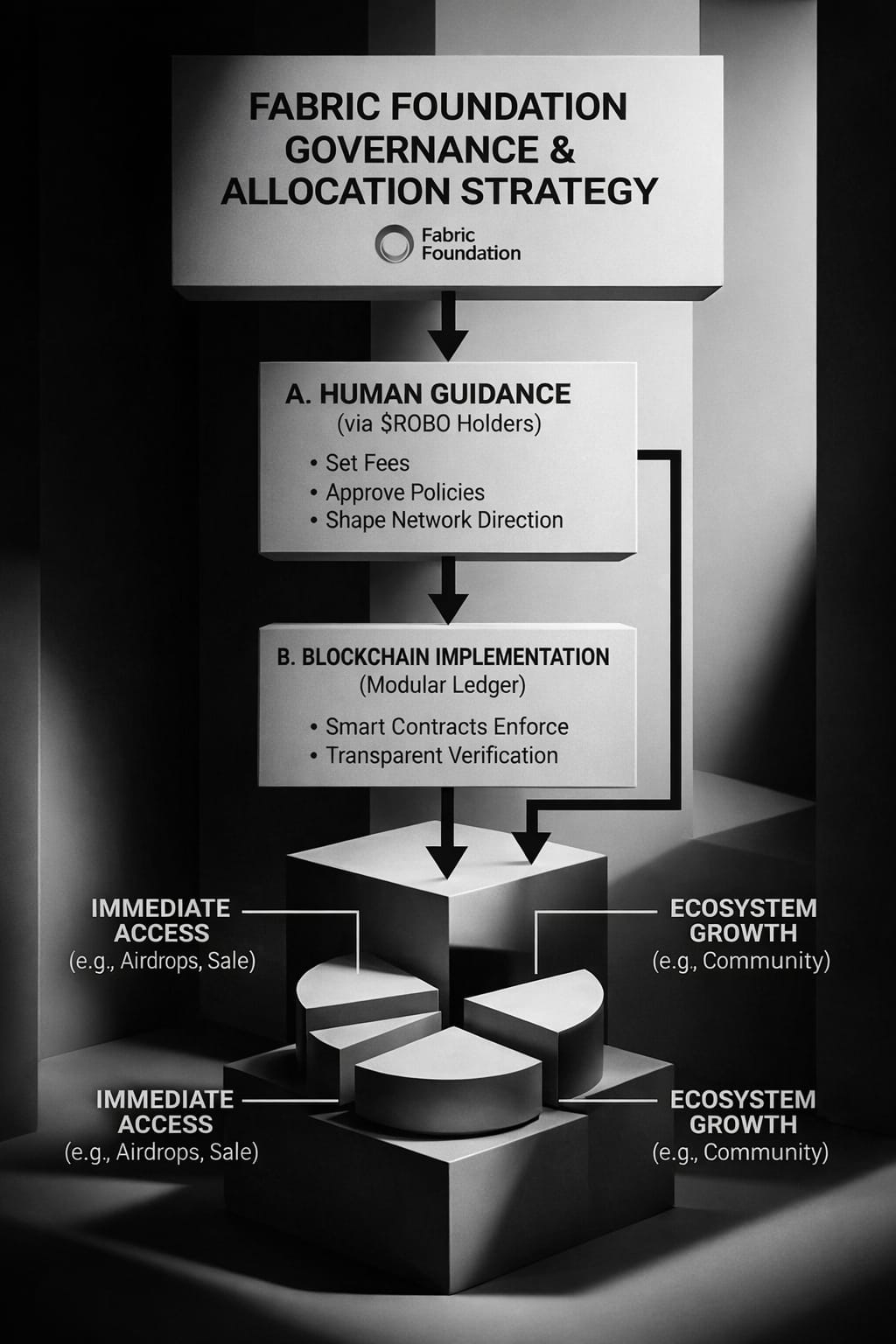
Even the token allocation reflects long-term thinking. Investors and team members have vesting periods meaning they cannot immediately sell everything. Ecosystem and community allocations are structured to support gradual and sustainable growth.
One more important clarification. Participation in Fabric does not mean you own robot hardware or claim revenue rights. Instead, you gain coordination power and access to the protocol. That distinction prevents misuse and keeps the focus on governance and infrastructure.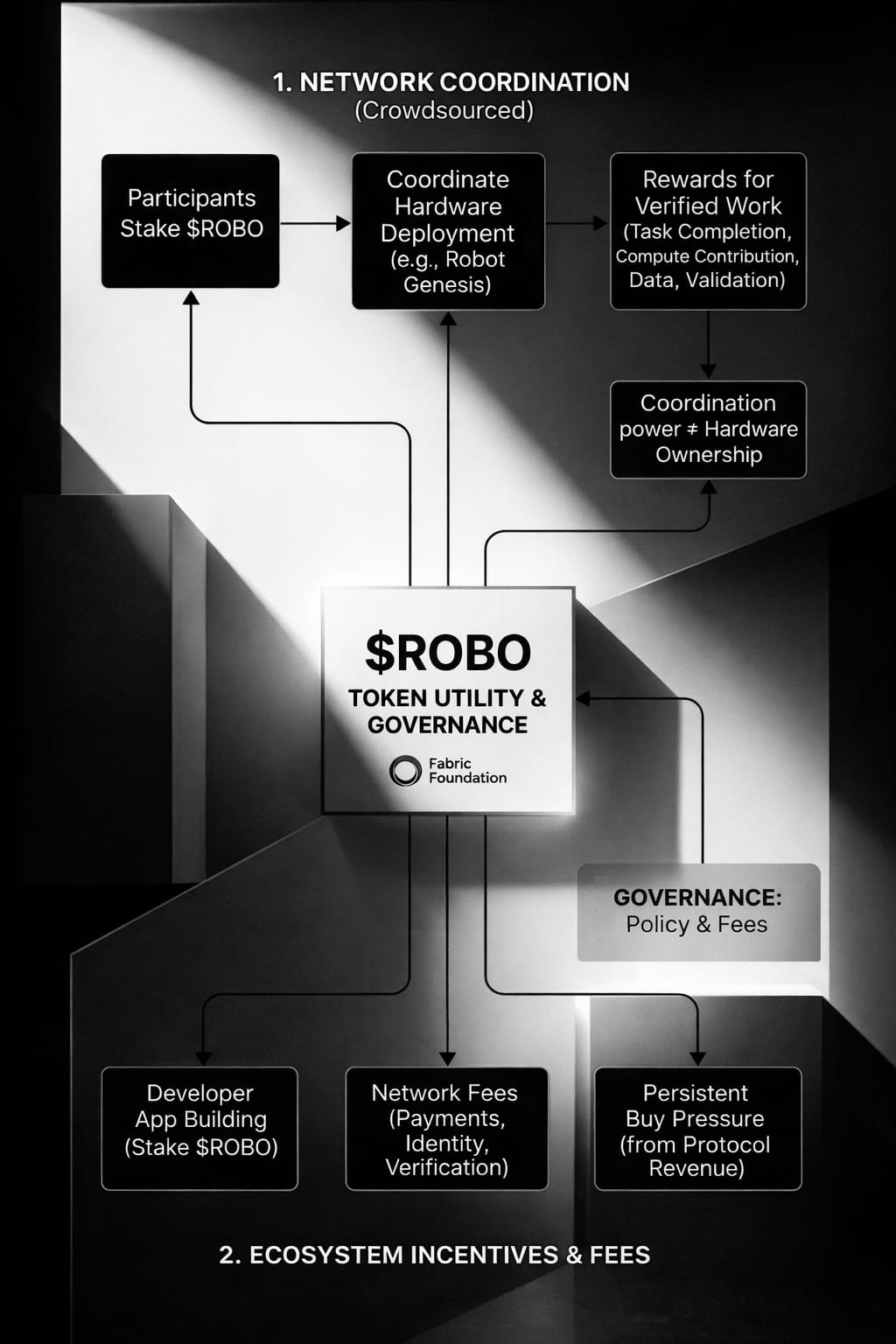
Now let us step back and see the bigger picture.
We often talk about AI and robotics transforming industries. But transformation without infrastructure creates chaos. Fabric is attempting to build that infrastructure early before autonomous robots become deeply integrated into society.
In simple terms, Robo Fabric Foundation is building the economic and governance rails for the robot economy. It ensures transparency through a public ledger, scalability through modular architecture, and alignment through $ROBO incentives.
I see this as an example of forward-thinking system design. Instead of reacting to technological growth, Fabric is preparing the foundation in advance.
The future will not just be about smarter robots. It will be about structured coordination between humans and machines. And that is exactly what the Robo Fabric Foundation is trying to achieve.