

Autonomy in crypto is easy to claim and hard to prove.
Every chain says it supports automation. Every protocol markets “self-executing contracts.” But when AI agents begin acting independently — moving assets, referencing memory, coordinating across chains — the real question becomes different:
How do you prove that autonomous execution is safe?
Not promised. Not simulated. Proven.
That is where flows matter.
On VANAR, execution is not just about transactions. It is about structured flows — predictable sequences of actions that finalize deterministically, reference persistent state, and respect encoded enforcement rules.
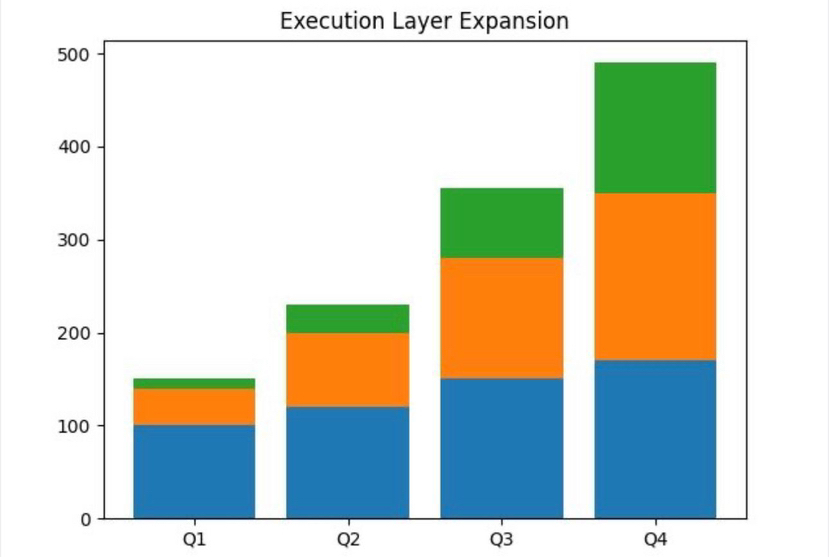
Flows become proof.
Because when autonomous systems operate, you do not measure them by isolated events. You measure them by continuity. If an agent initiates, settles, validates, references history, and triggers subsequent logic without breaking state integrity, that sequence becomes observable economic evidence.
Safe autonomy is not theoretical. It leaves traces.
Traditional blockchains focus on single-step finality. Transaction in, transaction confirmed. But AI-native systems require multi-step loops. An agent may:
• Query stored memory • Evaluate external data • Execute a contract • Trigger conditional logic • Settle assets • Update state
If any of those steps lack determinism, autonomy degrades into risk.
VANAR’s architecture increasingly reflects this reality. By treating memory, enforcement, and settlement as core primitives rather than peripheral features, it allows flows to become verifiable execution paths instead of fragmented events.
And verifiable flows create trust without requiring trust.
That distinction is critical.
In AI systems, trust does not come from identity. It comes from reproducibility. If a sequence of actions can be audited, referenced, and replayed through state history, autonomy becomes predictable.
Predictability is safety.
Another layer of safety emerges through programmable enforcement. Autonomous agents must operate within constraints. If flows encode conditions that must resolve before execution continues, the system enforces discipline natively.
For example, conditional settlement ensures that asset movement only finalizes after state validation. That reduces the risk of partial execution or ambiguous outcomes.
In traditional automation, rollback mechanisms are often external. In AI-native systems built on structured flows, enforcement lives inside the execution logic itself.
That changes the risk profile entirely.
When flows are structured and state continuity is preserved, economic coordination strengthens. Agents can interact without human oversight because the architecture itself provides guardrails.
Guardrails do not slow autonomy. They enable it.
There is also a composability dimension. Safe autonomous execution is not isolated. Agents frequently operate across protocols. If VANAR enables predictable flow composition — where one validated sequence can trigger another without compromising finality — ecosystem complexity increases safely.
Safe complexity is where structural growth happens.
Because complexity without safety produces fragility. But complexity with deterministic flows produces scalability.
The economic implication is subtle but powerful.
If autonomous agents can execute repeatedly without introducing systemic risk, usage density increases. Increased usage density strengthens base demand for settlement. Settlement demand strengthens token utility. Token utility supports validator incentives. Validator incentives protect execution integrity.
It becomes a reinforcing loop.
Flows are not just technical sequences. They are economic proofs.
They prove that autonomous execution happened. They prove that constraints were respected. They prove that settlement finalized correctly. They prove that state continuity was preserved.
And in AI-native environments, proof is more valuable than promises.
Most chains still treat automation as an add-on feature layered on top of general infrastructure. VANAR’s differentiation lies in treating autonomous flows as foundational.
When you design around flows instead of isolated transactions, you optimize for coordination rather than activity.
That distinction matters long term.
Markets often reward transaction volume spikes. But sustainable ecosystems reward safe repetition. Repetition creates predictability. Predictability attracts integration. Integration embeds the token deeper into economic architecture.
That is structural value creation.
Another overlooked dimension is observability. Structured flows create measurable patterns. Patterns can be audited, analyzed, and optimized. Optimization strengthens developer confidence. Developer confidence increases build activity.
Build activity increases execution.
Execution increases settlement demand.
Settlement demand increases economic density.
All of it begins with flows.
In AI-driven systems, safe autonomous execution is not achieved by limiting behavior. It is achieved by encoding behavior into deterministic pathways.
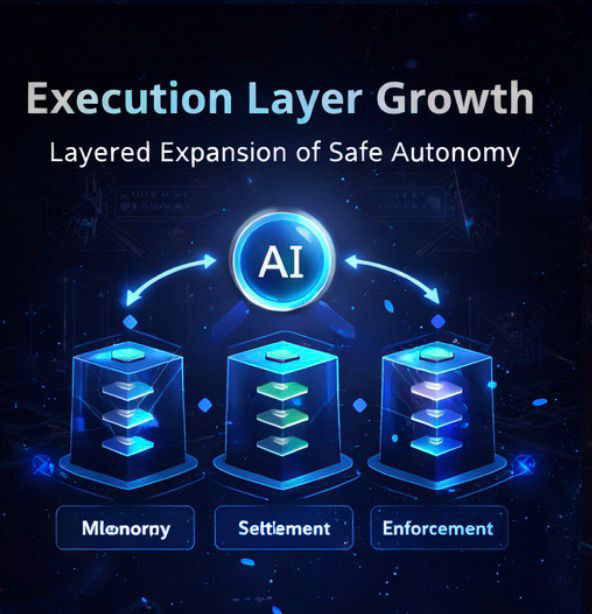
VANAR’s positioning suggests that it understands this shift.
Instead of optimizing purely for throughput metrics, it optimizes for execution continuity. Instead of celebrating isolated transactions, it enables layered coordination. Instead of promising safety abstractly, it embeds safety inside structured flow logic.
That architectural mindset creates long-term differentiation.
Because once AI agents begin to dominate network usage, the chains that can prove safe autonomy through observable flows will become coordination hubs.
Coordination hubs capture value.
Value capture strengthens token fundamentals.
And fundamentals sustain growth beyond cycles.
Autonomy without proof is risk.
Autonomy with verifiable flows is infrastructure.
That is the difference.
And that is why flows matter.
