


Solana is a high-performance blockchain platform built to serve financial infrastructure and decentralised applications. To facilitate quick, safe, and effective transactions, it makes use of a proof-of-stake consensus mechanism and a specially designed consensus algorithm dubbed Solana Proof-of-History. Additionally, Solana allows token issuance, decentralised exchanges, and other use cases that call for quick and effective transactions.
► The Rise
Sol increased by almost 22000% in a short span from around $1 in January 2021 to the top of $260 in November 2021. Let’s examine the reasons that led to the dramatic increase in SOL.
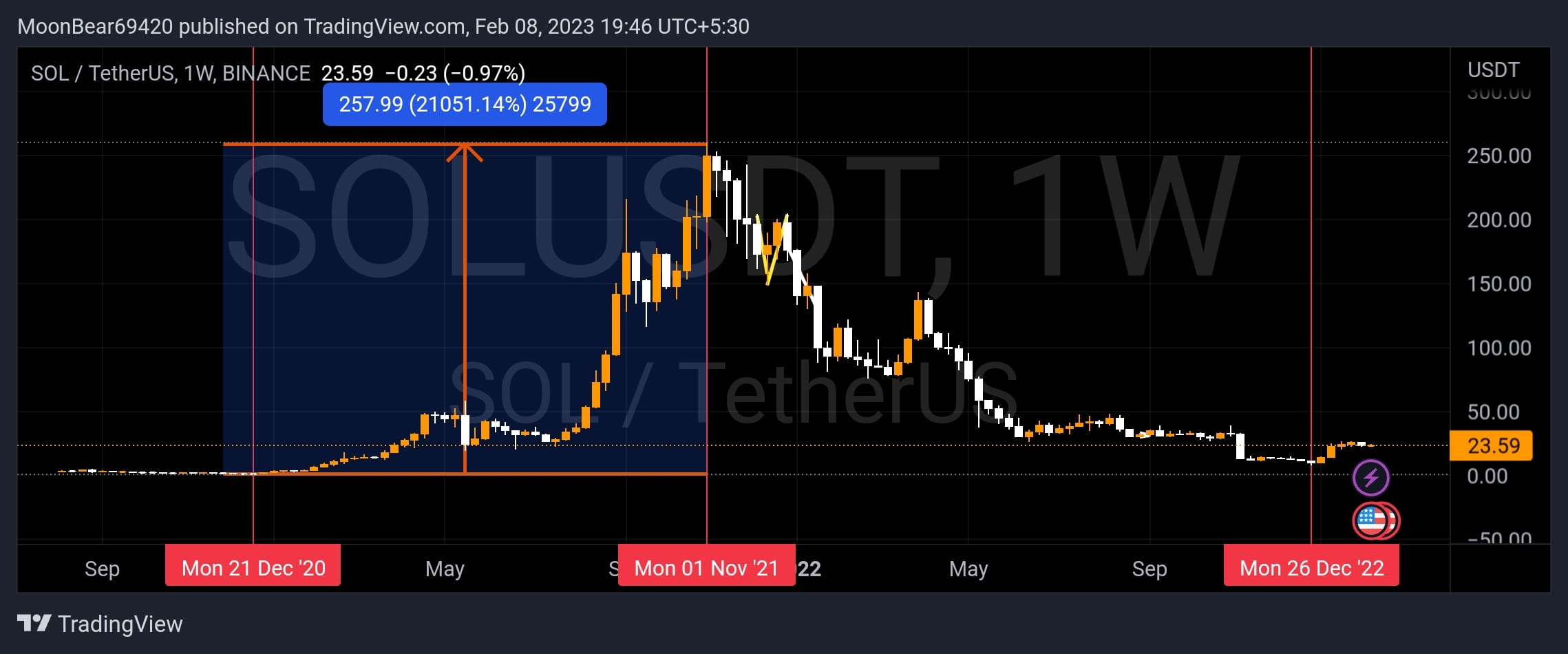
The gaming industry and prosperous NFT launches on Solana network were mostly the reason for the quick rise in price. More than 350 projects were built on the Solana network by the mid 2021, including different DeFi Apps like Raydium, Orca, Mercurial, Marinade Finance, etc. that made up a significant share of the volume traded on the network. Because the Solana blockchain could perform 50,000 transactions per second at an average cost of $0.00025 per transaction, early SOL buyers/holders benefited from the network’s phenomenal adoption and use case which were fueled by the NFT trend and DeFi apps. Hence making Solana network much faster & cost efficient than Ethereum.
► Some good projects on Solana
Serum: a decentralized exchange that aims to offer fast, secure, and low-cost trading.
Mirror: a decentralized finance (DeFi) platform that allows users to trade and invest in a range of financial products.
Raydium: a decentralized platform for trading digital assets with high performance and low fees.
Akash Network: a decentralized cloud computing platform that aims to offer scalable and affordable computing resources.
Audius: built on the Solana blockchain, Audius is a decentralized music streaming and distribution platform that aims to empower artists and provide a fair and transparent ecosystem for music creators and listeners. By leveraging the Solana blockchain, Audius offers fast, secure, and low-cost transactions for its users. The use of blockchain technology also ensures that artists have control over their music and are fairly compensated for their work.
Solana Saga(Upcoming): For Web3, Solana stated that they would be releasing their own flagship Android smartphone under the brand “Saga.” Solana becomes the first blockchain to participate in such a initiative. The price of this smartphone is said to be $1000. It is anticipated to launch in 2023 Q1.
► Tokenomics
Just like Ethereum, Solana does not have a supply cap. Solana token’s supply is inflationary which is set to increase at a certain rate.
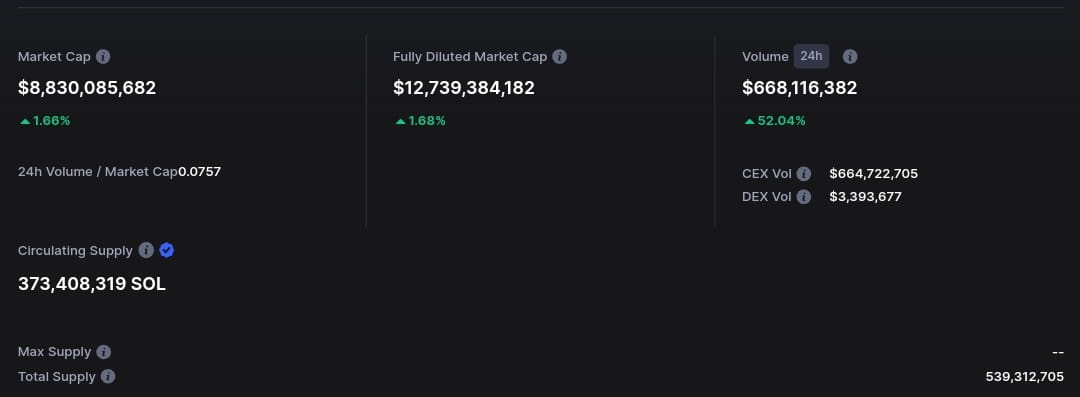
The circulating supply is being referred as the amount of Solana tokens that is currently circulating across centralized exchanges, DEXs and user wallets including staked SOL(activated & delegated to a validator) as well. Currently, there are 373,408,319 solana tokens in circulation.
Initial allocation of SOL supply was 500 million at the time of the genesis block (the first block of the blockchain).
Solana’s token inflation refers to the process by which new tokens are added to the existing supply of Solana (SOL) tokens over time. This increase in supply is usually implemented as a mechanism to reward network participants, such as validators, for maintaining the network and performing important tasks. The rate of Solana’s token inflation is determined by the Solana protocol and can change over time. A long-term token inflation rate of 1.5% is what the Solana Foundation hopes to achieve, meaning there will eventually be more Solana tokens coming into circulation. The supply could reach 690+ million by 2030, according to some forecasts.
► FTX Fiasco and The Fall:
It is crucial to understand how Alameda & FTX’s exposure to the Solana foundation affected the token’s price too fall.
The connection between FTX and Alameda was unclear despite their market size. Although each appear to be separate legal businesses on paper, it was not obvious whether they had mixed their cash (turned out they did). Over time, it became evident that Alameda served as FTX’s liquidity provider. It worked as the counterparty for FTX retail trades.
Solana Labs raised $314.2 million in 2021 and received significant financial support from Alameda Research. SOL stood out to be Alameda’s 2nd largest investment. Therefore, Both FTX & Alameda kept SOL in their balance sheets.
The Solana Foundation team published a blog post in November 2021 outlining the connections between the coin and Sam-Bankman’s business empire. Over 50.5 million Solana tokens were purchased by FTX and Alameda and would be locked until 2028. Later it was discovered that Alameda received a liquidation exemption from FTX, which would protect them in volatile market conditions while other traders would lose their positions if their trade hits the liquidation price.
Solana being one of the top layer 1 blockchain networks, was therefore unable to resist and maintain its immunity to FTX and the Alameda Saga. Solana foundation stored a million dollars on the FTX exchange, and FTX’s own DEX called Serum was based on Solana network while 3.24 million common shares of FTX Trading LTD are held by the Solana Foundation, together with 3.43 million FTT tokens and 134.54 million SRM tokens.
While the artificial price rise for SOL came to an end with the whole Fiasco. A series of unfortunate events took place as same time:
Several Top NFT projects on Solana such DeGods & Y00ts announced they will be migrating to Ethereum.
On Solana-based projects, trading volume almost reached very low levels.
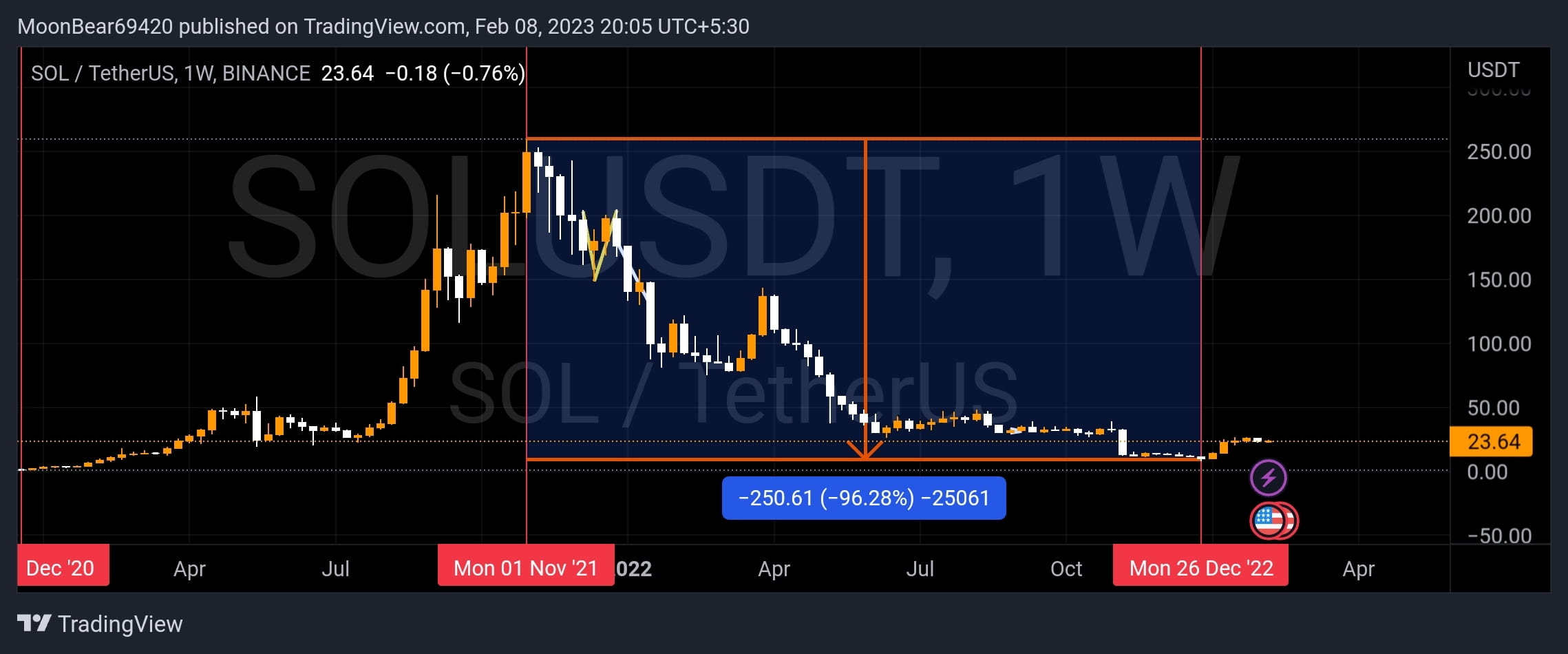
Over $50 billion was loss reported by Solana in its Marketcap, representing a 96% fall in value.
► Conclusion
In addition, Solana has experienced numerous hacking events that resulted in users’ wallets being drained and DDoS attacks that caused the network to go down until a repair is implemented. With its unique technology, Solana is able to handle high transaction volumes and provide low latency for users. Solana’s network has seen rapid growth and adoption. Since the Solana network and its core business are still in place, even though the price of SOL may have taken a significant damage from the recent crisis, long-term investors may rest assured that the network will continue to exist even though its growth may stall for a while and look forward to a new roadmap from the foundation team.