


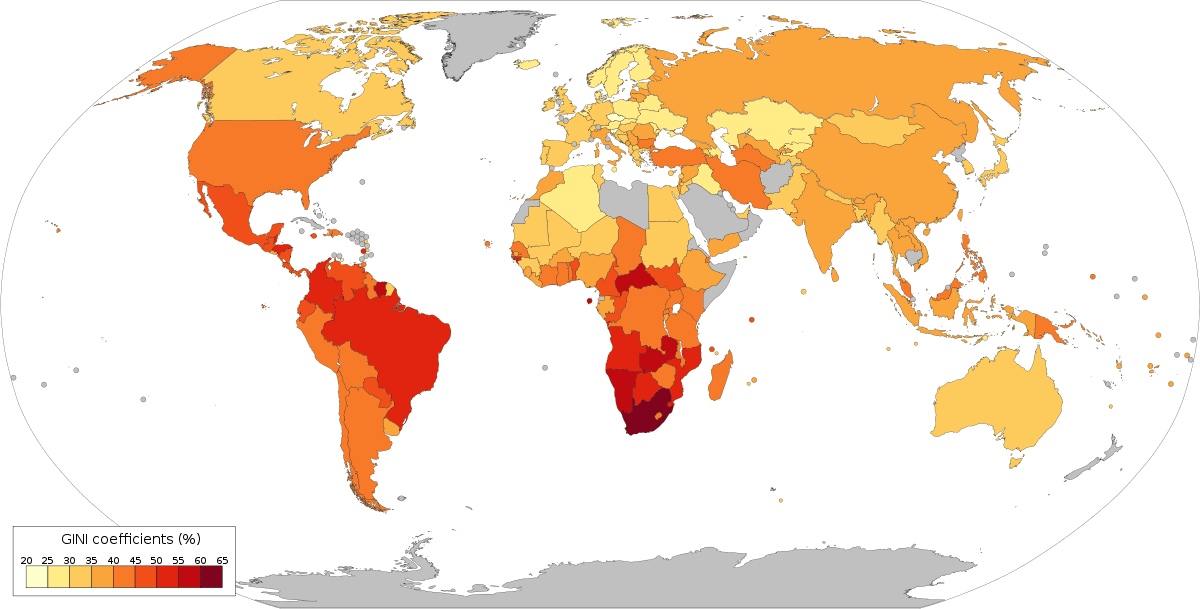
In tokenomics, the Gini coefficient is used to determine how unequally tokens are distributed. It may take on a value between 0 and 1, with 0 denoting complete equality and 1 complete inequality.
Some aspects of a token economy that the Gini coefficient may quantify include:
Token distribution is more even and has a smaller Gini coefficient when more tokens are evenly distributed. As a result, a larger portion of the token economy's population will be able to acquire tokens and participate in its management.
Token concentration: The more concentrated the token distribution, the higher the Gini coefficient. As a result, a very small number of users hold a concentrated amount of tokens, which could result in abuses of power and other issues.
Tokens are easily accessible. The more evenly distributed tokens there are, the lower the Gini coefficient should be. In other words, the token economy is open to people from all walks of life and provides them with the same opportunities.
To evaluate the robustness and longevity of a token economy, the Gini coefficient might be used. If the Gini coefficient for a token economy is high, then it's possible that too few people have disproportionate sway over its direction. There are a few potential outcomes if this continues to happen:
Less user involvement if people don't feel like they have a voice in the token economy's administration. Because of this, the token economy may become less liquid and less active.
There is a higher possibility of manipulation if a few people control the vast majority of tokens in circulation. This might affect the token's value on the market or the result of governance elections. The token economy and its users' trust in it might suffer as a result.
Token economies with a high Gini coefficient are more vulnerable to disruptions like hacks and governmental crackdowns. This is due to the fact that a minority of users own the majority of tokens.
The Gini coefficient may help token project teams and communities track how tokens are being distributed in their token economy and take corrective action if necessary to address concerns about inequality. Teams working on token projects may prioritize equity and transparency by creating methods for distributing tokens, including airdrops, bounties, and fair launches. Members of the community may band together to bring attention to the problem of inequality and push for reforms to the token economy.
Token economy teams and community members may collaborate in the following ways to lower the Gini coefficient:
Teams working on token projects should create airdrops, bounties, and fair launches as ways to distribute tokens in a way that is equitable and transparent.
To avoid having investors and team members sell all of their tokens at once, vesting periods should be implemented. One way to lessen the impact of a small number of tokens is to incentivize users to stake or lock their tokens.
Bring attention to the problem of token economy inequality and push for solutions.
Back token initiatives with a focus on equity and inclusion.
Take part in governance voting to guarantee honest and open administration of the token economy.
The token economy can be made more just, egalitarian, and sustainable if the token project teams and the community work together to make it so.