



In the wake of the FTX collapse in November 2022, the cryptocurrency industry has been striving to enhance transparency and rebuild trust among users. One of the steps taken by exchanges is the publication of Proof-of-Reserve (PoR) reports. Binance, the world's largest cryptocurrency exchange, has been consistently releasing these reports since November 2022. However, despite the release of its tenth PoR report, doubts persist regarding the exchange's transparency and solvency.
The Latest PoR Report
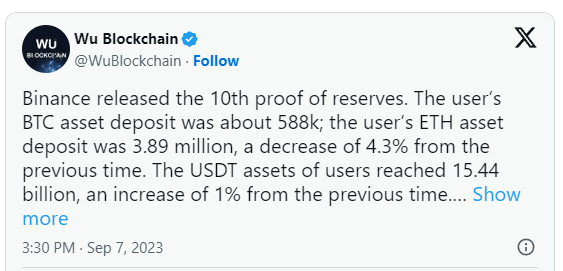
Binance's tenth PoR report, dated as of Friday, September 1, employs a Merkle Tree combined with zk-SNARKs, allowing users to view and verify their balances on the exchange. According to the report, Binance holds over 1:1 reserves for at least 31 of the 350+ supported assets. These reserves include 618.12k BTC, 4.09 million ETH, 34.5 million BNB, and 18.2 billion USDT. On the surface, this suggests that Binance possesses sufficient reserves to cover customer withdrawals.
Lingering Doubts
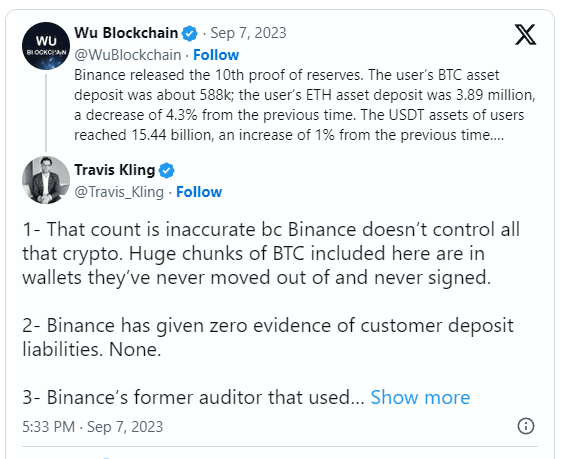
Despite the release of this report, concerns about Binance's transparency persist. Notable figures, such as Travis Kling, the founder of Ikigai Asset Management, have pointed out that Binance has yet to offer proof of customer liabilities. This omission has been a recurring issue since the inception of Binance's PoR reports and has been raised by prominent figures like Jesse Powell, the co-founder of Kraken.
Proof of liabilities is crucial in PoR reports as it reveals a firm's obligations to its customers. Without this disclosure, users and investors cannot gauge a firm's solvency accurately.
Legal Troubles Compound Concerns
Binance's recent legal troubles have exacerbated concerns surrounding its business practices and transparency. In June 2023, the U.S. Securities and Exchange Commission (SEC) filed 13 charges against the exchange, accusing it of routinely commingling customer funds. This legal battle further eroded trust in Binance and intensified scrutiny of its operations.
Key Points to Consider
Binance's PoR reports are self-verified, meaning they have not been independently audited, which raises questions about their reliability.
Binance has refuted claims made by the SEC regarding the commingling of customer deposits with corporate funds, but these allegations have contributed to doubts about the exchange's practices.
Why It Matters
PoR reports are intended to rebuild trust among users of cryptocurrency exchanges, but despite ten reports, Binance's transparency and credibility continue to be sources of concern. In an industry that relies heavily on trust, these ongoing doubts emphasize the importance of exchanges providing transparent and verifiable information to their users.