Binance Square

wars

681 مشاهدات
9 يقومون بالنقاش
theseven meme
·
--
صاعد
الاقتصاد العالمي والحروب. #CryptoNewss $XRP ، #pepe إلخ إلخ $BTC كلها كانت تضخ، تجاوزت XRP القيمة السوقية 37.5 مليار دولار وبلغ إجمالي السوق 256 تريليون دولار #wars وإيران وإسرائيل. الدين العالمي، ديون الولايات المتحدة، القروض الأمريكية. انتظر التحديث التالي. سأحضر تحديثات مالية وحربية عالمية.
·
--
صاعد
عرض الترجمة
أرباحي وخسائري خلال 30 يوم
2025-04-18~2025-05-17
+$1.95
+1166.90%
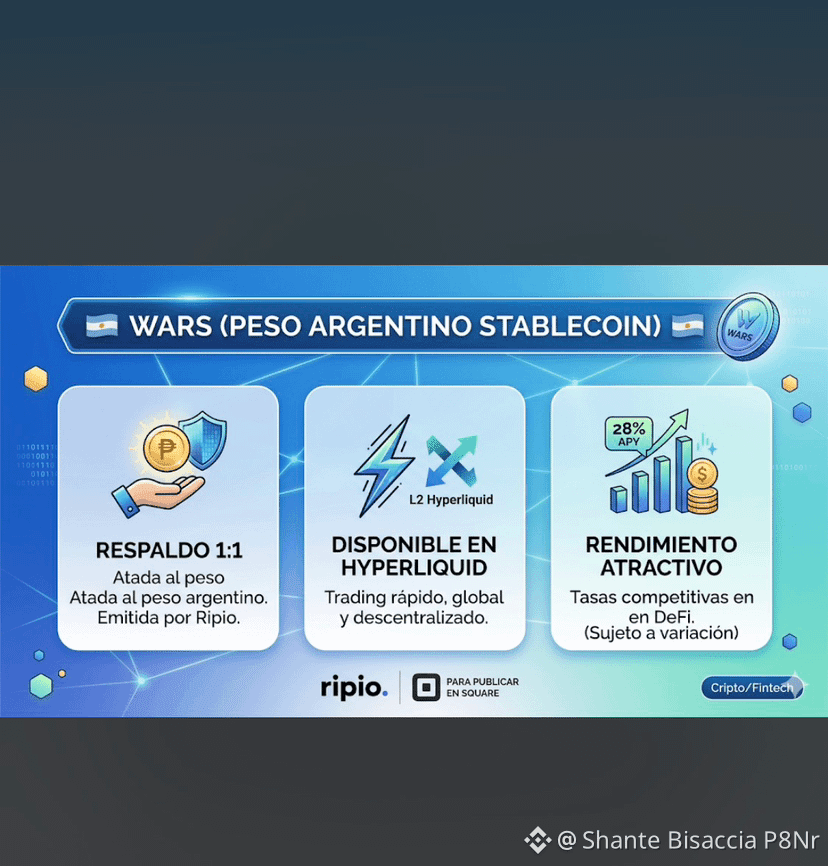
🌎💰 الأرجنتين تطلق أول عملة مستقرة مدعومة بالبيزو! تقدم بورصة العملات المشفرة ريبيو $wARS، أول عملة مستقرة مدعومة بالبيزو في البلاد، والتي أصبحت الآن حية على إيثريوم، وبايس، وورلد تشين. يمثل هذا الإنجاز خطوة كبيرة نحو توسيع الاقتصاد الرقمي في الأرجنتين وجسر التمويل التقليدي مع ابتكار البلوك تشين. #Ripio #wARS #Stablecoin #Argentina #CryptoNews
🌎💰 الأرجنتين تطلق أول عملة مستقرة مدعومة بالبيزو!

تقدم بورصة العملات المشفرة ريبيو $wARS، أول عملة مستقرة مدعومة بالبيزو في البلاد، والتي أصبحت الآن حية على إيثريوم، وبايس، وورلد تشين.

يمثل هذا الإنجاز خطوة كبيرة نحو توسيع الاقتصاد الرقمي في الأرجنتين وجسر التمويل التقليدي مع ابتكار البلوك تشين.

#Ripio #wARS #Stablecoin #Argentina #CryptoNews
ريبيو تطلق عملة مستقرة مدعومة بالبيزو الأرجنتيني wARS قد أطلقت بورصة العملات المشفرة في أمريكا اللاتينية #Ripio #wARS ، وهي عملة مستقرة مرتبطة بالبيزو الأرجنتيني، متاحة الآن على #Ethereum و #Base و #WorldChain . يمكن للتوكن الجديد تمكين المستخدمين من تحويل الأموال عالميًا دون الاعتماد على البنوك أو التحويل إلى الدولار الأمريكي. تأتي هذه الإصدارة بعد الانخفاض الحاد في التضخم في الأرجنتين، من 292% في أبريل 2024 إلى 31.8%، تحت إدارة الرئيس خافيير ميلي.
ريبيو تطلق عملة مستقرة مدعومة بالبيزو الأرجنتيني wARS

قد أطلقت بورصة العملات المشفرة في أمريكا اللاتينية #Ripio #wARS ، وهي عملة مستقرة مرتبطة بالبيزو الأرجنتيني، متاحة الآن على #Ethereum و #Base و #WorldChain .

يمكن للتوكن الجديد تمكين المستخدمين من تحويل الأموال عالميًا دون الاعتماد على البنوك أو التحويل إلى الدولار الأمريكي. تأتي هذه الإصدارة بعد الانخفاض الحاد في التضخم في الأرجنتين، من 292% في أبريل 2024 إلى 31.8%، تحت إدارة الرئيس خافيير ميلي.
·
--
عرض الترجمة
Ripio wARS and the Quiet Revolution of Latin America’s StablecoinsIn a region where currency volatility is not a theoretical risk but a lived reality, a new chapter in digital finance just turned a page. The Argentine crypto-platform Ripio has launched a stablecoin pegged to the Argentine peso, labelled wARS, and on its face this may look like another token launch. But dig a little deeper and you’ll see it is part of something much more significant: the next wave of real-world asset tokenisation and local-currency innovation that could reshape finance across Latin America. Ripio is no unknown player. Founded in Argentina and now offering services to millions across Latin America, it has built momentum through crypto exchanges, payments infrastructure and digital-asset services. Now it has introduced wARS: a token designed to reflect one unit of Argentine peso on major blockchains including Ethereum, Base (backed by Coinbase) and World Chain. The logic is simple: give users in Argentina, and by extension in Latin America, a stable digital representation of their local currency that can move 24/7 across chains, borders and devices — without the need to convert to US dollars or traverse traditional banking rails. This matters for several reasons. First, Argentina has lived through inflationary cycles that erode purchasing power quickly — a rate of 292 % in April of last year, now cooled but still at about 31.8 %. In that environment, stablecoins denominated in US dollars have long been popular. But the dollar-based model has limitations: currency controls, regulatory mismatches, counterparty risks. A peso-based stablecoin changes the equation. It lets people hold, send or receive value in their own currency — but with the benefits of blockchain: speed, global reach, and programmable execution. Second, it signals a shift in how local-currency stablecoins might emerge in Latin America. Ripio has stated that after wARS it plans to launch similar stablecoins for other regional currencies. The idea is to build an ecosystem of local-currency tokens across Latin America, each usable for remittances, payments, savings and cross-border flow without passing through the US dollar as the default intermediary. That could reduce friction, lower costs and increase financial inclusion in markets where banks and traditional infrastructure don’t serve everyone. Third, the launch is part of a broader trend: real-world assets (RWAs) being tokenised and anchored onto blockchain rails. Ripio itself previously released a tokenised version of an Argentine sovereign bond (tagged wAL30rd) and now adds the stablecoin to the portfolio. The message: digital assets are not purely speculative anymore. They are becoming representations of fiat currencies, bonds, real financial flows. That expands the frame of crypto from “alternative money” to “digital economy infrastructure.” But as with all things novel, there are risks and caveats. A peso-pegged stablecoin may face pressures the US dollar or euro pegged coins don’t. If the peso’s external value weakens or if Argentina‘s macroeconomic policy shifts, maintaining the peg may become complex. Also, stablecoins must address backing, redemption, transparency and regulatory footprint — issues surfaced by other jurisdictions during past stablecoin stresses. The technical launch is one piece; trust and governance are the other. From a builder’s perspective, wARS is interesting because it opens potential new rails. Remittances from Brazil or the US to Argentina might be denominated in wARS, bypassing traditional cross-border networks and dollar gate-keepers. Merchants in Argentina could accept wARS for settlement on-chain, while developers build smart-contract-enabled financial services denominated in pesos but globally accessible. If the ecosystem grows, you have a local-currency on-chain layer, not just global tokens priced in dollars. From a policy and regulatory lens, the launch invites attention. Latin America has lagged in some dimensions of crypto policy, but it has also been home to high adoption and innovative uses precisely because its financial systems are under strain. A local-currency stablecoin raises questions of regulation: who ensures the backing of the token? Which authority oversees redemption? How are cross-border flows taxed or monitored? And how will that mesh with central bank objectives? The interplay between decentralised finance and national monetary policy may be tested here. Perhaps the most potent implication is one of identity: digital finance built on local context, not imported wholesale. The US dollar has dominated global stablecoins for decades. But when people in Argentina, Brazil or Mexico can hold value in their country’s currency on chain — and when they can move it without banks or brokers — you begin to see a shift from “crypto is global asset priced in dollars” toward “crypto is local currency augmented by blockchain.” That is subtle, but it may prove transformational. So what happens next? The metrics to watch: how much liquidity flows into wARS, how many merchants adopt it, how many remittance corridors use it instead of traditional wires, and whether other regional currencies follow. Also: how Ripio discloses the backing of wARS, its redemption process, the stress-tests and the regulatory alignment. If the token remains close to 1:1 parity with the peso, liquidity is intact, and integration expands, that may signal a new chapter for Latin American payments. If not, it will be a cautionary tale of ambition outpacing infrastructure. In closing, #wARS is more than just a stablecoin. It’s a statement of confidence — that in Latin America the currency of tomorrow could look like the currency of today, but built for a digital world. It acknowledges the uniqueness of inflation, currency controls and cross-border need in the region, and pivots towards a solution that is both local and global. For Ripio, and for Latin America’s crypto story, this may mark one of the quieter but more meaningful shifts of 2025.

Ripio wARS and the Quiet Revolution of Latin America’s Stablecoins

In a region where currency volatility is not a theoretical risk but a lived reality, a new chapter in digital finance just turned a page. The Argentine crypto-platform Ripio has launched a stablecoin pegged to the Argentine peso, labelled wARS, and on its face this may look like another token launch. But dig a little deeper and you’ll see it is part of something much more significant: the next wave of real-world asset tokenisation and local-currency innovation that could reshape finance across Latin America.

Ripio is no unknown player. Founded in Argentina and now offering services to millions across Latin America, it has built momentum through crypto exchanges, payments infrastructure and digital-asset services. Now it has introduced wARS: a token designed to reflect one unit of Argentine peso on major blockchains including Ethereum, Base (backed by Coinbase) and World Chain. The logic is simple: give users in Argentina, and by extension in Latin America, a stable digital representation of their local currency that can move 24/7 across chains, borders and devices — without the need to convert to US dollars or traverse traditional banking rails.

This matters for several reasons. First, Argentina has lived through inflationary cycles that erode purchasing power quickly — a rate of 292 % in April of last year, now cooled but still at about 31.8 %. In that environment, stablecoins denominated in US dollars have long been popular. But the dollar-based model has limitations: currency controls, regulatory mismatches, counterparty risks. A peso-based stablecoin changes the equation. It lets people hold, send or receive value in their own currency — but with the benefits of blockchain: speed, global reach, and programmable execution.

Second, it signals a shift in how local-currency stablecoins might emerge in Latin America. Ripio has stated that after wARS it plans to launch similar stablecoins for other regional currencies. The idea is to build an ecosystem of local-currency tokens across Latin America, each usable for remittances, payments, savings and cross-border flow without passing through the US dollar as the default intermediary. That could reduce friction, lower costs and increase financial inclusion in markets where banks and traditional infrastructure don’t serve everyone.

Third, the launch is part of a broader trend: real-world assets (RWAs) being tokenised and anchored onto blockchain rails. Ripio itself previously released a tokenised version of an Argentine sovereign bond (tagged wAL30rd) and now adds the stablecoin to the portfolio. The message: digital assets are not purely speculative anymore. They are becoming representations of fiat currencies, bonds, real financial flows. That expands the frame of crypto from “alternative money” to “digital economy infrastructure.”

But as with all things novel, there are risks and caveats. A peso-pegged stablecoin may face pressures the US dollar or euro pegged coins don’t. If the peso’s external value weakens or if Argentina‘s macroeconomic policy shifts, maintaining the peg may become complex. Also, stablecoins must address backing, redemption, transparency and regulatory footprint — issues surfaced by other jurisdictions during past stablecoin stresses. The technical launch is one piece; trust and governance are the other.

From a builder’s perspective, wARS is interesting because it opens potential new rails. Remittances from Brazil or the US to Argentina might be denominated in wARS, bypassing traditional cross-border networks and dollar gate-keepers. Merchants in Argentina could accept wARS for settlement on-chain, while developers build smart-contract-enabled financial services denominated in pesos but globally accessible. If the ecosystem grows, you have a local-currency on-chain layer, not just global tokens priced in dollars.

From a policy and regulatory lens, the launch invites attention. Latin America has lagged in some dimensions of crypto policy, but it has also been home to high adoption and innovative uses precisely because its financial systems are under strain. A local-currency stablecoin raises questions of regulation: who ensures the backing of the token? Which authority oversees redemption? How are cross-border flows taxed or monitored? And how will that mesh with central bank objectives? The interplay between decentralised finance and national monetary policy may be tested here.

Perhaps the most potent implication is one of identity: digital finance built on local context, not imported wholesale. The US dollar has dominated global stablecoins for decades. But when people in Argentina, Brazil or Mexico can hold value in their country’s currency on chain — and when they can move it without banks or brokers — you begin to see a shift from “crypto is global asset priced in dollars” toward “crypto is local currency augmented by blockchain.” That is subtle, but it may prove transformational.

So what happens next? The metrics to watch: how much liquidity flows into wARS, how many merchants adopt it, how many remittance corridors use it instead of traditional wires, and whether other regional currencies follow. Also: how Ripio discloses the backing of wARS, its redemption process, the stress-tests and the regulatory alignment. If the token remains close to 1:1 parity with the peso, liquidity is intact, and integration expands, that may signal a new chapter for Latin American payments. If not, it will be a cautionary tale of ambition outpacing infrastructure.

In closing, #wARS is more than just a stablecoin. It’s a statement of confidence — that in Latin America the currency of tomorrow could look like the currency of today, but built for a digital world. It acknowledges the uniqueness of inflation, currency controls and cross-border need in the region, and pivots towards a solution that is both local and global. For Ripio, and for Latin America’s crypto story, this may mark one of the quieter but more meaningful shifts of 2025.
·
--
هابط
عرض الترجمة
what can effect most Both U.S. elections and wars can have significant impacts on various aspects of the global landscape, but their effects differ in scope and nature: U.S. Elections:Economic Policies: Changes in administration can lead to shifts in economic policies, affecting markets, trade, and international relations. Regulation and Legislation: New laws and regulations can impact industries, including technology, finance, and healthcare.Global Diplomacy: The U.S.'s foreign policy stance can change, affecting international alliances, treaties, and geopolitical dynamics. Wars: Global Stability: Wars can disrupt global stability, leading to economic sanctions, supply chain disruptions, and shifts in energy markets. Humanitarian Crises: Conflicts often lead to humanitarian issues, including refugee crises and international aid requirements.Military Alliances and Defense Spending: Wars can influence military strategies, alliances, and defense budgets on a global scale. #BinanceHODLerBANANA #price #crypto #election #wars
what can effect most

Both U.S. elections and wars can have significant impacts on various aspects of the global landscape, but their effects differ in scope and nature:

U.S. Elections:Economic Policies: Changes in administration can lead to shifts in economic policies, affecting markets, trade, and international relations.

Regulation and Legislation: New laws and regulations can impact industries, including technology, finance, and healthcare.Global Diplomacy: The U.S.'s foreign policy stance can change, affecting international alliances, treaties, and geopolitical dynamics.

Wars:

Global Stability: Wars can disrupt global stability, leading to economic sanctions, supply chain disruptions, and shifts in energy markets.

Humanitarian Crises: Conflicts often lead to humanitarian issues, including refugee crises and international aid requirements.Military Alliances and Defense Spending: Wars can influence military strategies, alliances, and defense budgets on a global scale.

#BinanceHODLerBANANA #price #crypto #election #wars
·
--
عرض الترجمة
Wars can significantly impact crypto trading due to several factors: {spot}(BTCUSDT) * Increased Volatility: * Sanctions and Regulations: * Refuge and Remittances: * Cybersecurity Threats: #btc #solana #wars
Wars can significantly impact crypto trading due to several factors:

* Increased Volatility:
* Sanctions and Regulations:
* Refuge and Remittances:
* Cybersecurity Threats:
#btc #solana #wars
سجّل الدخول لاستكشاف المزيد من المُحتوى
استكشف أحدث أخبار العملات الرقمية
⚡️ كُن جزءًا من أحدث النقاشات في مجال العملات الرقمية
💬 تفاعل مع صنّاع المُحتوى المُفضّلين لديك
👍 استمتع بالمحتوى الذي يثير اهتمامك
البريد الإلكتروني / رقم الهاتف