


Application programming interfaces, or APIs, facilitate the transfer of data between systems and serve as the primary access point connecting businesses to customers. They streamline organizational processes and deliver greater efficiency and brand awareness among other benefits, while reducing response times.
The excitement of the Layer-2 war still shows no signs of cooling down, besides Europe seems to be the next fertile ground for the world's leading crypto exchanges. But what is an API? How are they applied in the crypto market?
What is API?
API stands for Application Programming Interface, which means application programming interface. API can be understood as a means that allows two or more applications to exchange and interact with each other, thereby creating a more effective and convenient interaction between users and applications. Therefore, APIs often exist in any software that needs to interact and connect with customers.
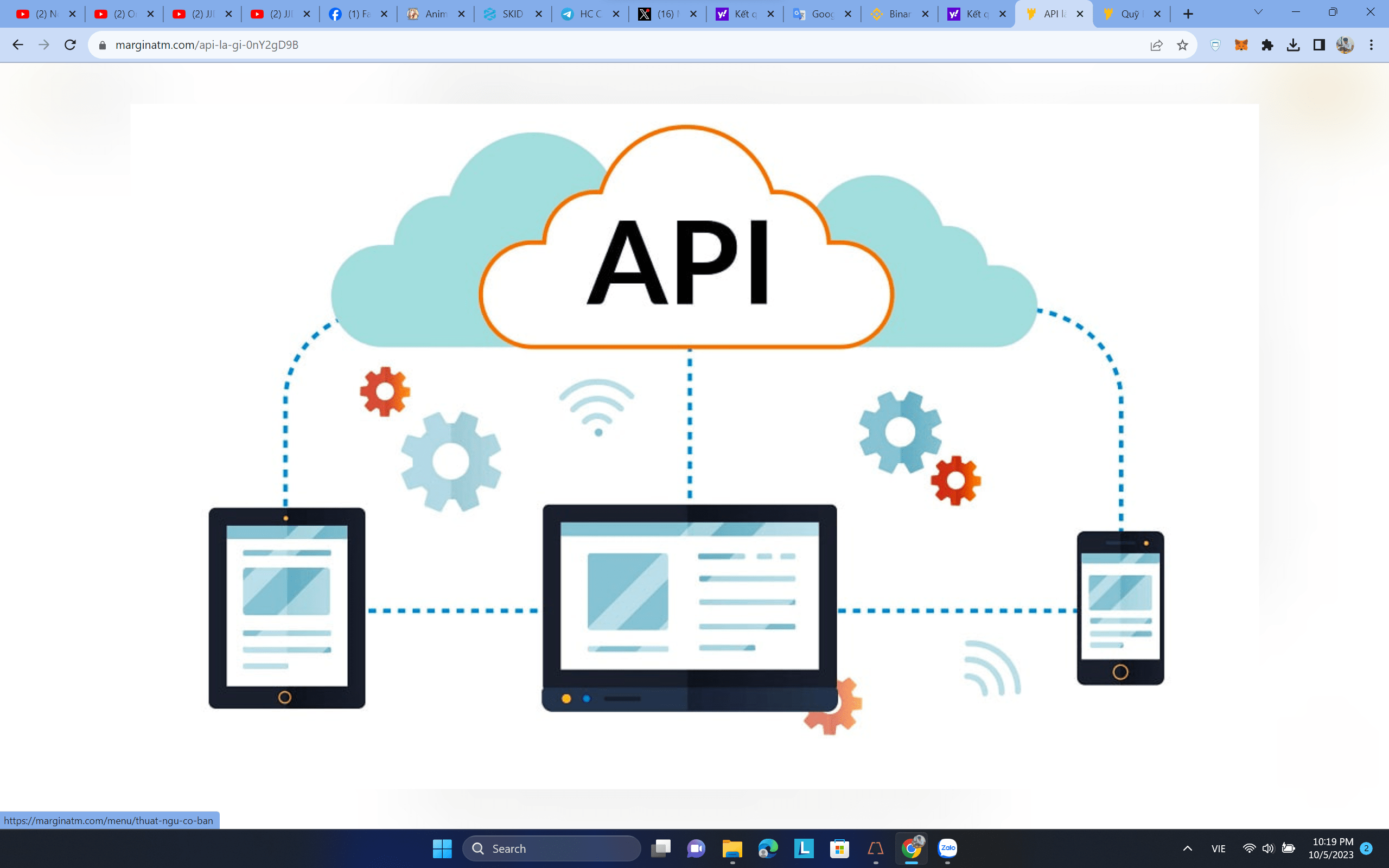
API allows connecting multiple applications together.
With API, programmers can easily access and retrieve data from the server and present them on their own software applications or websites instead of using an alternative solution or implementing it themselves.
An example of API usage that most people are familiar with is booking airline tickets on flight price comparison websites like Traveloka or Agoda. Once you have entered information about arrival, departure, time and number of passengers, the website will search through all available airlines' databases and provide you with different options. . This is done using APIs provided by each airline.

API airline ticket booking system.
For DeFi and crypto trading, APIs help users communicate with projects technically (through software, not an interface), allowing users to get live, complete market data trade and control their accounts.
History of APIs
APIs have been around since 2000, and two of the earliest and most famous APIs, the eBay and Salesforce APIs, were launched around that time:
eBay wanted to give users easier access to its website and facilitate mass uploading of listings.
Salesforce was looking for a solution that would allow more users to connect existing data to their Salesforce platform.
Two years later, Amazon Web Services appeared. Since then, the number of APIs available has increased exponentially. But the number of APIs isn't the only thing that's changed in recent years. With the rise of open source APIs and REST APIs, the rules have been rewritten - for both the Internet and software development. The trend towards cloud-based technology promises even more drastic changes in the future.
Amazon Web Services is growing very quickly.
Application of API
APIs are everywhere, and most of us interact with them every day without realizing it. Every time we post updated information on Facebook, compare airfare and hotel prices on travel websites or make online transactions with banks on our phones,... there are APIs behind it.
Some possible applications of API include:
In the real world
Weather forecast
To better understand the functionality and scope of the API, let's look at an example of weather forecasting. A company that wants to develop a weather information tracking utility on phones will need to collect and store weather data from millions of sources globally using many different APIs.
These APIs allow application developers to create widgets for users to access a consolidated weather forecast information panel. Additionally, the APIs also ensure that files can be exchanged with the server via the phone: when you provide your location, you receive weather forecast information in return.
E-commerce: Transfer inventory data in real time
In e-commerce, retailers use APIs to track their inventory and provide customers with information about product availability.
Service providers: Simplify customer contact
Healthcare providers use APIs for their online websites, where patients can make appointments or search for specific services. Government agencies use APIs for voter registration and directory management, while nonprofits use APIs to connect with donors.
Digital Bank
APIs for digital banking platforms enable banks to integrate with crypto banking services to enable lending, account maintenance, payments, and deposit acceptance. It also allows banks to inform customers about their balances and fees. In doing so, banks can attract new customers and further engage with existing customers.
In the cryptocurrency market
Interact with your Exchange
APIs in the crypto market allow developers or service users to communicate with exchanges. Some tasks that can be performed through the API include:
Conduct transaction
Get real-time market data.
Get live market data.
Identify and balance transaction fees.
Cryptocurrency wallet
Cryptocurrency wallets help manage public key/private key pairs that control cryptocurrency ownership. They serve as a central location where you can manage your assets and connect to decentralized applications (dApps).
The Crypto Wallet API links with digital currencies and performs a variety of functions. Take the Binance API for example – it allows you to set up a “kill switch” on your wallet to instantly sell crypto, place orders, and cancel open orders.
API on Binance.
Monitor your investment portfolio
Cryptocurrency API can be used to provide historical, blockchain, and market data to portfolio management software or portfolio trackers, allowing users to manage their holdings their assets more effectively. These APIs can provide portfolio owners with information such as transactions made from a specific address, tracking fees paid in a transaction, or specific transaction times, according to track deposits and withdrawals,...
Cryptocurrency custody
Crypto custody APIs from custodial providers integrate with crypto wallets and other digital currency management applications to store and secure crypto assets – especially private keys Verify the owners of those assets.
Cryptocurrency mining
The Cryptocurrency Mining API can connect cryptocurrency mining applications to information from a specific blockchain, providing detailed information about the cryptocurrency.
Cryptocurrency lending
The Crypto Borrower API can easily perform the task of authenticating the ownership and history of the borrower's assets, net worth, and credit. Lending platforms using crypto APIs can help users borrow and lend crypto directly to each other.
Classification API
There are different row APIs in use today and each time new software is introduced or updated, new APIs are added. Some APIs are publicly available, while others are strictly internal or limited to two or more partners. There are basically three different types of APIs, the differences lie in their accessibility:
Internal API
Internal APIs, also known as private APIs, are hidden from external users and are only exposed internally to the system. This API is declarative so it is not intended for use outside of the tool intended for internal use.
For example, we are used by companies to achieve greater efficiency in a variety of sectors, product developers, human resources and customer service.
Partner/customer API
API partners are APIs that are offered to business strategies on a restricted mode basis – meaning special permission is required to access. API information is typically accessible through a developer-specific portal that makes the API public.
Open source code API
An open source API, also known as an API declaration, is an application that implements an interface that is publicly available to software developers. Open APIs are published and shared on the Internet, allowing the owner to provide access to anyone.

Open source code allows anyone to access it.
APIs and API integrations can be found everywhere, in every industry and sector. Today, open source API options give developers more flexibility and access to proprietary software and web services. Some advantages of using open source APIs include::
Open concept and flexibility: Open source application integration solutions are ideal for ensuring business infrastructure remains flexible, future-proofed and not dependent on a single proprietary technology best.
Data sharing and innovation: Rapid advances in computing power and high data availability have opened up new opportunities to derive clear business value from information. Increasingly, data is shared through APIs.
Cost savings: Open source solutions that meet enterprise application integration needs are much cheaper than proprietary software, both in terms of initial investment and maintenance costs.
Valuable insights: APIs provide more capabilities in terms of interaction and data collection. This way, companies will better understand their customers and processes and can better tailor their products and services to user needs.
Community support: Developer communities around active open source projects are a source for sharing tips, tricks, and app improvements.
Some of the leading open source APIs
CoinAPI: CoinAPI provides a fast, reliable and harmonized API to get real-time information or data from the cryptocurrency market. It is also trying to combine all cryptocurrency exchanges and produce the resulting data in both simple or preprocessed structures.
BraveNewCoin: This is a cloud-based API that provides smooth and flawless data for chronological and real-time cryptocurrency data, capable of receiving many other markets and assets together.
As the future of the Internet is Web3.0 and the Metaverse is capable of using crypto payments and NFTs, crypto APIs will play an indispensable role – not just in finance but in every aspect of Social life.