


Controversy spilled over the crypto world again this week, ranging from cultural debates in Hollywood-style crypto drama to fresh regulatory proposals across Asia and a new wave of exchange caution after suspected bridge activity.
Meanwhile, authorities in the United States pursued legal steps related to alleged North Korea-linked theft from Binance, and multiple jurisdictions continued to refine how stablecoins, tokenized assets, and crypto intermediaries should be handled.
Key takeaways
Constance Waing, former COO of FTX, criticized Netflix’s portrayal of Binance founder Changpeng Zhao as racist, tying concerns to Asian mafia stereotypes in The Altruists.
South Korean exchanges Upbit and Bithumb suspended deposits and withdrawals of CYBER after the project reported suspicious minting and movements tied to its cross-chain bridge.
South Korea’s draft bill would initially restrict won-denominated stablecoins to bank-majority groups and cap shareholders’ voting power in crypto exchanges at 20%.
In Hong Kong, the HKMA launched a tokenized debt platform enabling 24-hour settlement for tokenized debt securities in multiple currencies.
Japan’s SBI and SMFG launched a Solana-based venture focused on tokenization and stablecoin payment infrastructure.
Netflix drama reignites debate over stereotypes
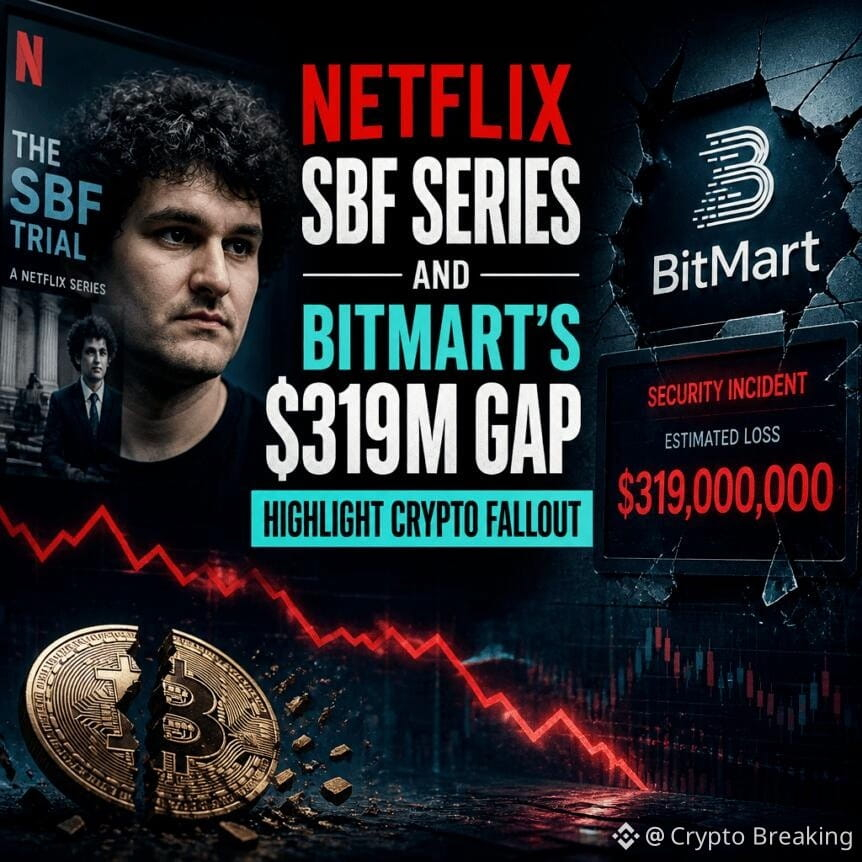
Former FTX chief operating officer Constance Waing took aim at Netflix’s dramatization of crypto’s most infamous crash, arguing that the show leans on racialized tropes when portraying Binance founder Changpeng Zhao.
In a comment relayed by Cointelegraph, Waing said the depiction was “very racist,” referencing The Altruists, a dramatized account of the rise and fall of Sam Bankman-Fried’s FTX and his subsequent imprisonment for fraud.
Waing specifically objected to a scene in which fictionalized SBF and Alameda CEO Caroline Ellison enter through a back door to meet CZ. She said the moment implied CZ was “trying to get these two innocent people into something bad,” framing the disagreement as more than cinematic license.
The dispute also touches on other storyline elements. In another episode, the fictional CZ urges SBF to provide Alameda Research advance access to FTX customer orders so the firm can trade ahead. Cointelegraph noted that a “real” CZ characterized the suggestion as “insane,” and Ethereum co-founder Vitalik Buterin previously questioned whether the portrayal exaggerated Zhao’s accent and whether that crossed into racist territory.
For readers, the controversy matters because it reflects a broader tension in mainstream crypto storytelling: even when a show focuses on verifiable scandals, the use of stereotypes can shape public perceptions of who belongs in—or is blamed for—crypto’s risks. That cultural narrative can influence how newcomers interpret the sector long after the courtroom timelines end.
South Korea pauses CYBER transfers after bridge exploit warning
South Korean exchanges have moved to ring-fence user exposure after CYBER reported suspicious cross-chain activity. According to Cointelegraph, Upbit and Bithumb suspended CYBER deposits and withdrawals on Sunday.
The suspension followed a warning from Cyber, formerly known as CyberConnect, which said it detected unexpected minting of CYBER tokens on Solana. The project then reported that tokens were transferred out of its bridge’s Ethereum lockbox.
Cyber said it was investigating and advised users to avoid using the bridge and to refrain from depositing CYBER to exchanges while checks continue. The incident highlights a familiar operational risk for cross-chain infrastructure: even if the underlying token exists on multiple networks, bridge logic and accounting are the choke points that can be targeted or may fail in unexpected ways.
Investors and active traders typically watch for follow-up signals such as confirmation from the project’s incident response, on-chain remediation steps, and whether major exchanges extend or lift suspensions. Until then, liquidity and withdrawals can be constrained regardless of the token’s broader market movement.
South Korea drafts stablecoin rules with bank-led control and 20% vote caps
South Korea’s Financial Services Commission has unveiled draft legislation that would reshape how won-denominated stablecoins are issued and how ownership works for domestic crypto exchanges. Cointelegraph reported that the bill would initially limit stablecoin issuance to groups that are majority-owned by banks.
The proposal also introduces a general cap: shareholders’ stakes in crypto exchanges would be limited, with the cap set at 20%. Under the structure described by Cointelegraph, ownership above that threshold could lead to the affected shares losing voting rights.
Cointelegraph added that the 20% rule is positioned to affect a deal in which Naver took full control of Upbit owner Dunamu. If the new voting limitations are implemented as proposed, the governance outcome could change even if the ownership structure remains in place.
The draft bill would also lift South Korea’s 2017 ban on domestic initial coin offerings, expanding the policy toolkit available to crypto businesses—though the exact regulatory boundaries would depend on how details are finalized during legislative review.
Beyond issuance, the legislation could shift influence toward established financial channels. Tiger Research, as cited by Cointelegraph in a separate report, suggested fintech companies could gain leverage in bank-led stablecoin ecosystems by partnering with banks and providing infrastructure for spending won-denominated stablecoins in real-world transactions. The key operational point, per that analysis, is that relationships for distribution and payment enablement may matter as much as the volume of stablecoins created.
Tokenized finance expands in Hong Kong and Japan
Hong Kong moved from policy discussions to infrastructure. The Hong Kong Monetary Authority launched a tokenized debt platform intended to support round-the-clock settlement of tokenized debt securities in multiple currencies, according to Cointelegraph.
The CMU Digital Asset Platform is developed and operated by CMU OmniClear Limited on behalf of the HKMA. Cointelegraph reported that it uses cash tokens for payment and connects with conventional payment systems as well as central bank digital currencies.
Separately, Hong Kong also set out licensing expectations for crypto intermediaries. Cointelegraph noted that the government published a Virtual Asset Services Legislation (Amendment) Bill 2026 to bring crypto custodians, advisers, and other virtual asset service providers under mandatory licensing or registration with the Securities and Futures Commission. The bill is scheduled for its first reading in the Legislative Council on Dec. 2.
Across Asia, Japan’s major financial players announced a venture aimed at applying Solana infrastructure to stablecoins and tokenized assets. Cointelegraph reported that SBI Holdings and Sumitomo Mitsui Financial Group (SMFG) launched a joint venture with the Solana Foundation focused on tokenization, stablecoin payment infrastructure, and expanding on-chain financial services.
Taken together, these developments underscore a recurring global theme: even as regulation advances, institutions are also building tokenized rails for settlement, payments, and issuance. For market participants, the practical question becomes less “whether tokenization will happen” and more “who controls access, compliance, and liquidity” across the stack.
US seeks to recover funds from alleged North Korea-linked Binance theft
In the legal arena, the United States Department of Justice is pursuing recovery of more than $1.1 billion in crypto allegedly stolen from Binance in October by North Korean hackers, Cointelegraph reported. A court filing requested permanent forfeiture of the funds, which are held in the USDC stablecoin.
Cointelegraph also noted that since the attack, US authorities say they have helped freeze, seize, or return nearly $3 billion out of more than $6 billion taken from Binance. The case illustrates how stablecoins can become central to asset recovery efforts even when the initial theft occurs across chains and exchange wallets.
As these stories develop, readers should watch three things: whether South Korea’s CYBER suspension ends with confirmed remediation, how South Korea’s stablecoin and voting rules evolve during legislation, and whether Hong Kong’s licensing framework changes who can operate as a compliant onramp for tokenized assets.
This article was originally published as Netflix SBF Series and BitMart’s $319M Gap Highlight Crypto Fallout on Crypto Breaking News – your trusted source for crypto news, Bitcoin news, and blockchain updates.