
Binance Square
--Sky
86 منشورات

--Sky

تحقُّق Binance Square الإضافي
All views in this post are personal and for reference only. Not financial advice. Always do your own research and be responsible for your decisions.
مُتداول مُتكرر
6.8 سنوات
1 تتابع
37.6K+ المتابعون
35.4K+ إعجاب
منشورات
PINNED
·
--
If you only have $1,000 in crypto, your goal probably isn’t to make another 20% or 30%. You’re looking for an opportunity big enough to actually change the size of your portfolio. But 50x or 100x coins are rarely discovered after the entire market is already talking about them. The biggest opportunities usually appear when volume is still small, attention is low, and the narrative is only beginning to form. By the time your timeline is flooded with the ticker and everyone is asking, “Where did this coin come from?”, the easiest part of the opportunity may already be gone. The real question is: Can you recognize it before that day comes?
If you only have $1,000 in crypto, your goal probably isn’t to make another 20% or 30%. You’re looking for an opportunity big enough to actually change the size of your portfolio.

But 50x or 100x coins are rarely discovered after the entire market is already talking about them. The biggest opportunities usually appear when volume is still small, attention is low, and the narrative is only beginning to form.

By the time your timeline is flooded with the ticker and everyone is asking, “Where did this coin come from?”, the easiest part of the opportunity may already be gone.

The real question is: Can you recognize it before that day comes?
PINNED
·
--
If your net worth is under $10,000 and you’re buying large-cap coins like ETH, SOL, or BNB… Don’t expect these coins to make you rich overnight. Even in this bull market, a 10x–20x move would already be an extremely strong performance. The real opportunity is finding coins with powerful narratives and strong messaging before the super bull run begins. I’m preparing a detailed breakdown to show you exactly how to do that. Which narratives am I watching? How do I filter coins? What signals do I pay attention to before the big move starts? I’ll explain everything step by step. If you want me to break all of this down in detail, just show some support.
If your net worth is under $10,000 and you’re buying large-cap coins like ETH, SOL, or BNB…

Don’t expect these coins to make you rich overnight.

Even in this bull market, a 10x–20x move would already be an extremely strong performance.

The real opportunity is finding coins with powerful narratives and strong messaging before the super bull run begins.

I’m preparing a detailed breakdown to show you exactly how to do that.

Which narratives am I watching?
How do I filter coins?
What signals do I pay attention to before the big move starts?

I’ll explain everything step by step.

If you want me to break all of this down in detail, just show some support.
·
--
What If the Real Reason You Keep Losing in Crypto Has Nothing to Do With the Market?I used to think the hardest part of crypto was finding the right coin. Over time, I realized something much more uncomfortable: the hardest part is staying rational when money starts changing the way you think. Reading Kazuo Inamori, especially A Compass to Fulfillment, made me think about crypto in a completely different way. One idea appears again and again in his philosophy: the results we create on the outside are deeply connected to the way we think, act, and discipline ourselves on the inside. Crypto magnifies almost everything inside a person. When the market rises, greed often grows faster than the portfolio. When the market falls, fear grows faster than the losses. When we make money too easily, we start believing we are smarter than we really are. When we keep losing, we blame the market, bad luck, influencers, whales, or anyone except ourselves. But the market does not know who you are. Bitcoin does not know your entry price. BNB does not care whether you are in profit or underwater. ETH and SOL do not know how many nights you spent researching them. The market simply moves. What determines how long you survive is not how the market treats you. It is how you respond to it. That is what I find so powerful about Inamori’s philosophy. He was not teaching that positive thinking magically creates success. His message was much harder than that. You need the right way of thinking, the right attitude toward life, and the willingness to keep acting on those principles for a very long time. Crypto is no different. Someone can get lucky once and turn $1,000 into $10,000. But without discipline, more money often does nothing except make their mistakes more expensive. One trade may take you from $1,000 to $10,000. Going from $10,000 to $100,000 and still keeping that wealth through multiple market cycles usually requires you to become a different person. You have to learn how to wait. You have to know when to walk away from an opportunity that looks irresistible. You have to become comfortable saying, “I don’t know.” You have to understand that not every coin pumping is your opportunity. Sometimes the best trade is no trade at all. Most importantly, you have to remain in control of yourself when everyone around you is losing control. Another Inamori book, Challenge from Zero, makes me think about one reality that almost every serious crypto investor eventually faces: at some point, you may have to start again. Maybe it happens after a market crash. Maybe a token goes close to zero. Maybe leverage destroys months of gains. Maybe you trust the wrong person. Or maybe you simply become too confident and convince yourself that “this time is different.” Losing money hurts. But losing money and learning nothing from it is far worse. If every failure leaves you with the same thinking, the same risk management, the same tendency to follow the crowd, and the same emotional decisions, then you are not really starting over. You are simply repeating the past with a new account balance. Starting from zero does not mean your portfolio has to reach zero. Sometimes starting from zero means having the courage to destroy the beliefs that caused your failure and rebuild your way of thinking from the beginning. Inamori’s writing about dreams and ambition also reminds me of something crypto investors often forget. There is nothing wrong with wanting more. There is nothing wrong with wanting financial freedom, building serious wealth, or hoping that crypto can change your life. The mistake is believing that your life must change in the next few weeks. Some people once looked at Bitcoin and saw nothing more than strange internet money. Some looked at BNB in 2017 and saw only a token for trading-fee discounts. Others looked at blockchain and saw nothing except speculation. The biggest things often need years before their real value becomes obvious. People are the same. Maybe your portfolio is still small. Maybe you have not found the opportunity that changes your life yet. Maybe you missed the best early years of BTC, ETH, BNB, or SOL. There will still be new opportunities. But before spending all your time searching for the next 10x or 100x coin, there may be a more important question worth asking: If a truly life changing opportunity appeared in front of you tomorrow, have you already become the kind of person capable of recognizing it, holding through the uncertainty, and keeping the wealth it creates? A bull market can make a lot of people money. But discipline, judgment, patience, and self-control determine who still has that money years later. After watching crypto rise and fall through multiple cycles, I increasingly believe that the most important lesson this market teaches us is not found on a chart. It is found in ourselves. Maybe the portfolio does not need to change first. Maybe you do.

What If the Real Reason You Keep Losing in Crypto Has Nothing to Do With the Market?

I used to think the hardest part of crypto was finding the right coin. Over time, I realized something much more uncomfortable: the hardest part is staying rational when money starts changing the way you think.
Reading Kazuo Inamori, especially A Compass to Fulfillment, made me think about crypto in a completely different way. One idea appears again and again in his philosophy: the results we create on the outside are deeply connected to the way we think, act, and discipline ourselves on the inside.
Crypto magnifies almost everything inside a person. When the market rises, greed often grows faster than the portfolio. When the market falls, fear grows faster than the losses. When we make money too easily, we start believing we are smarter than we really are. When we keep losing, we blame the market, bad luck, influencers, whales, or anyone except ourselves.
But the market does not know who you are. Bitcoin does not know your entry price. BNB does not care whether you are in profit or underwater. ETH and SOL do not know how many nights you spent researching them. The market simply moves.
What determines how long you survive is not how the market treats you. It is how you respond to it.
That is what I find so powerful about Inamori’s philosophy. He was not teaching that positive thinking magically creates success. His message was much harder than that. You need the right way of thinking, the right attitude toward life, and the willingness to keep acting on those principles for a very long time.
Crypto is no different.
Someone can get lucky once and turn $1,000 into $10,000. But without discipline, more money often does nothing except make their mistakes more expensive. One trade may take you from $1,000 to $10,000. Going from $10,000 to $100,000 and still keeping that wealth through multiple market cycles usually requires you to become a different person.
You have to learn how to wait. You have to know when to walk away from an opportunity that looks irresistible. You have to become comfortable saying, “I don’t know.” You have to understand that not every coin pumping is your opportunity. Sometimes the best trade is no trade at all.
Most importantly, you have to remain in control of yourself when everyone around you is losing control.
Another Inamori book, Challenge from Zero, makes me think about one reality that almost every serious crypto investor eventually faces: at some point, you may have to start again.
Maybe it happens after a market crash. Maybe a token goes close to zero. Maybe leverage destroys months of gains. Maybe you trust the wrong person. Or maybe you simply become too confident and convince yourself that “this time is different.”
Losing money hurts. But losing money and learning nothing from it is far worse.
If every failure leaves you with the same thinking, the same risk management, the same tendency to follow the crowd, and the same emotional decisions, then you are not really starting over.
You are simply repeating the past with a new account balance.
Starting from zero does not mean your portfolio has to reach zero. Sometimes starting from zero means having the courage to destroy the beliefs that caused your failure and rebuild your way of thinking from the beginning.
Inamori’s writing about dreams and ambition also reminds me of something crypto investors often forget. There is nothing wrong with wanting more. There is nothing wrong with wanting financial freedom, building serious wealth, or hoping that crypto can change your life.
The mistake is believing that your life must change in the next few weeks.
Some people once looked at Bitcoin and saw nothing more than strange internet money. Some looked at BNB in 2017 and saw only a token for trading-fee discounts. Others looked at blockchain and saw nothing except speculation.
The biggest things often need years before their real value becomes obvious.
People are the same.
Maybe your portfolio is still small. Maybe you have not found the opportunity that changes your life yet. Maybe you missed the best early years of BTC, ETH, BNB, or SOL.
There will still be new opportunities.
But before spending all your time searching for the next 10x or 100x coin, there may be a more important question worth asking:
If a truly life changing opportunity appeared in front of you tomorrow, have you already become the kind of person capable of recognizing it, holding through the uncertainty, and keeping the wealth it creates?
A bull market can make a lot of people money.
But discipline, judgment, patience, and self-control determine who still has that money years later.
After watching crypto rise and fall through multiple cycles, I increasingly believe that the most important lesson this market teaches us is not found on a chart.
It is found in ourselves.
Maybe the portfolio does not need to change first. Maybe you do.
·
--
How Much Capital Did You Start With, and How Long Have You Been in Crypto? Some people enter the market with $500 and build a meaningful portfolio over the next few years. Others start with $50,000, go through several market cycles, yet repeatedly find themselves back where they began. More capital creates more opportunities, but it also makes every mistake more expensive. If you cannot manage $1,000 properly, having $100,000 may not make you a better investor. Experience is not measured only by the number of years you have spent in the market. Some people have held BTC, ETH, BNB, or SOL for years but still repeat the same mistakes: chasing out of fear of missing out, changing their plans whenever prices move, and risking too much capital on a single decision. Real experience begins when you recognize what once cost you money and refuse to let it happen again. I’m genuinely curious: How much capital did you start with? How many years have you been investing? And what is the most expensive lesson the market has ever taught you?
How Much Capital Did You Start With, and How Long Have You Been in Crypto?

Some people enter the market with $500 and build a meaningful portfolio over the next few years.

Others start with $50,000, go through several market cycles, yet repeatedly find themselves back where they began.

More capital creates more opportunities, but it also makes every mistake more expensive. If you cannot manage $1,000 properly, having $100,000 may not make you a better investor.

Experience is not measured only by the number of years you have spent in the market. Some people have held BTC, ETH, BNB, or SOL for years but still repeat the same mistakes: chasing out of fear of missing out, changing their plans whenever prices move, and risking too much capital on a single decision.

Real experience begins when you recognize what once cost you money and refuse to let it happen again.

I’m genuinely curious:

How much capital did you start with?

How many years have you been investing?

And what is the most expensive lesson the market has ever taught you?
·
--
مقالة
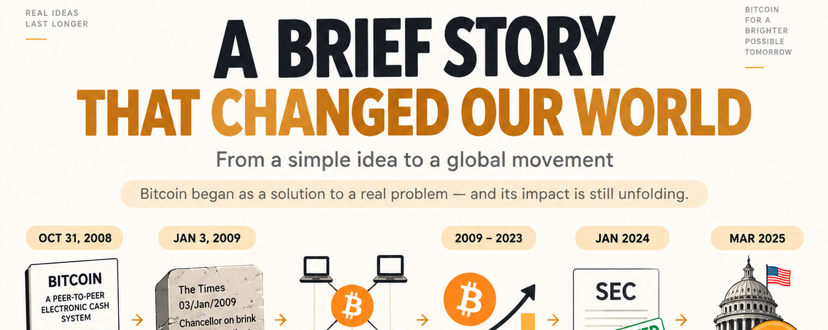
Most People Know Bitcoin’s Price. Few Understand Why Bitcoin Exists.If you hold Bitcoin, there is one document worth reading at least once: Satoshi Nakamoto’s whitepaper. It is only nine pages long. Yet those nine pages laid the foundation for an entirely new financial system. On October 31, 2008, in the middle of one of the most severe financial crises in modern history, a person or group using the name Satoshi Nakamoto published a paper titled “Bitcoin: A Peer-to-Peer Electronic Cash System.” Bitcoin was not introduced as a speculative asset. It was not presented as digital gold, an institutional investment, or a shortcut to wealth. It began with a much simpler problem. Most online payments relied on banks and financial institutions to act as trusted intermediaries. They maintained the records, verified transactions, resolved disputes, and ultimately decided which payments were valid. Satoshi asked a different question: Could two people transfer value directly across the internet without depending on a central institution to control the entire system? That question became the starting point of Bitcoin. Satoshi combined digital signatures, a peer-to-peer network, Proof of Work, and a chain of cryptographically linked blocks to address one of the hardest problems in digital money: preventing the same unit of value from being spent twice without relying on a central server to determine which transaction was legitimate. On January 3, 2009, Bitcoin’s first block was created. Embedded inside the Genesis Block was a message that has since become part of Bitcoin’s history: “The Times 03/Jan/2009 Chancellor on brink of second bailout for banks.” It was a headline published by The Times that day, while the banking system was still struggling with the consequences of the financial crisis. No one can say with certainty what political message Satoshi intended to send. But the line tells us something important about the world into which Bitcoin was born. Trust in some of the largest financial institutions was being tested, governments were rescuing banks, and the weaknesses of a system built around centralized intermediaries had become impossible to ignore. Bitcoin proposed a different model. Instead of allowing one institution to maintain the ledger and approve every transaction, Bitcoin enabled independent participants around the world to verify the same rules and share the same transaction history. It would be inaccurate to say that Bitcoin eliminated trust completely. What it did was change where trust had to be placed. Instead of relying entirely on one bank, government, company, or central operator, users could rely on transparent rules, cryptography, economic incentives, and a public record that anyone could independently verify. That distinction is one of the most important ideas behind Bitcoin. What happened next is even more remarkable. In 2009, Bitcoin was little more than an experimental piece of software known to a small group of cryptographers and early developers. In January 2024, the U.S. Securities and Exchange Commission approved the listing and trading of spot Bitcoin exchange-traded products, opening a much wider regulated path for traditional capital to gain exposure to Bitcoin. Then, in March 2025, the United States established a Strategic Bitcoin Reserve, placing government-held Bitcoin within a dedicated reserve framework. A nine-page document once shared on a cryptography mailing list had gradually become the foundation of an asset studied and held by individuals, financial institutions, public companies, and governments. For me, that is the most fascinating part of Bitcoin. Not how much BTC moved today. Not whether the price will rise or fall tomorrow. Not how many times its value could multiply from here. The more important question is why Bitcoin needed to exist in the first place. If you have held BTC for years but have never read Satoshi’s whitepaper, spending 30 minutes with those nine pages may teach you more about Bitcoin than months of watching price charts. Before trying to predict where Bitcoin is going, understand where it came from.

Most People Know Bitcoin’s Price. Few Understand Why Bitcoin Exists.

If you hold Bitcoin, there is one document worth reading at least once: Satoshi Nakamoto’s whitepaper.
It is only nine pages long. Yet those nine pages laid the foundation for an entirely new financial system.
On October 31, 2008, in the middle of one of the most severe financial crises in modern history, a person or group using the name Satoshi Nakamoto published a paper titled “Bitcoin: A Peer-to-Peer Electronic Cash System.”
Bitcoin was not introduced as a speculative asset. It was not presented as digital gold, an institutional investment, or a shortcut to wealth.
It began with a much simpler problem.
Most online payments relied on banks and financial institutions to act as trusted intermediaries. They maintained the records, verified transactions, resolved disputes, and ultimately decided which payments were valid.
Satoshi asked a different question:
Could two people transfer value directly across the internet without depending on a central institution to control the entire system?
That question became the starting point of Bitcoin.
Satoshi combined digital signatures, a peer-to-peer network, Proof of Work, and a chain of cryptographically linked blocks to address one of the hardest problems in digital money: preventing the same unit of value from being spent twice without relying on a central server to determine which transaction was legitimate.
On January 3, 2009, Bitcoin’s first block was created.
Embedded inside the Genesis Block was a message that has since become part of Bitcoin’s history:
“The Times 03/Jan/2009 Chancellor on brink of second bailout for banks.”
It was a headline published by The Times that day, while the banking system was still struggling with the consequences of the financial crisis.
No one can say with certainty what political message Satoshi intended to send.
But the line tells us something important about the world into which Bitcoin was born. Trust in some of the largest financial institutions was being tested, governments were rescuing banks, and the weaknesses of a system built around centralized intermediaries had become impossible to ignore.
Bitcoin proposed a different model.
Instead of allowing one institution to maintain the ledger and approve every transaction, Bitcoin enabled independent participants around the world to verify the same rules and share the same transaction history.
It would be inaccurate to say that Bitcoin eliminated trust completely.
What it did was change where trust had to be placed.
Instead of relying entirely on one bank, government, company, or central operator, users could rely on transparent rules, cryptography, economic incentives, and a public record that anyone could independently verify.
That distinction is one of the most important ideas behind Bitcoin.
What happened next is even more remarkable.
In 2009, Bitcoin was little more than an experimental piece of software known to a small group of cryptographers and early developers.
In January 2024, the U.S. Securities and Exchange Commission approved the listing and trading of spot Bitcoin exchange-traded products, opening a much wider regulated path for traditional capital to gain exposure to Bitcoin.
Then, in March 2025, the United States established a Strategic Bitcoin Reserve, placing government-held Bitcoin within a dedicated reserve framework.
A nine-page document once shared on a cryptography mailing list had gradually become the foundation of an asset studied and held by individuals, financial institutions, public companies, and governments.
For me, that is the most fascinating part of Bitcoin.
Not how much BTC moved today.
Not whether the price will rise or fall tomorrow.
Not how many times its value could multiply from here.
The more important question is why Bitcoin needed to exist in the first place.
If you have held BTC for years but have never read Satoshi’s whitepaper, spending 30 minutes with those nine pages may teach you more about Bitcoin than months of watching price charts.
Before trying to predict where Bitcoin is going, understand where it came from.
·
--
The next 100x coin may already exist right now. You may have scrolled past it on Binance Square today, looked at the chart for a few seconds, and thought there was nothing special about it. That’s exactly what makes finding early opportunities so difficult. The coins that eventually deliver the biggest returns rarely look obvious before the move begins. Once the chart goes vertical, volume explodes, and every major account starts talking about it, the opportunity becomes easy to recognize. But when everyone can finally see it, are you really early anymore?
The next 100x coin may already exist right now. You may have scrolled past it on Binance Square today, looked at the chart for a few seconds, and thought there was nothing special about it.

That’s exactly what makes finding early opportunities so difficult. The coins that eventually deliver the biggest returns rarely look obvious before the move begins.

Once the chart goes vertical, volume explodes, and every major account starts talking about it, the opportunity becomes easy to recognize.

But when everyone can finally see it, are you really early anymore?
·
--
The biggest problem for someone with a small crypto portfolio may not be a lack of capital. The bigger mistake is only buying what everyone already knows about. When a narrative has gone viral, your timeline is flooded with the same ticker, and major accounts are all repeating the same story, you’re no longer in the discovery phase. You’re entering with the crowd. The biggest opportunities are often created before that point, when the narrative is still just a whisper and most of the market isn’t paying attention. In crypto, being early can sometimes matter more than having a large portfolio.
The biggest problem for someone with a small crypto portfolio may not be a lack of capital. The bigger mistake is only buying what everyone already knows about.

When a narrative has gone viral, your timeline is flooded with the same ticker, and major accounts are all repeating the same story, you’re no longer in the discovery phase. You’re entering with the crowd.

The biggest opportunities are often created before that point, when the narrative is still just a whisper and most of the market isn’t paying attention.

In crypto, being early can sometimes matter more than having a large portfolio.
·
--
Everyone wants to know which memecoin will do the next 10000x. The answer is already somewhere on the timeline. You just haven’t noticed it yet. Until one day, it goes vertical and everyone says: “Why didn’t I buy it earlier?”
Everyone wants to know which memecoin will do the next 10000x.

The answer is already somewhere on the timeline.

You just haven’t noticed it yet.

Until one day, it goes vertical and everyone says:

“Why didn’t I buy it earlier?”
سجّل الدخول لاستكشاف المزيد من المُحتوى
انضم إلى مُستخدمي العملات الرقمية حول العالم على Binance Square
⚡️ احصل على أحدث المعلومات المفيدة عن العملات الرقمية.
💬 موثوقة من قبل أكبر منصّة لتداول العملات الرقمية في العالم.
👍 اكتشف الرؤى الحقيقية من صنّاع المُحتوى الموثوقين.
البريد الإلكتروني / رقم الهاتف
خريطة الموقع
تفضيلات ملفات تعريف الارتباط
شروط وأحكام المنصّة