
Ahmed Ali Nizamani
986 منشورات
Ahmed Ali Nizamani
 تحقُّق Binance Square الإضافي
Live: 7 - 9 PM (PKT) | X: AhmedAliNizaman
مُتداول مُتكرر
4.2 سنوات
520 تتابع
42.3K+ المتابعون
28.6K+ إعجاب
منشورات
الكل
اقتباسات
مقاطع فيديو
Live
PINNED
454 + 444 = 🎁🎁🎁🎁🎁✅

Frenzy

Frenzy _13
·
--
Good morning 🌞
claim for reward 😉
#frenzy
claim for reward 😉
#frenzy

Maliz

M A L I Z-مالیز 马 利 兹
·
--
صاعد🔥BIG GIVEAWAY ALERT! Let’s grow together!🔥
Hey everyone! Hope you’re all doing amazing.
⚡ I need your massive support on my latest posts!
👇 Here is what you need to do RIGHT NOW:
1. LIKE and COMMENT or REPOPO/REPOST on my latest posts.
2. REPOST/REPOPO this post for your friends and fans to spread the word! 🎁
Your Reward: Do this, and I will instantly return the favor (100% back) and you can claim your reward right here! Don't miss out! 🚀🚀
#repopo #repopomypopo #repopomybothpinpoposuppome #malizgiveaway $btc...$bnb DYOR GUYS
WHAT #MALIZ MADE THE WORD FOR REPOSTING?
ANSWER IN COMMENTS👇
$XAU $BTC $PROM
Hey everyone! Hope you’re all doing amazing.
⚡ I need your massive support on my latest posts!
👇 Here is what you need to do RIGHT NOW:
1. LIKE and COMMENT or REPOPO/REPOST on my latest posts.
2. REPOST/REPOPO this post for your friends and fans to spread the word! 🎁
Your Reward: Do this, and I will instantly return the favor (100% back) and you can claim your reward right here! Don't miss out! 🚀🚀
#repopo #repopomypopo #repopomybothpinpoposuppome #malizgiveaway $btc...$bnb DYOR GUYS
WHAT #MALIZ MADE THE WORD FOR REPOSTING?
ANSWER IN COMMENTS👇
$XAU $BTC $PROM

SNM KHAN
SNM Khan
·
--
Gifting Time Claim Surprise Boxes 🎁🧧🎁 Share Like The Post Thankyou 6+6= $SOL Prize 🏆🥇🏆#GiftboxGiveaway

Alone

ALONE_21
·
--
claim your free rewards
good night sweet dreams take care friends
good night sweet dreams take care friends
Mr raj

⁰MR RAJ⁰
·
--
صاعد💰 In 2015, Gravity Payments CEO Dan Price made headlines by cutting his own salary from about $1 million to $70,000 — a roughly 94% reduction. He used the move to help raise the company’s minimum salary to $70,000 for employees.
❤️🏢 Price said the decision was about giving his Seattle-based team greater financial stability, after seeing employees struggle with rising living costs. The move sparked a huge debate about CEO pay and fair wages.
$DUSK $RIVER $POWER
#XRPRallies44%InAWeek #IranSaysHormuzOmanDealNotFinalized #SECSendsCryptoCustodyRuleToWhiteHouse #CryptoFearGreedIndexHits74 #USBitcoinETFsExtendInflowsToSixthDay
❤️🏢 Price said the decision was about giving his Seattle-based team greater financial stability, after seeing employees struggle with rising living costs. The move sparked a huge debate about CEO pay and fair wages.
$DUSK $RIVER $POWER
#XRPRallies44%InAWeek #IranSaysHormuzOmanDealNotFinalized #SECSendsCryptoCustodyRuleToWhiteHouse #CryptoFearGreedIndexHits74 #USBitcoinETFsExtendInflowsToSixthDay

Coin king

Coin--King
·
--
People don’t look at their own behavior, yet they still ask why we changed.
🎁 🎁
$BICO $DUSK $BMT
#XRPLeadsCryptoPullbackDropsNearly7% #DollarPostsBiggestGainInNearlyFourWeeks #NvidiaRises4%OnRevenueBeat #XRPRallies44%InAWeek
🎁 🎁
$BICO $DUSK $BMT
#XRPLeadsCryptoPullbackDropsNearly7% #DollarPostsBiggestGainInNearlyFourWeeks #NvidiaRises4%OnRevenueBeat #XRPRallies44%InAWeek
Prince

Prince-7³
·
--
welcome square family 😊
claim 🧧 Follow 🧧 Repost 🧧
$BTC
$BNB
$ETH
#GIVEAWAY🎁
claim 🧧 Follow 🧧 Repost 🧧
$BTC
$BNB
$ETH
#GIVEAWAY🎁

Join
@ETHcryptohub
يتحدّث[بث مباشر] 🎙️ Let's discuss about Market and Pala Pala each other
420 يستمعون

Eth
ETHcryptohub
·
--
🎁🎁🎁🎁 Gifts for Everyone 🎁🎁🎁🎁
Comment: Yes
LIKE + Follow + Repost
🎉🎉🎉🎉🎉🎉🎉🎉🎉🎉🎉
#Ethcryptohub
$BNB $BTC
Comment: Yes
LIKE + Follow + Repost
🎉🎉🎉🎉🎉🎉🎉🎉🎉🎉🎉
#Ethcryptohub
$BNB $BTC
Abdul

AbdullRauf
·
--
GIVEAWAY ALERT 🧧
We're giving away 2000 gifts to our Square Family as a huge thank you for your support!
To Enter:
✅ Follow
✅ Share this post
✅ Comment "666 !"
Random winners will be selected. Good luck, everyone! 🚀
We're giving away 2000 gifts to our Square Family as a huge thank you for your support!
To Enter:
✅ Follow
✅ Share this post
✅ Comment "666 !"
Random winners will be selected. Good luck, everyone! 🚀

Bilvers
Bilverse
·
--
🚨 WHO WANTS TO WAKE UP TO FREE ETH? 👀
One community. One mission. One chance to be part of the ETH giveaway. 💎🚀
#Bilverse is making noise — and your ETH reward could be waiting. 👀
👇 Want to claim a portion of ETH?
💬 Comment “ETH” below to claim your reward! 🎁
The Bilverse Army is growing. 🟡
Click here to DOUBLE your Rewards! 🧧🚀
Are you in?
#ETH #RedPacketMission #CryptoGiveaway #CryptoCommunity
One community. One mission. One chance to be part of the ETH giveaway. 💎🚀
#Bilverse is making noise — and your ETH reward could be waiting. 👀
👇 Want to claim a portion of ETH?
💬 Comment “ETH” below to claim your reward! 🎁
The Bilverse Army is growing. 🟡
Click here to DOUBLE your Rewards! 🧧🚀
Are you in?
#ETH #RedPacketMission #CryptoGiveaway #CryptoCommunity

Jannat

JANNAT BM_
·
--
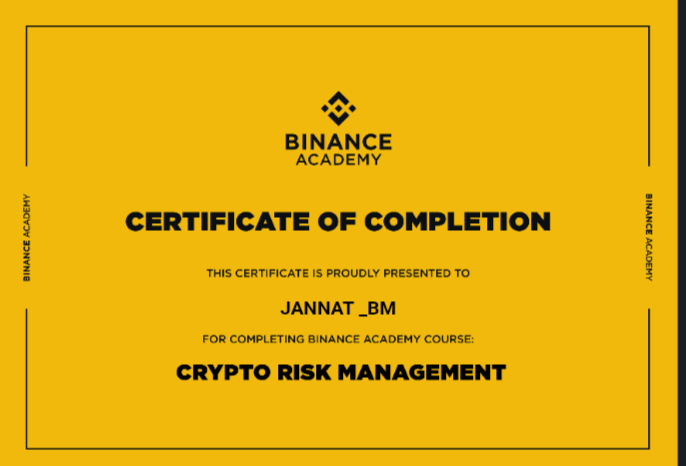
Thank you #Binance 💛
My first certificate form @Binance Academy 💛💛💛
My first certificate form @Binance Academy 💛💛💛
Dt

DT_Singh
·
--
Jisne $SOL ko 75 pe kharida tha, aaj uska face finally smile kar raha hai 😂
75.39 (Sell Avg) se 108.44 tak — matlab 43% ka move! Aur ye koi random pump nahi, STEADY climb hai:
• 7 Days: +32%
• 30 Days: +43%
• 90 Days: +31%
BUT — 1 Year: -44% — matlab purane holders abhi bhi "breakeven aana baki hai" mode mein hain 💀
Chart pe dekho pattern — consistent higher lows, consistent higher highs. Ye "recovery" wala vibe hai, na ki "pump and dump" wala.
Funny part:
Jo log 75 pe entry liye the aur 65 tak gir gaya dekh ke "sell kar dun?" soche the — unhe aaj 40% profit dikh raha hai.
Jo log abhi 108 pe buy kar rahe hain — unhe sochna padega "arey, top toh nahi tha na pichle hafte?"
Order book mein 47.78% sellers hain — matlab "booking profit" mode strong chal raha hai. Jab itne sare log sell kar rahe hain top pe, tab next move kya hoga?
Solana ke saath hota ye hi na — slow recovery ↗️, fir ek do din mein crash ↘️, fir wapas recovery 😅
Kisi ne recently entry liya was SOL? Or abhi bhi recovery completion wait kar rahe ho? 👇
#SOL #solanAnalysis #RecoveryStory #CryptoReality
75.39 (Sell Avg) se 108.44 tak — matlab 43% ka move! Aur ye koi random pump nahi, STEADY climb hai:
• 7 Days: +32%
• 30 Days: +43%
• 90 Days: +31%
BUT — 1 Year: -44% — matlab purane holders abhi bhi "breakeven aana baki hai" mode mein hain 💀
Chart pe dekho pattern — consistent higher lows, consistent higher highs. Ye "recovery" wala vibe hai, na ki "pump and dump" wala.
Funny part:
Jo log 75 pe entry liye the aur 65 tak gir gaya dekh ke "sell kar dun?" soche the — unhe aaj 40% profit dikh raha hai.
Jo log abhi 108 pe buy kar rahe hain — unhe sochna padega "arey, top toh nahi tha na pichle hafte?"
Order book mein 47.78% sellers hain — matlab "booking profit" mode strong chal raha hai. Jab itne sare log sell kar rahe hain top pe, tab next move kya hoga?
Solana ke saath hota ye hi na — slow recovery ↗️, fir ek do din mein crash ↘️, fir wapas recovery 😅
Kisi ne recently entry liya was SOL? Or abhi bhi recovery completion wait kar rahe ho? 👇
#SOL #solanAnalysis #RecoveryStory #CryptoReality
Mahi

mahii_23
·
--
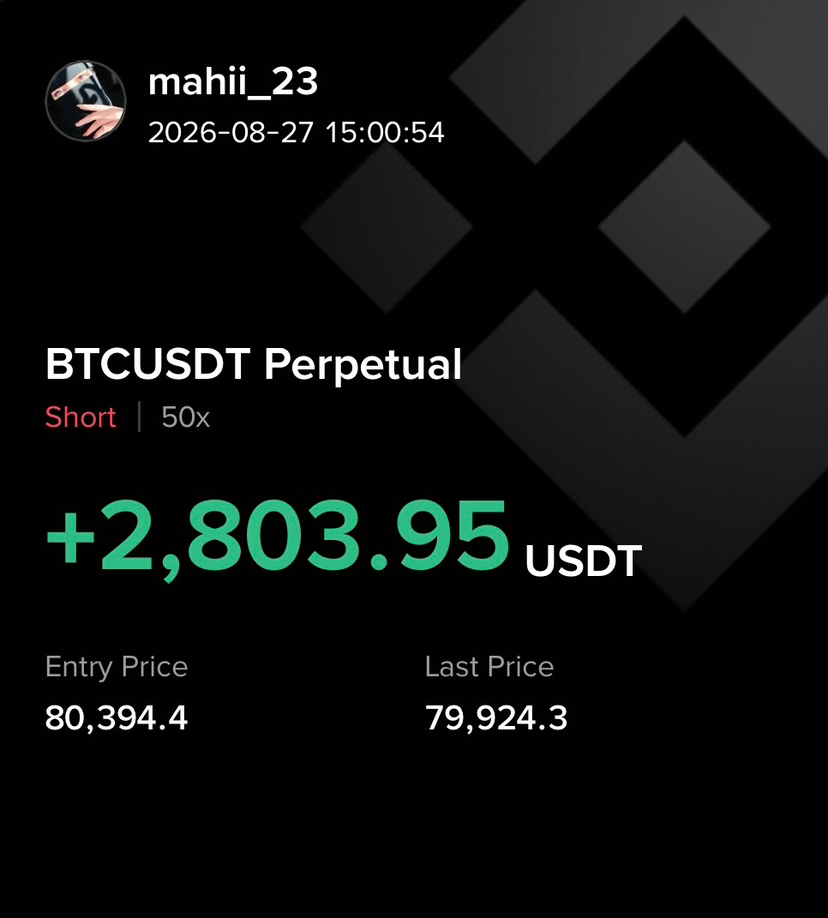
$BTC 🎁 Smart trading is not about being right every time 💫📉
It’s about patience, proper risk management, and trusting your setup.💰
Trade smart, stay focused, and let the strategy work. 💎✨
$BTC
$ETH
#BitcoinHoldsNear$79400
It’s about patience, proper risk management, and trusting your setup.💰
Trade smart, stay focused, and let the strategy work. 💎✨
$BTC
$ETH
#BitcoinHoldsNear$79400
yash

YASH DHALIWAL 31_加密 143
·
--
🌄🌄🌄🌄🌄🌄🔥🔥🔥🔥🌹🌹🥰🌹🤠🌹🌉😊🌹🤪🌄🌄😊😁🌉😁🥰😁🌉🎂🌉😁😽🌄🤪🌄😊🥰🌄😊😊😁😽🎂😜🥰🌄😽🎉🤠
When I research a crypto asset, I don’t start with the upside. I start by asking what am I actually risking and what justifies taking that risk?
For $DUSK that question is especially interesting because the thesis isn’t built purely around speculation. Dusk Network is targeting a difficult market: regulated financial infrastructure, tokenized securities, privacy, compliance and settlement.
From my research and experience tracking crypto projects I’ve learned that strong narratives are not enough. The real test is whether the technology can attract developers, users, institutions and sustainable network activity.
That’s where I see both the opportunity and the risk in $DUSK
The opportunity comes from Dusk’s focus on combining confidentiality with regulatory requirements rather than treating privacy and compliance as competing ideas.
The risk is execution Institutional adoption takes time, competition is intense and technical infrastructure only becomes valuable when real applications use it.
So I don’t view $DUSK as a simple momentum trade. I view it as a higher-risk infrastructure thesis where the future payoff depends heavily on adoption and execution.
In my views risk management comes first. The technology can be compelling but the market ultimately decides whether the thesis works.
@Dusk #DUSK
For $DUSK that question is especially interesting because the thesis isn’t built purely around speculation. Dusk Network is targeting a difficult market: regulated financial infrastructure, tokenized securities, privacy, compliance and settlement.
From my research and experience tracking crypto projects I’ve learned that strong narratives are not enough. The real test is whether the technology can attract developers, users, institutions and sustainable network activity.
That’s where I see both the opportunity and the risk in $DUSK
The opportunity comes from Dusk’s focus on combining confidentiality with regulatory requirements rather than treating privacy and compliance as competing ideas.
The risk is execution Institutional adoption takes time, competition is intense and technical infrastructure only becomes valuable when real applications use it.
So I don’t view $DUSK as a simple momentum trade. I view it as a higher-risk infrastructure thesis where the future payoff depends heavily on adoption and execution.
In my views risk management comes first. The technology can be compelling but the market ultimately decides whether the thesis works.
@Dusk #DUSK

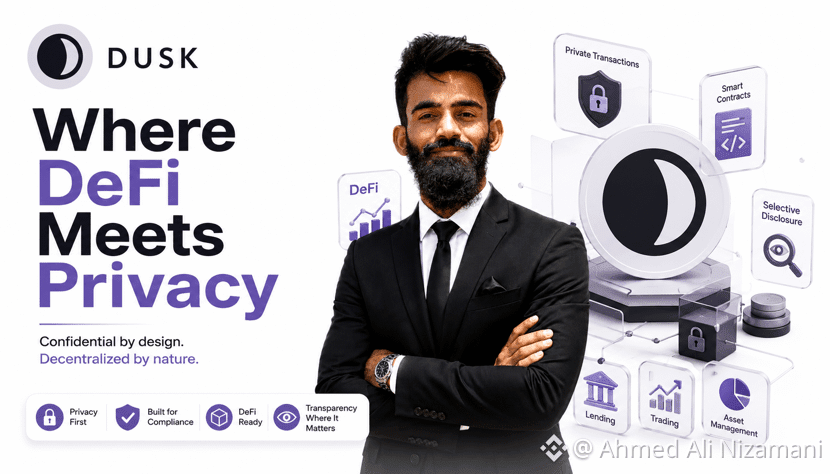
After watching DeFi evolve I’ve learned that the next challenge isn’t simply putting more financial activity onchain. It’s making that activity usable without exposing everything publicly.
Here we find Dusk interesting.
Most DeFi systems make transparency a default. That works for many use cases, but financial markets often involve sensitive positions, balances, counterparties and transaction details. Making all of that permanently visible can create problems for serious capital.
Dusk takes a different direction by combining smart contract execution with privacy focused infrastructure. Its architecture is designed around cryptographic primitives that can support confidential transactions and selective disclosure while still allowing applications to operate onchain.
the more interesting part is the potential DeFi use case.
Imagine lending, trading or asset management where users can prove the information required by a protocol without exposing their entire financial history to everyone watching the blockchain.
That could create a different model for DeFi: privacy where it matters transparency where it is required.
I’m not saying Dusk automatically solves DeFi’s biggest problems. Adoption, liquidity, developers and real applications still matter.
But if DeFi moves toward more sophisticated financial products, privacy may become infrastructure rather than an optional feature.
That’s why everyone keeping $DUSK on my radar.
@Dusk #Dusk
Here we find Dusk interesting.
Most DeFi systems make transparency a default. That works for many use cases, but financial markets often involve sensitive positions, balances, counterparties and transaction details. Making all of that permanently visible can create problems for serious capital.
Dusk takes a different direction by combining smart contract execution with privacy focused infrastructure. Its architecture is designed around cryptographic primitives that can support confidential transactions and selective disclosure while still allowing applications to operate onchain.
the more interesting part is the potential DeFi use case.
Imagine lending, trading or asset management where users can prove the information required by a protocol without exposing their entire financial history to everyone watching the blockchain.
That could create a different model for DeFi: privacy where it matters transparency where it is required.
I’m not saying Dusk automatically solves DeFi’s biggest problems. Adoption, liquidity, developers and real applications still matter.
But if DeFi moves toward more sophisticated financial products, privacy may become infrastructure rather than an optional feature.
That’s why everyone keeping $DUSK on my radar.
@Dusk #Dusk
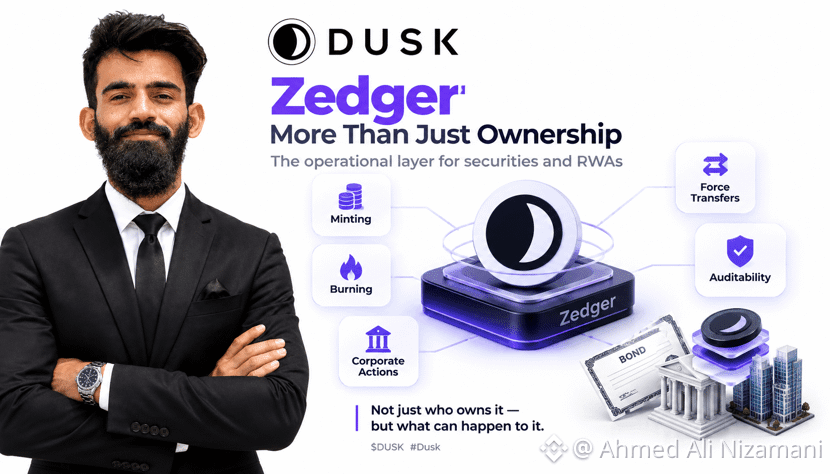
A wallet address can show who owns a token.
But for a financial security ownership is only the starting point.
The harder question is what happens when something changes around that asset.
An issuer may need to execute a corporate action. An asset may need to be created or removed. A transfer could require specific controls. Authorized participants may also need a reliable way to verify the asset’s history.
This is where Zedger gets interesting to me.
Dusk describes Zedger as infrastructure for securities and RWAs, with capabilities including minting, burning, corporate actions, force transfers and auditability.
To me those functions point to a broader idea
A financial asset needs more than a balance. It needs operational rules.
That distinction matters for RWAs.
Simply representing a bond fund or other financial instrument as a token doesn’t automatically recreate the processes surrounding the real-world asset.
Zedger is designed around this missing layer, providing mechanisms for actions that can occur throughout an asset’s lifecycle.
So instead of asking only
“Who owns it?”
We can also ask
“What can happen to it, who can trigger it and how can that activity be verified?”
That’s the part of @Dusk I find compelling.
$DUSK #Dusk
But for a financial security ownership is only the starting point.
The harder question is what happens when something changes around that asset.
An issuer may need to execute a corporate action. An asset may need to be created or removed. A transfer could require specific controls. Authorized participants may also need a reliable way to verify the asset’s history.
This is where Zedger gets interesting to me.
Dusk describes Zedger as infrastructure for securities and RWAs, with capabilities including minting, burning, corporate actions, force transfers and auditability.
To me those functions point to a broader idea
A financial asset needs more than a balance. It needs operational rules.
That distinction matters for RWAs.
Simply representing a bond fund or other financial instrument as a token doesn’t automatically recreate the processes surrounding the real-world asset.
Zedger is designed around this missing layer, providing mechanisms for actions that can occur throughout an asset’s lifecycle.
So instead of asking only
“Who owns it?”
We can also ask
“What can happen to it, who can trigger it and how can that activity be verified?”
That’s the part of @Dusk I find compelling.
$DUSK #Dusk
تمّ التحقق
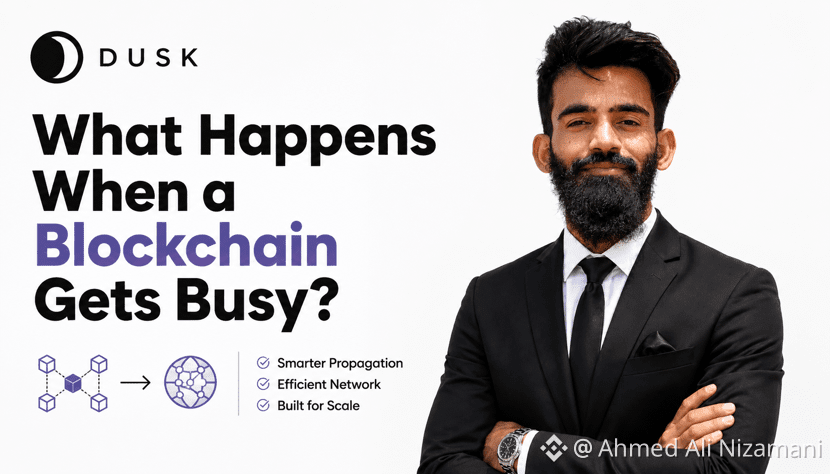
What Happens When a Blockchain Gets Busy?
I think one of the more overlooked questions in blockchain design is what happens between producing a message and everyone receiving it.
As network activity grows the challenge isn’t simply creating more transactions.
The network also has to coordinate more information without turning communication overhead into a hidden scalability limit.
This is where Dusk’s choice of Kadcast becomes interesting to me.
Its approach to propagation is designed around structured peer selection rather than having every node repeatedly relay information across the network.
That changes the efficiency equation.
The goal isn’t just:
“Can the network send the message?”
It is;
“Can the network distribute the message without wasting resources doing it?”
That distinction becomes particularly relevant for infrastructure intended to support financial activity, where predictable network behavior can matter just as much as raw throughput.
I find this a more interesting way to look at blockchain scalability.
Sometimes scalability isn’t only about processing more.
It’s also about communicating more intelligently.
That’s the engineering layer I think is worth paying attention to when looking at @Dusk
$DUSK #Dusk
I think one of the more overlooked questions in blockchain design is what happens between producing a message and everyone receiving it.
As network activity grows the challenge isn’t simply creating more transactions.
The network also has to coordinate more information without turning communication overhead into a hidden scalability limit.
This is where Dusk’s choice of Kadcast becomes interesting to me.
Its approach to propagation is designed around structured peer selection rather than having every node repeatedly relay information across the network.
That changes the efficiency equation.
The goal isn’t just:
“Can the network send the message?”
It is;
“Can the network distribute the message without wasting resources doing it?”
That distinction becomes particularly relevant for infrastructure intended to support financial activity, where predictable network behavior can matter just as much as raw throughput.
I find this a more interesting way to look at blockchain scalability.
Sometimes scalability isn’t only about processing more.
It’s also about communicating more intelligently.
That’s the engineering layer I think is worth paying attention to when looking at @Dusk
$DUSK #Dusk
سجّل الدخول لاستكشاف المزيد من المُحتوى